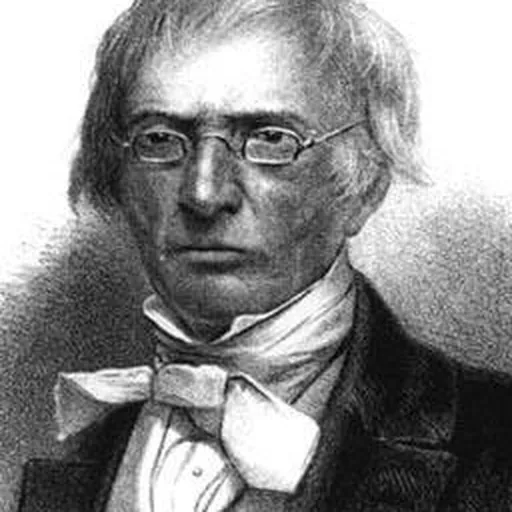
About Victory Birdseye
Lived 1782 – 1853 (aged 70). Victory Birdseye was an American politician and lawyer.
Victory Birdseye (December 25, 1782 – September 16, 1853) was an American politician and a U. S. Representative from New York.
Biography Birdseye was born in Cornwall, Litchfield County, Connecticut attended the public schools at Cornwall, Connecticut. He graduated from Williams College in 1804. Then he studied law, was admitted to the bar in 1807, and commenced practice in partnership with Daniel Wood, Esquire, in Pompey Hill, New York until 1814. In 1813, he married Electa Beebee of Pompey. His daughter Ellen Douglas Birdseye married abolitionist Charles Augustus Wheaton. His great-grandson Clarence Birdseye developed the process for freezing food and founded Birds Eye Frozen Foods.
Career Elected as a Democratic-Republican to the 14th United States Congress, Birdseye held the office of United States Representative for the nineteenth district of New York from March 4, 1815, to March 3, 1817.
Birdseye was Postmaster of Pompey Hill from 1817 to 1838, D.A. of Onondaga County from 1818 to 1833, and a delegate to the New York State Constitutional Convention of 1821. He was a member of the New York State Assembly (Onondaga Co.) in 1823, and of the New York State Senate (7th D.) in 1827.
Birdseye served as the special counsel to conduct prosecution in the trial of parties for the alleged abduction of William Morgan, a man who threatened exposure of the Freemason's secrets and whose disappearance brought about powerful anti-masonic sentiments in the U.S., sparking the formation of the Anti-Masonic Party.
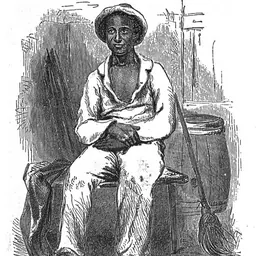
Birdseye was again a member of the State Assembly in 1838 and 1840. While serving the latter term, Birdseye drafted and ushered through a bill that provided for the rescue of New York State citizens who had been kidnapped and sold into slavery. Under the provisions of that law, Solomon Northup, who had been enslaved in Louisiana, was restored to freedom in 1853.
Elected as a Whig to the 27th United States Congress, Birdseye held the office of U. S. Representative for the twenty-third district of New York from March 4, 1841, to March 3, 1843. Afterwards he resumed the practice of law.
Death He died on September 16, 1853, in Pompey, Onondaga County, New York; and was buried at the Pompey Hill Cemetery there.
Don’t just read it —
keep it.
Full-length biographies made to live with: read them, listen on the way to work, watch them tonight.
- E-book
- Audio
- Video
Instant download · yours to keep · every purchase keeps this site free
Important facts
People in Victory Birdseye's life
Named in this biography and alive at the same time


Related people
Same field, nearest in time



Contemporaries
People whose lives overlapped Victory Birdseye's

Frequently asked questions
Who was Victory Birdseye?
American politician (1782-1853)
When was Victory Birdseye born?
Victory Birdseye was born on 25 December 1782 in Cornwall.
When did Victory Birdseye die?
Victory Birdseye died on 16 September 1853 in Pompey.
What was Victory Birdseye's occupation?
Victory Birdseye was a politician and lawyer.
What nationality was Victory Birdseye?
Victory Birdseye was American.
Sources & further reading
Cite this page
APA: Biography.guide. (2026). Victory Birdseye. https://biography.guide/victory-birdseye/
MLA: "Victory Birdseye." Biography.guide, https://biography.guide/victory-birdseye/.
Chicago: "Victory Birdseye." Biography.guide. https://biography.guide/victory-birdseye/.
Data last updated: 2026-09-22 · Spot an error? Report a correction.
Portrait: Wikimedia Commons · author & licence
Page generated 2026-09-27 05:03 UTC