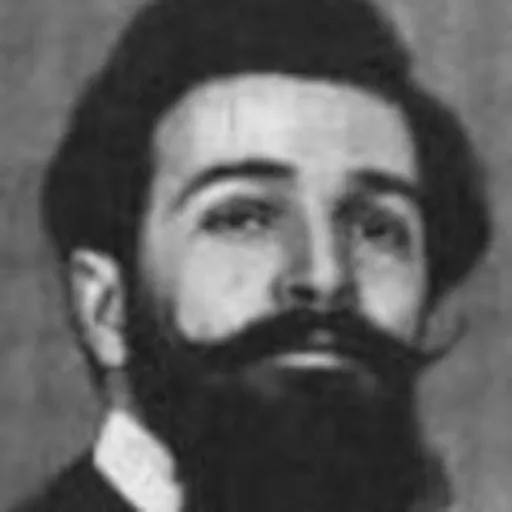
About Victor Staub
Lived 1872 – 1953 (aged 80). Victor Staub was a French composer, pianist and musician.
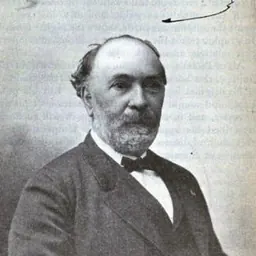
Victor (Henri) Staub (16 October 1872 – 4 February 1953) was a French pianist and composer.
Life Born in Lima, Peru, to Swiss-French parents, Staub exhibited an early aptitude for the piano. He studied at the Paris Conservatoire with Antoine Marmontel and Louis Diémer, gaining a first prize in piano in 1888.
Staub competed in the Anton Rubinstein prize in Berlin in 1895. He and Josef Lhévinne both played Beethoven's Hammerklavier Sonata, Op. 106. In the first round of voting, Staub and Lhévinne obtained the same number of votes, but Lhévinne was ultimately awarded the 5,000 franc first prize after a second round of voting.
Staub taught for five years at the Cologne conservatory. He left Cologne in 1902 and returned to Paris.
He became a professor at the Paris Conservatoire on 21 October 1909, in succession to Edouard Risler. Upon the death of Elie Delaborde in 1914, Gabriel Fauré chose Staub over Marguerite Long to head the Classe Supérieure for women. Staub's female pupils included Germaine Devèze, Madeleine Giraudeau, Jacqueline Pangnier (Robin), Hélène Pignari, and Rita Savard. He also taught José Iturbi, Ernest Hoffzimmer, and Raymond Trouard. Staub retired from the Conservatoire on 15 January 1941 and was succeeded by Armand Ferté.
Victor Staub recorded Chopin's Waltz in F, Op. 34, No. 3; Debussy's Ménéstrels; and Schumann's Des Abends.
He composed numerous piano pieces, including most notably "Sous bois" (1902) and "Boléro" (1924), as well as his piano arrangement of the Sorcerer's Apprentice by Paul Dukas. He also authored pedagogical works.
Raymond Trouard recalled that: Staub could play like no one else. One morning (I had come in a little early), I saw him arrive calmly, sit down at the keyboard and perform, for himself, without any warning, Liszt's "Feux-Follets" impeccably! Staub had memorized the Etudes Transcendantes, Chopin's op. 10 and 25 Etudes, as well as most of the difficult works of the repertoire. Only a handful of pianists could boast of being able to do the same."
Personal life The son of Henri Staub (Zurich 1845 - Paris 1906) and Isabelle Merey (1847–1907), Victor Staub had three sisters: Emma, Béatrice, and Mercedes. His marriage to Blanche Marie de Orelly (1882–1906) produced no children, but with his second wife Marie Marguerite Emilie Baneux (1882–1958) he had a daughter, Odette Blanche Staub (the pianist Diana Staub, 1908–2000). Odette was the mother of actor Jean Claudio.
Victor Staub lived at 27 rue Fourcroy, in Paris, where he also gave private lessons for "professionals, amateurs, and children". He died in Paris.
Works Solo piano Opus Title Year 6 Sous bois 1902 11 Aubade - impromptu 1907 13 Gaiement 1908 15 Scintillements - arabesque 1908 18 En Valsant - Valse Mignonne 22 Chanson gaie 1909 27 Pasquinade 1912 28 Sérénade Italienne 1911 29 La ronde des follets 38 Sérénade espagnole 40 Rêverie 44 Sérénade française 46 Humoresque 1912 Les deux compères 1905 Les matines 1919 Boléro 1924 Les chasseurs 1930 Pantomime 1930 Bab-el-oued Chanson arabe Conchita Danse napolitaine Le chant du muletier Les jongleurs Li-o-ting Mazurka Paysage ensoleillé Pepita - pièce espagnole - boléro Rêverie hindoue Saboulah - pièce orientale Sérénade valse Simple conte 50 Tango191? Valse ballet Valse lente
Piano 4-hands Trois Pièces: En trottinant, Marche; En dansant, Valse; En chantant, Sérénade (1909)
Opérette Les Quatre fils Aymon, one act (performed at the Cercle des Joyeux, 19 December 1888)
Chansons L'Heure délicieuse (Lucien Marotte), 1910 L'Heure silencieuse (Lucien Marotte), 1910
Don’t just read it —
keep it.
Full-length biographies made to live with: read them, listen on the way to work, watch them tonight.
- E-book
- Audio
- Video
Instant download · yours to keep · every purchase keeps this site free
Important facts
People in Victor Staub's life
Named in this biography and alive at the same time


Related people
Same field, nearest in time




Contemporaries
People whose lives overlapped Victor Staub's

Frequently asked questions
Who was Victor Staub?
French pianist and composer (1872–1953)
When was Victor Staub born?
Victor Staub was born on 16 October 1872 in Lima.
When did Victor Staub die?
Victor Staub died on 4 February 1953 in Paris.
What was Victor Staub's occupation?
Victor Staub was a composer, pianist and musician.
What nationality was Victor Staub?
Victor Staub was French.
Sources & further reading
Cite this page
APA: Biography.guide. (2026). Victor Staub. https://biography.guide/victor-staub/
MLA: "Victor Staub." Biography.guide, https://biography.guide/victor-staub/.
Chicago: "Victor Staub." Biography.guide. https://biography.guide/victor-staub/.
Data last updated: 2026-09-21 · Spot an error? Report a correction.
Portrait: Wikimedia Commons · author & licence
Page generated 2026-09-27 05:00 UTC