
About Victor Marchetti
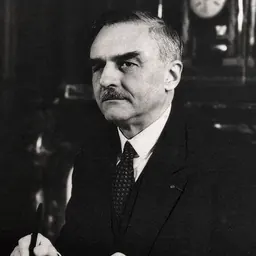
Lived 1929 – 2018 (aged 88). Victor Marchetti was an American spy and non-fiction writer.
Victor Leo Marchetti Jr. (December 23, 1929 – October 19, 2018) was a special assistant to the Deputy Director of the Central Intelligence Agency who later became a prominent critic of the United States Intelligence Community and the Israel lobby in the United States.
Early life and background Marchetti was born in Hazleton, Pennsylvania. From 1951 to 1953, he served as a corporal in U.S. Army Intelligence in France and Germany. Returning to the United States after his military service, he enrolled in Pennsylvania State University, where he majored in Russian area studies, graduating with a bachelor's degree in history in 1955.
CIA career
After a few months working as an analyst at the National Security Agency, Marchetti joined the CIA in October 1955. He began his career as an analyst in the Office of Research and Reports, eventually serving a tour of duty in the Office of National Estimates (ONE).
From ONE, Marchetti moved to the Office of Planning, Programming, and Budgeting in 1966, where he worked for over two years. Beginning in July 1968, he served for nine months as special assistant to CIA Deputy Director Rufus Taylor. His final position in the Agency was on the Planning, Programming, and Budget Staff of the National Photographic Interpretation Center. Among other projects with which he was involved, Marchetti worked on setting up the Pine Gap satellite ground station near Alice Springs in Central Australia.
In September 1969, Marchetti resigned from the CIA.
Writing career After leaving the CIA, Marchetti began a writing career. His first work was a novel, The Rope-Dancer, published in 1971. The plot involves an officer in the "National Intelligence Agency" who becomes a spy for the Soviet Union. In a 2004 article for American Intelligence Journal, Jon Wiant, career member of the Department of State's Senior Executive Service and a faculty member of the Joint Military Intelligence College, reported a 1991 conversation with retired KGB General Oleg Kalugin in which the latter told him that Rope Dancer is assigned as required reading for every KGB officer assigned to the United States. Kalugin believed the novel was an excellent primer in American counterintelligence doctrine.
Marchetti continued work on his book with a co-author, John D. Marks, and signed a book contract with publisher Alfred A. Knopf. In August 1973, they submitted their manuscript to the CIA. After reviewing the manuscript, the Agency responded with a list of 339 passages which it claimed contained classified information and demanded their deletion. Marchetti and Marks rejected the demand and indicated they would go to court in order to print the manuscript as written. The CIA then withdrew its objections to 171 of the items but stood firm on the remaining 168. The trial was held again before Judge Bryan. This time, however, he rejected all but 26 of the deletions requested by the CIA on the grounds that the information in them was not properly or provably classified. The CIA appealed Bryan's ruling, and ultimately the Fourth Circuit Court of Appeals upheld all 168 of the deletions. The book was published by Knopf in 1974 as The CIA and the Cult of Intelligence. It was printed with blanks for deleted passages and boldface type for the 171 deletions which CIA originally requested and later withdrew.
Later writing In 1978, Marchetti published an article about the JFK assassination in the far-right newspaper of the antisemitic Liberty Lobby, The Spotlight. Marchetti, a proponent of the organized crime and the CIA conspiracy theory, claimed that the House Select Committee on Assassinations revealed a CIA memo from 1966 that named E. Howard Hunt, Frank Sturgis and Gerry Patrick Hemming in the JFK assassination. Marchetti also claimed that Marita Lorenz offered sworn testimony to confirm this. The HSCA reported that it had not received such a memo and rejected theories that Hunt was involved in a plot to kill Kennedy.
In 1981, Hunt sued the Liberty Lobby and Marchetti for defamation and won $650,000 in damages. Liberty Lobby, represented by attorney Mark Lane, appealed the verdict. On February 1, 1985, Marchetti stated that key parts of his articles were based upon rumors that he heard from Penthouse columnist Bill Corson and that he had no corroboration of Corson's story. Commenting afterward, two jurors rejected that the conspiracy theories offered by Lane influenced the verdict. In 1989, Marchetti presented a paper on the CIA at the Ninth International Revisionist Conference held by the Institute for Historical Review (IHR). which described its aim as to "document for patriotic Americans... the excess of pro-Israelism, which warps the news we see and hear from our media, cows our Congress into submission, and has already cost us hundreds of innocent, young Americans in Lebanon and elsewhere."
Personal life and death
Marchetti suffered from dementia in his last years. He died at his home in Ashburn, Virginia at the age of 88 on October 19, 2018.
Filmography Inside Pine Gap (1997) Inside the CIA: On Company Business (1980) The JFK Conspiracy: Final Analysis (1992) "You Have Used Me as a Fish Long Enough" (Part 2). The Living Dead: Three Films About the Power of the Past (1995). The second major television documentary series by British filmmaker Adam Curtis for the BBC. The series examines the manipulation of history and memory (both national and individual) by politicians and others. Extract of Marchetti discussing Acoustic Kitty. 1 min.
Publications Articles "CIA: The President's Loyal Tool." The Nation, vol. 214, no. 14 (Apr. 3, 1972), pp. 430–432. "Inside the CIA: The Clandestine Mentality," with John D. Marks. Ramparts Magazine (Jul. 1974), pp. 21-25, 48, 50, 52. "Twilight of the Spooks." Inquiry (July 10, 1978), pp. 6–8. "CIA to Admit Hunt Involvement in Kennedy Slaying." Spotlight (Aug. 14, 1978). "How the CIA Views the UFO Phenomenon." Second Look, vol. 1, no. 7 (May 1979), pp. 2–7. Republished in the Journal of Historical Review, vol. 17, no. 5 (Sep./Oct. 1998), p. 14.
Books The Rope-Dancer. New York: Grosset & Dunlap (1971). . . The CIA and the Cult of Intelligence, with John D. Marks. New York: Knopf (1974). .
Book reviews "Memoirs of a Frustrated Spook." Review of Decent Interval: An Insider's Account of Saigon's Indecent End Told by the CIA's Chief Strategy Analyst in Vietnam by Frank Snepp. Inquiry (Feb. 6, 1978), pp. 22–24. "A Sand Trap for the CIA." Review of Ropes of Sand by Wilbur Crane Eveland. Inquiry (Nov. 10, 1980), pp. 23–24. Republished: Journal of Historical Review, vol. 14, no. 3 (May-Jun. 1994), p. 43.
Interviews Kondracke, Morton. Penthouse (January 1975). Castleman, Michael. "I Was a Spook for the CIA: A Conversation with Victor Marchetti." Ann Arbor Sun, vol. 3, no. 9 (April 25, 1975), pp. 15, 21. . full issue. Interview for episode of The Kwitny Report; "Mafia Involvement in the JFK Assassination?" (1988) Interview for The Kennedy Assassinations: Coincidence or Conspiracy? (1992), hosted by Robert Conrad.
Newsletters New American Views (as editor). Washington, D.C. (1988–). . "Monitoring the special relationship between the United States and Israel." Zionist Watch (as co-publisher, with Mark Lane).
Transcripts Presented at the Ninth International Revisionist Conference in Huntington Beach, California, hosted by the Institute for Historical Review (February 1989). Republished in the Journal of Historical Review, vol. 9, no. 3 (Fall 1989), pp. 305–320.
Don’t just read it —
keep it.
Full-length biographies made to live with: read them, listen on the way to work, watch them tonight.
- E-book
- Audio
- Video
Instant download · yours to keep · every purchase keeps this site free
Important facts
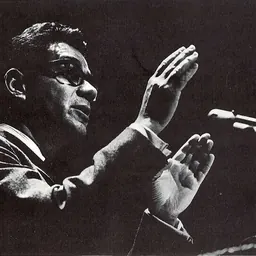
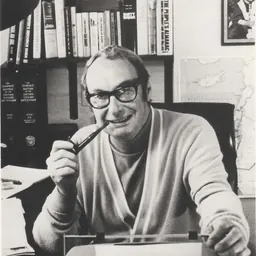
People in Victor Marchetti's life
Named in this biography and alive at the same time




Related people
Same field, nearest in time





Contemporaries
People whose lives overlapped Victor Marchetti's


Frequently asked questions
Who was Victor Marchetti?
American intelligence agent and author (1929-2018)
When was Victor Marchetti born?
Victor Marchetti was born on 23 December 1929 in Hazleton.
When did Victor Marchetti die?
Victor Marchetti died on 19 October 2018 in Ashburn.
What was Victor Marchetti's occupation?
Victor Marchetti was a spy and non-fiction writer.
What nationality was Victor Marchetti?
Victor Marchetti was American.
Sources & further reading
Cite this page
APA: Biography.guide. (2026). Victor Marchetti. https://biography.guide/victor-marchetti-spy/
MLA: "Victor Marchetti." Biography.guide, https://biography.guide/victor-marchetti-spy/.
Chicago: "Victor Marchetti." Biography.guide. https://biography.guide/victor-marchetti-spy/.
Data last updated: 2026-09-20 · Spot an error? Report a correction.
Page generated 2026-09-27 05:08 UTC