
About Victor L. King
Lived 1886 – 1958 (aged 71–72). Victor L. King was a chemist.
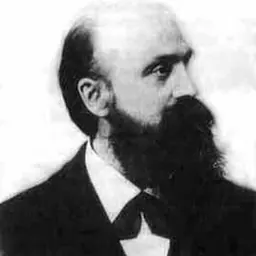
Victor Louis King (March 14, 1886 – October 12, 1958) was an American chemist. He studied under Alfred Werner and his experiments assisted Werner in attaining the 1913 Nobel Prize in Chemistry. His work in chemical and dye production led King to become chairman of the dye section of the War Industries Board during World War I.
Early life Victor Louis King was born on March 14, 1886, in Nashville, Tennessee, to Christina Hartman King. He studied at Dartmouth College from 1903 to 1906 and for a short time in 1906 at the Columbia School of Mines. In late 1906 and in 1907, King was a smelter superintendent at Elizabeth Copper Company (later the Vermont Copper Company). In 1908, he was a consulting chemist at Peter D. Austien in New York. He developed silicon carbide filaments at Columbia University under Professor Parker. He made filaments in a plant in Newark. His 1912 dissertation at the University of Zurich was titled "On cleavage methods and their application to complex metal-ammonia compounds". He graduated with his PhD in 1912 and then he conducted research with Richard Willstätter at Swiss Polytechnic Institute in Zurich. He also received a PhD from that institution. He hired only black workers from the South, stating that he wished to "prevent the entrance into the organization of any enemy aliens" who he felt might sabotage the works.
In September 1918, King succeeded Jacob F. Schoellkopf Jr. as chairman of the dye section of the War Industries Board in Washington, D.C. He remained in the role until January 1, 1919. He was executive of American Cyanamid until his retirement in 1957. He then served as vice president of Rhodia Inc., a chemical firm in New Brunswick. He was a consulting engineer with Lederle Laboratories.
Personal life King married Eugenia "Eugenie" Katherine Ruegger, daughter of Charles R. Ruegger, of Wood-Ridge on September 7, 1907. Following their marriage, they lived in Strafford, Vermont. They had four sons, Victor R., Jamie H., Gene G., and Thomas A. Willstätter, Richard; King, Victor L. (1913) Hydrogenation of Aromatic Compounds by Means of Platinum and Hydrogen. Journal of the Chemical Society.
Patents Dean, Russell Tattershall; King, Victor L. (1946) Nicotinic Acid Prepared from Nicotine Nitrate. U.S. Patent Number 2,409,345. King, Victor L. (1949) Rocket Propulsion by Reacting Alkyl-Substituted Mononuclear Aromatic Amines and Nitric Acid. U.S. Patent Number 2,474,183.
Don’t just read it —
keep it.
Full-length biographies made to live with: read them, listen on the way to work, watch them tonight.
- E-book
- Audio
- Video
Instant download · yours to keep · every purchase keeps this site free
Important facts
People in Victor L. King's life
Named in this biography and alive at the same time



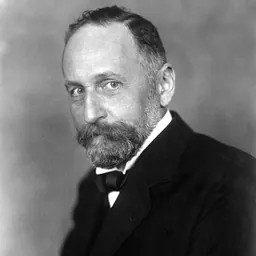
Related people
Same field, nearest in time



Contemporaries
People whose lives overlapped Victor L. King's




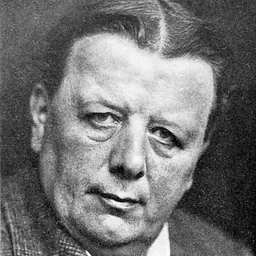
Frequently asked questions
Who was Victor L. King?
American chemist (1886–1958)
When was Victor L. King born?
Victor L. King was born in 1886.
When did Victor L. King die?
Victor L. King died in 1958.
What was Victor L. King's occupation?
Victor L. King was a chemist.
Sources & further reading
Cite this page
APA: Biography.guide. (2026). Victor L. King. https://biography.guide/victor-l-king/
MLA: "Victor L. King." Biography.guide, https://biography.guide/victor-l-king/.
Chicago: "Victor L. King." Biography.guide. https://biography.guide/victor-l-king/.
Data last updated: 2026-09-20 · Spot an error? Report a correction.
Page generated 2026-09-27 05:21 UTC