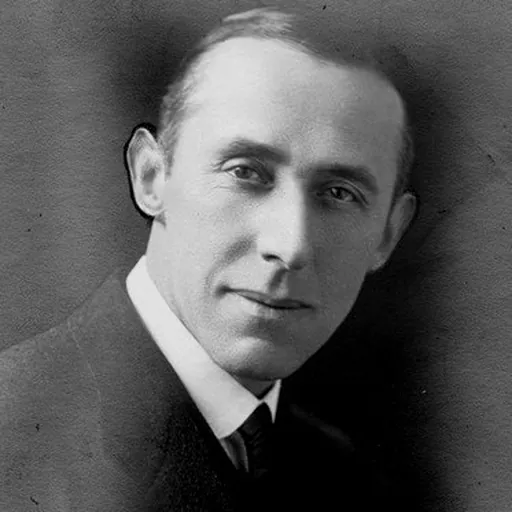
About Victor Bonney
Lived 1872 – 1953 (aged 81). Victor Bonney was a British gynecologist, surgeon and physician.
William Francis Victor Bonney FRCP FRCS (17 December 1872 – 4 July 1953) was a prominent British gynaecological surgeon. He received his basic education at a private school.
Bonney was trained at St Bartholomew's Hospital but transferred to the Middlesex Hospital, with his intention to become a physician. Sir John Bland-Sutton then invited him to the Chelsea Hospital for Women, where he became a gynaecologist. He was awarded with MBBS in 1896, and MD two years later. In 1899, he was awarded with the Master of Surgery and subsequently became a fellow of the Royal College of Surgeons in 1899.
Lower-segment caesarian section His early work was on the causes of puerperal fever and techniques in caesarean section, being one of the first to advocate the delivery of babies through the lower segment of the caesarean section. This brought down the mortality and infection rates of caesarean deliveries. he referred to it as a "smash and grab raid".
Gynaecological cancers He was a pioneer figure in the domain of cervical cancer and commanded immense fame in the radical procedure of Wertheim hysterectomy, performing 500 of these in the course of his career. Complications of Wertheim's hysterectomy included bowel, bladder and ureteric damage. The procedure later declined particularly after the advent of radiotherapy for use in cervical cancer in the late 1930s. and who also commended Bonney for his work.
In 1949, Bonney reported a 40% cure rate from his Wertheim's hysterectomies. the "Bonney myomectomy clamp", to temporarily halt the blood supply of the uterus during the operation. It allowed the shelling out of the uterine fibroids while still preserving the fertility of women of reproductive age, thus giving them a chance to have children later on. He went on to perform over 700 myomectomies across his career-span. With a death-rate of around 1.1% and around 38% of the patients being able to bear children, they were highly successful. In 1934, he made it clear that he "strenuously advocated myomectomy in preference to hysterectomy in all those cases in which the removal of the uterus is liable to be followed by undesirable psychological effects."
Post-operative bowel obstruction As a consequence of his wife's experience with gynaecological procedures, Bonney took interest in a number of surgical scenarios including the functioning of bowel after major surgery.
Bonney's blue He established a skin-procedure to provide a sterile area for gynaecological procedures.
It has since been known as "Bonney's blue" and its use in staining and dyeing has continued and has been shown to be an effective antiseptic solution for generic purposes. He later described how the staining of the vagina with his solution "is a great advantage when – as, for instance, in total hysterectomy – that canal has to be opened from above, for the deep coloration defines it very clearly."
Other surgical instruments Bonney modified the Reverdin needle. Other instruments attributed to Bonney include Bonney's round ligament forceps and the Bonney's vaginal clamp.
Surgical writing Bonney's most significant books were the Textbook of Gynaecological Surgery (1911) with Comyns Berkeley and The Technical Minutiae of extended Myomectomy and Ovarian Cystectomy (1946).
Other appointments Group Portrait, Council of the Royal College of Surgeons (1927). Includes Victor Bonney. He was elected as the vice-president of the Royal College of Surgeons and vociferously objected to the formation of the Royal College of Obstetricians and Gynaecologists (RCOG), with the opinion that obstetricians and gynaecologists were surgeons too.
He was also the first honorary fellow of the Royal Australasian College of Surgeons and an honorary fellow of the Association of Surgeons, the American Gynaecological Society, and did eventually become an honorary fellow of the RCOG.
Bonney met his future wife Annie, while he was a resident and she was a sister at the Chelsea Hospital for Women in London. They married in May 1905. Two years later, Annie suffered from very heavy periods which in turn resulted in severe anaemia and was corrected by a hysterectomy, thus preventing her having children. This setback led to Bonney's lifelong advocacy for the more conservative surgery of myomectomy over the more radical hysterectomy, arguing that "Since cure without deformity or loss of function must ever be surgery's highest ideal, the general proposition that myomectomy is a greater surgical achievement than hysterectomy is incontestable." It is believed that she had submucous fibroids. In 1956 his wife gave the Royal College of Surgeons the portrait of Bonney painted by Oswald Birley. The college also holds three bound volumes of his published papers and his autobiography, which he donated to them.
Articles
"The Standardised Reverdin Needle Holder", The Journal of Obstetrics and Gynaecology of the British Empire, 1931, Volume 38, Issue 3.
Books A Textbook of Gynaecological Surgery. Cassell, London, 1911. (With Comyns Berkeley) The Difficulties and Emergencies of Obstetric Practice. Churchill, London, 1913. (With Comyns Berkeley) A Guide to Gynaecology in General Practice. Churchill, London, 1914. (With Comyns Berkeley) The Annals of the Middlesex Hospital at Clacton-on-Sea, 1914–1919. London, 1921. (With Comyns Berkeley) Cancer of the Uterus. Postgraduate Lectures. Bale, Son and Danielson, 1925. The Technique of Myomectomy. 1936. The Abnormal in Obstetrics. Edward Arnold, London, 1938. (With Comyns Berkeley and Douglas Macleod) The Technical Minutiae of Extended Myomectomy and Ovarian Cystectomy. Cassell, London, 1946.
Don’t just read it —
keep it.
Full-length biographies made to live with: read them, listen on the way to work, watch them tonight.
- E-book
- Audio
- Video
Instant download · yours to keep · every purchase keeps this site free
Important facts
People in Victor Bonney's life
Named in this biography and alive at the same time




Related people
Same field, nearest in time



Contemporaries
People whose lives overlapped Victor Bonney's
Frequently asked questions
Who was Victor Bonney?
British gynaecologist
When was Victor Bonney born?
Victor Bonney was born on 17 January 1872 in Chelsea.
When did Victor Bonney die?
Victor Bonney died on 17 January 1953 in Middlesex Hospital.
What was Victor Bonney's occupation?
Victor Bonney was a gynecologist, surgeon and physician.
What nationality was Victor Bonney?
Victor Bonney was British.
Sources & further reading
Cite this page
APA: Biography.guide. (2026). Victor Bonney. https://biography.guide/victor-bonney/
MLA: "Victor Bonney." Biography.guide, https://biography.guide/victor-bonney/.
Chicago: "Victor Bonney." Biography.guide. https://biography.guide/victor-bonney/.
Data last updated: 2026-09-21 · Spot an error? Report a correction.
Portrait: Wikimedia Commons · author & licence
Page generated 2026-09-27 05:00 UTC