
About Vicente Aranda
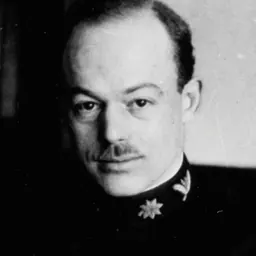
Lived 1926 – 2015 (aged 88). Vicente Aranda was a Spanish film director, screenwriter, film producer and director.
Vicente Aranda Ezquerra (; 9 November 1926 – 26 May 2015) was a Spanish film director, screenwriter and producer.
Due to his refined and personal style, he was one of the most renowned Spanish filmmakers. He started as a founding member of the Barcelona School of Film and became known for bringing contemporary Spanish novels to life on the big screen. Aranda was also noted for exploring difficult social issues and variations on the theme of desire while using the codes of melodrama.
Love as uncontrollable passion, eroticism and cruelty are constant themes in his filmography. The frank examination of sexuality is one of the trademarks of his work, as seen in his most internationally successful film: Amantes (1990) (Lovers).
Early life Vicente Aranda Ezquerra was born in Barcelona on 9 November 1926. He was the youngest son in a large and impoverished family who had emigrated from Aragón to Barcelona twenty years before he was born. He barely knew his father, an itinerant photographer, who died when the child was only seven years old. The Spanish Civil War, in which his family took the side of the losing Republicans, marked his childhood.
After the war ended, Aranda spent a lot of time in the local movie theatre, much against the wishes of his mother, who took to smelling him on his return for traces of the disinfectant that was sprayed in cinemas of the time. He never finished his formal studies. At age thirteen, he began to work in order to help support his family. After seven years, he returned to Spain in 1959.
Wealthy and married upon his return, he intended to become a novelist, but found that he lacked enough talent as a writer. He fell in with the cultural elite of Catalonia and was encouraged to try his hand at filmmaking. He was not allowed to enroll at the School of Cinema in Madrid because he had not graduated from high school.
Vicente Aranda married twice. His first wife, Luisa, a name he used repeatedly for the female leads in his films, committed suicide years after they divorced. They did not have children. Aranda's second wife, Teresa Font, was thirty years his junior. She was the editor of his movies since the mid-1980s; they had two daughters together, but separated a few years before Aranda's death.
Film career and later life
Early films (1964–1974) Aranda made his directorial debut with the low-budget Brillante Porvenir (1964) (Promising Future), co-directing with screenwriter Román Gubern to avoid problems with the directors guild of Spain. Ignored upon release, Fata Morgana would eventually be recognized for inspiring the particular kitsch aesthetic of La Escuela de Barcelona (the Barcelona School of Film), It would take Aranda many years to recover ownership of this film. The experience made him found his own production company: Morgana Film, which produced his next six features.
In La Novia Ensangrentada (1972) (The Blood Spattered Bride), a loose adaptation of Carmilla, a lesbian vampire recruits a young bride to help her seek revenge against all men. A genre film for the cultural elite, it evaded censors by virtue of its incomprehensibility. By Aranda's own admission, he sacrificed conventional coherence for the cinematographic and phenomenological possibilities of each action. Cambio de Sexo also marks the beginning of his long collaboration with Victoria Abril, who became his favorite actress. The intrigue runs a poor second to Aranda's commentary on the Spanish transition to democracy.
Much of the film's action is filtered through headlines and television reports in imitation of the way in which the Spanish public lived the transition. Fanny Pelopaja failed to find an audience when first released, but now has become one of Aranda's best regarded works.
Aranda's chapter, El Crimen del Capitán Sánchez (1984) (Captain Sánchez's Crime), was considered the best episode of the series. Made in 16 mm and with a very low budget, El Lute: camina o revienta (1987) (El Lute, Run for Your Life) concerns the early life of Sanchez, known as El Lute, who claimed to have been forced into delinquency in the 1960s by poverty and lack of education. After an early nomadic period of his life, El Lute moves to Madrid's slums outskirts. He became involved in a robbery and murder; was convicted and, at age 23, lucky to gain a commutation of his death sentence to 30 years in prison. His escapes from jail turned him into a popular folk hero and public enemy number one for the Franco police.
Aranda's hybrid combination of period drama, thriller and social realism reveals how the criminal career and media profile of this petty thief were manipulated and exploited by the authorities as a diversionary tactic at a time of political unrest. Featuring violence and eroticism, the film delivered a resounding critique of the Franco regime and its brutal treatment of the Spanish merchero and gitano populations. With a labyrinthine structure in which imaginary facts and real events are blended in a crosswords style, the main part of the story is set in the old quarter of 1940s Barcelona during the early years of Francoist repression. The plot features a young man who, trying to survive in the aftermath of the Civil War, is hired to perform sexual acts with a prostitute; they are to be viewed by a rich falangist rendered crippled during the war. With a large cast, including Victoria Abril playing three different characters, the film was daring and ambitious in its scope.
Los Jinetes del Alba (1990) At the request of Pilar Miró, then director of TVE, Aranda took on Los Jinetes del Alba (1990) (Riders of the Dawn) an adaptation of the novel by Jesús Fernández Santos about the Spanish Civil War and the anarchist movement.
Made as a five-part TV miniseries, it features a young woman ambitious to own the resort where she works in a small town in Asturias. When she finally achieves her goal, there is little to rejoice about. Aranda's favorite topics: cruelty, violence and sex pervade this story framed by the tumultuous life of Spain in the 1930s, the uprising in Asturias in 1934, and the Spanish Civil War.
Amantes (1991) In the 1990s, Aranda continued to make films that were commercial hits at home and were shown at film festivals worldwide. With Amantes (1991) (Lovers), he finally achieved wide international exposure and critical acclaim. This tragic story of forbidden passions and betrayed innocence is a film noir, inspired by real events. In the repressive Spain during the early 1950s, a young man just out of military service is torn between his attraction for the two opposite women who love him: his girlfriend, a naïve maid and his landlady, an attractive, scheming widow.
Originally conceived as a television project, Amantes was made with few actors, a small crew, and with few exterior locations. It is widely considered as the director's most accomplished work, becoming a classic of Spanish Cinema. It marked the beginning of Aranda's most prolific period.
El Amante Bilingüe (1993) Still exploring the passion of love, Aranda directed El Amante Bilingüe (1993) (The Bilingual Lover), an adaptation of a story by Juan Marsé. Set in Barcelona, this ironic film mixes Catalan linguistic policies, nationalism and eroticism with a pattern of double identity. The central character is a humble man who falls in love with a beautiful rich woman; they marry but his unfaithful wife abandons him later. After being horribly disfigured in an explosion, he gradually adopts a new personal identity in an effort to lure back his spoiled ex-wife.
Intruso (1993) Some of Vicente Aranda films present real events, things that happen on the street but that have had the appearance of the exceptional occurrences, where passion, toughness, and violence manage to acquire a tone of unreality that is almost literary. In Intruso (1993) (Intruder), Aranda takes the theme of the relationship between love and death through a passionate love to its ultimate conclusion. This film is a psychological thriller with his characteristic visual atmosphere and exacerbated passions. A middle-class woman is torn between her love for her spouse and her ill ex-husband, both of whom were her childhood friends. After ten years of separation, they become entangled in a tragic story.
La Pasión Turca (1994) Aranda's films feature a woman as the protagonist and the center around which the story turns. La Pasión Turca (1994) (Turkish Passion), an adaptation of a novel by Antonio Gala, explores female sexual desire. A bored housewife from a well-to-do family, decides to risk everything by leaving her husband to return to a lover met while on holiday in Turkey. Her pursuit of sexual pleasure leads her to an obsessive dependence, degradation, and total collapse of her self esteem. La Pasión Turca became one of Spain's highest-grossing films of the 1990s.
Libertarias (1996) Aranda returned to the Spanish Civil War in Libertarias (1996) (Libertarians), an epic drama with an ensemble cast that reconstructs the role played by anarchist women during the Spanish Civil War. It is set in Barcelona at the start of the war, where a young naive nun flees her convent and seeks refuge in a brothel. There she and the prostitutes are recruited to the anarchist cause. Together, a group of six women (Mujeres Libres or Free Women) face the perils of war but their idealistic dreams are brutally crushed.
La Mirada del Otro (1998) La Mirada del Otro (1998) (The Naked Eye), based on a novel by Fernando G. Delgado, is an erotic psychodrama. Aranda features a woman in her 30s embarks on a quest for sexual pleasure which only brings her loneliness. In this case, the public and critics felt that the plot was sordid to the extent that it overwhelmed the credibility of the characters; it did not do well.
Celos (1999) Aranda returned to familiar territory with Celos (1999) (Jealousy), his third work in a trilogy exploring the love triangle, together with his earlier Amantes and Intruso. He created a story about destructive passions that lead to tragedy. A truck driver is tormented by jealousy about the man who was the former boyfriend of his beautiful fiancée. The driver tris to find the man and learn more about their previous relationship.
"Jealousy is at the center of stories of passion", Aranda explained. "To suffer with relish, there is nothing better than uncertainty. A good story demands that audiences share the same doubts than the main characters in the story: whether there is or is not a betrayal. There is always some else lurking and we also know that crime is among us even if it exists albeit only at the bottom of our hearts".
Juana la Loca (2001) In the early 21st century, Aranda started to explore period pieces, initiating a trilogy of historic costume dramas with Juana La Loca (2001) (Mad Love), a reinterpretation of the tragic fate of the 15th-century Spanish queen, Joanna of Castile. At a time when royal marriages were made to secure political alliances, she fell madly in love with her husband and suffered from his infidelity. A commercial and critical hit in Spain, the film was the nation's official entry at the 2001 Academy Awards for Best Foreign Language Film. It became Aranda's biggest box-office movie.
Carmen (2003) Desire and betrayal, themes that have been recurrent in Aranda's career,
Tirant lo Blanc (2006) Aranda completed his costume drama trilogy with Tirant lo Blanc (2006) (The Maidens' Conspiracy), an adaptation of a seminal Catalan chivalry novel, written in the 15th century by Joanot Martorell. The plot follows the adventures of Tirante, a knight from humble origins in the Byzantine Empire, who gains the favor of the ailing Emperor by his triumphs in fighting the incursion into Constantinople by the Turks. Tirante later seduces the royal family's only surviving child, a young, fanciful, and impressionable princess.
This is Aranda's most expensive work and was made with a large budget. The film has both humor and drama, is lavish, risqué, and skillfully composed, but it was considered to be superficial and unsatisfying. Tirant lo Blanc did not enjoy the success of the director's two previous films.
Canciones de Amor en Lolita's club (2007) Aranda has created a niche in adapting novels by Juan Marsé for film.
Luna Caliente (2009) Aranda's last film, Luna Caliente (2009) (Hot Moon), tells the story of a poet who briefly returns to his home town, gets entangled in a web of sex and violence. He rapes the young daughter of his host. The script is based on a novel by Argentine Mempo Giardinelli, which places the action during the last military coup in Argentina.
Aranda set the story in Spain of the 1970s during the process of Burgos, under which some of the last death sentences in Spain during Franco's regime were executed. Luna Caliente premiered in October 2009 at the Valladolid International Film Festival, but it failed to find an audience.
Filmography YearEnglish titleOriginal titleNotesAudience 1964 Promising Future Brillante Porvenir Co-director with critic and historian Román Gubern 130,012 1965 Fata Morgana Fata Morgana Original script written with Gonzalo Suárez 40,053 1969 The Exquisite Cadaver Las Crueles Based on a short story written by Gonzalo Suárez 338,695 1972 The Blood Spattered Bride La Novia Ensangrentada 531,108 1974 Clara is the Price Clara es el precio Original script written with Jesús Ferrero 1,013,439 1976 Sex Change Cambio de Sexo 840,261 1980 The Girl with the Golden Panties La Muchacha de las Bragas de Oro An adaptation of the novel by Juan Marsé 795,848 1982 Murder in the Central Committee Asesinato en el Comité Central Based on the novel by Manuel Vázquez Montalbán 170,618 1984 Fanny Pelopaja Fanny Pelopaja / Á coups de crosse (France) Based on the novel Protesis by Andreu Martín 182,664 1984 Captain Sánchez's Crime El Crimen del Capitán Sánchez Made for TV in 16 mm 1986 Time of Silence Tiempo de Silencio Based on the novel by Luis Martín Santos 433,149 1987 El Lute: Run for Your Life El Lute: camina o revienta Based on the biography of Eleuterio Sánchez 1,422,188 1988 El Lute: Tomorrow I'll be Free El Lute II: mañana seré libre Based on the biography of Eleuterio Sanchez 382,764 1989 If They Tell You I Fell Si te Dicen que Caí An adaptation of a novel by Juan Marsé 338,369 1990 Riders of the Dawn Los Jinetes del alba Based on the novel by Jesús Fernández Santos. Made as a five-episode television miniseries, it premiered at the 1990 Cannes Film Festival as a two-part feature film. 1991 Lovers Amantes Winner of two Goya Awards: Best Picture and Best DirectorScreened at the 41st Berlin International Film Festival 697,368 1993 The Bilingual Lover El Amante Bilingüe Based on a novel by Juan Marsé 273,218 1993 Intruder Intruso 249,087 1994 The Turkish Passion La Pasión Turca Based on a novel by Antonio GalaEntered into the 19th Moscow International Film Festival. 1,240,044 1996 Libertarias Libertarias 594,978 1998 The Naked Eye La Mirada del Otro An adaptation of the novel by Fernando G. DelgadoScreened at the 48th Berlin International Film Festival 107.489 1999 Jealousy Celos 338,073 2001 Mad Love Juana la Loca Based on a play 2,067,004 2003 Carmen Carmen Based on Prosper Mérimée's famous novella 1,362,874 2006The Maidens' Conspiracy Tirante el Blanco Based on the novel by Joanot Martorell 296,585 2007 Lolita's Club Canciones de amor en Lolita's Club Based on a novel by Juan Marsé 59,308 2009 Hot Moon Luna Caliente Based on a novel by Mempo Giardinelli 59,388
Don’t just read it —
keep it.
Full-length biographies made to live with: read them, listen on the way to work, watch them tonight.
- E-book
- Audio
- Video
Instant download · yours to keep · every purchase keeps this site free
Important facts
People in Vicente Aranda's life
Named in this biography and alive at the same time


Related people
Same field, nearest in time


Contemporaries
People whose lives overlapped Vicente Aranda's

Frequently asked questions
Who was Vicente Aranda?
Spanish film director (1926–2015)
When was Vicente Aranda born?
Vicente Aranda was born on 9 November 1926 in Barcelona.
When did Vicente Aranda die?
Vicente Aranda died on 26 May 2015 in Madrid.
What was Vicente Aranda's occupation?
Vicente Aranda was a film director, screenwriter, film producer and director.
What nationality was Vicente Aranda?
Vicente Aranda was Spanish.
Sources & further reading
Cite this page
APA: Biography.guide. (2026). Vicente Aranda. https://biography.guide/vicente-aranda/
MLA: "Vicente Aranda." Biography.guide, https://biography.guide/vicente-aranda/.
Chicago: "Vicente Aranda." Biography.guide. https://biography.guide/vicente-aranda/.
Data last updated: 2026-09-22 · Spot an error? Report a correction.
Page generated 2026-09-27 05:20 UTC