
About Veronica Wedgwood
Lived 1910 – 1997 (aged 86). Veronica Wedgwood was a British historian of Modern Age, historian and translator.
Dame Cicely Veronica Wedgwood, (20 July 1910 – 9 March 1997) was an English historian who published under the name C. V. Wedgwood. Specializing in the history of 17th-century England and continental Europe, her biographies and narrative histories are said to have provided a clear, entertaining middle ground between popular and scholarly works.
Early life Wedgwood was born in Stocksfield, Northumberland, on 20 July 1910. She was the only daughter of Sir Ralph Wedgwood, Bt, a railway executive, and his wife Iris Wedgwood (née Pawson), a novelist and travel writer. Her brother was the politician and industrialist Sir John Wedgwood. Veronica Wedgwood was a great-great-great-granddaughter of the potter and abolitionist Josiah Wedgwood. Her uncle was the politician Josiah Wedgwood, later 1st Baron Wedgwood.
She was educated at home, and then at Norland Place School. She earned a First in Classics and Modern History at Lady Margaret Hall, Oxford, where A. L. Rowse said she was "my first outstanding pupil". In 1932, she enrolled for a PhD at the London School of Economics under the supervision of R. H. Tawney, but never completed it.
Career Wedgwood published her first biography, Strafford, at the age of 25 and The Thirty Years War, "her big book ... covering a large canvas", according to Rowse, just three years later,
She specialised in European history of the 16th and 17th centuries. Her work in continental European history included the major study The Thirty Years War (1938) and biographies of William the Silent and Cardinal Richelieu. She devoted the greater part of her research to English history, especially in the English Civil War. Her major works included a biography of Oliver Cromwell and two volumes of a planned trilogy, The Great Rebellion, which included The King's Peace (1955) and The King's War (1958). She continued the story with The Trial of Charles I (1964). She was known to walk battlefields and experience the same weather and field conditions as the subjects of her histories, mindful that Cromwell had no military experience and most participants in the English Civil War were "talented amateurs" when it came to military manoeuvres.
Thirty years after she published a biography of Thomas Wentworth, Earl of Strafford, she published a much-revised version that was considerably more critical of her subject. In the earlier version she called him a "sincere, brave and able man". After using a collection of his family's papers that had not previously been available, she deemed him greedy and unscrupulous. (The other women invited along with Wedgwood were Elizabeth Bowen and Rose Macaulay, though Macaulay's was "too mischievous to use", according to Bowen's biographer.) and she was a Special Lecturer at University College London from 1962 to 1991. She wrote as well about the historian's responsibility to do more than analyse or describe. Rather than pose as a disinterested observer, she wrote: "Historians should always draw morals."
She acknowledged that contemporary concerns affected her historical assessments. In the 1957 introduction to a new release of The Thirty Years War, which first appeared in 1938, she wrote: "I wrote this book in the thirties, against the background of depression at home and mounting tension abroad. The preoccupations of that unhappy time cast their shadows over its pages." She replied to critics of her attention to biography and the role of the individual in history:
By 1966 her reputation and notoriety were sufficient to allow the authors of a study of The Nature of Narrative to invoke her name in reference to the tradition of historical scholarship: "... medieval traditional poetic narratives contained allusions to verifiable historical events [although] their history was not such as Tacitus, Bede, or C. V. Wedgwood might have written."
In 1946 she translated Elias Canetti's Die Blendung, as Auto-da-Fé, under the author's supervision, though a modern scholar who considers Wedgwood's work on it "ordinarily quite excellent" doubts Canetti reviewed it in detail. He suspects she hesitated to present discussions of misogyny and antisemitism quite openly.
Her book The Last of the Radicals (1951), was about her uncle Josiah Wedgwood, 1st Baron Wedgwood. She completed just one volume of her planned Short History of the World (1985) before illness prevented her from continuing the project. Garrett Mattingly praised the essays in Truth and Opinion (1960) for "displaying (or concealing, rather, but always molded and controlled by) that exquisite sense of form, in a medium apparently almost formless, which is the first-rate essayist's most precious gift."
Personal life She was active in numerous societies, including the London arm of the International Pen Club in London, where she was president from 1951 to 1957, as well as the Society of Authors (president, 1972–1977) and the London Library. She was appointed as the non-legal member on the Judicial Committee advising Home Secretary on deprivation of citizenship in 1948. She served on the Arts Council from 1958 to 1961 and the Advisory Council of the Victoria and Albert Museum from 1960 to 1969, and was twice a trustee of the National Gallery (1962–1968 and 1969–1976), and its first female trustee. She was a member of the Royal Commission on Historical Manuscripts from 1953 to 1978 and president of the English Association for 1955–56. She was elected a Fellow of the British Academy in 1975.
In 1947 she attended the first meeting of the Mont Pelerin Society. In 1966 she was one of 49 writers who signed a letter appealing to the Soviet Union for the release of Andrei Sinyavsky and Yuli Daniel from imprisonment based on the "literary and artistic merits" of their work and rejecting the characterisation of it as "propaganda". In her later years she was an admirer of Margaret Thatcher.
Wedgwood was a lesbian: her partner of almost seventy years, Jacqueline Hope-Wallace (died 2011), was a fellow graduate of Lady Margaret Hall and had a significant career in the British civil service. Wedgwood and Hope-Wallace together owned a country house near Polegate in Sussex. In 1997, Hope-Wallace donated a 1944 oil portrait of Wedgwood by Sir Lawrence Gowing to the National Portrait Gallery, London.
In her last years, Wedgwood suffered from Alzheimer's disease. She died on 9 March 1997 at St Thomas' Hospital in London. The Netherlands awarded her the Order of Orange-Nassau. She was elected an honorary fellow of her Oxford college, Lady Margaret Hall. and the American Philosophical Society.
She was appointed a CBE in 1956, an DBE in 1968, and in 1969, not yet sixty, became the third woman to be appointed a member of the Order of Merit. She termed the last of these honours "excessive".
Writings Strafford, 1593–1641 (1935; revised edition: Thomas Wentworth, First Earl of Strafford, 1593–1641: A Revaluation (1961)) The Thirty Years War (1938; new edition 1957; with updated bibliography, 1961) Oliver Cromwell (1939; revised 1973) William the Silent: William of Nassau, Prince of Orange, 1533–1584. New Haven, Connecticut: Yale University Press, 1944 Velvet Studies (1946), a collection of essays Richelieu and the French Monarchy (1949), "Teach Yourself History" series Seventeenth-Century English Literature (1950; 2nd edition 1970) The Last of the Radicals: Josiah Wedgwood, M.P. (1951) The Great Rebellion (two of three volumes completed) The King's Peace, 1637–1641 (1955) The King's War, 1641–1647 (1958) The Trial of Charles I (1964; also published as A Coffin for King Charles and later as A King Condemned: The Trial and Execution of Charles I (London, Taurus Parke Paperbacks: 2011)) Poetry and Politics Under the Stuarts (1960), originally Cambridge lectures Truth and Opinion (1960), a collection of essays "Introduction" to Rose Macaulay, They Were Defeated (London: Collins, 1960); reprint of 1932 edition of the historical novel Montrose (1966) The Sense of the Past: Thirteen Studies in the Theory and Practice of History (Collier Books, 1967) The World of Rubens (Time-Life Books, 1973) The Spoils of Time: A Short History of the World, Vol. 1: A World History From the Dawn of Civilization Through the Early Renaissance (1985) History and Hope: The Collected Essays of C.V. Wedgwood (1987); "Most of these essays were originally published in two collections—Velvet studies in 1946 and Truth and opinion in 1960—although the present volume contains a few later pieces"
Translations Carl Brandi, The Emperor Charles V: The Growth and Destiny of a Man and of a World-Empire (In German Brandi, Karl. 1937. Kaiser Karl V: Werden und Schicksal einer Persönlichkeit und eines Weltreiches. München: Bruckmann) Canetti, Elias, Auto-da-Fé (British ed., 1946); The Tower of Babel (American ed., 1947); original in German: Die Blendung
Don’t just read it —
keep it.
Full-length biographies made to live with: read them, listen on the way to work, watch them tonight.
- E-book
- Audio
- Video
Instant download · yours to keep · every purchase keeps this site free
Important facts
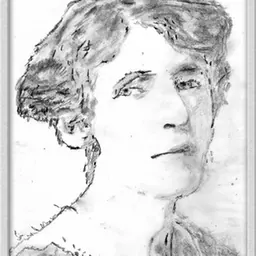
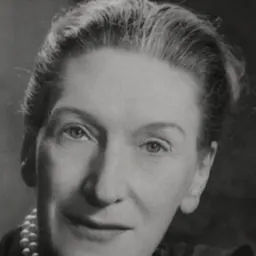
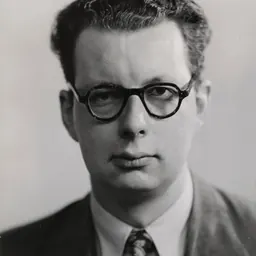
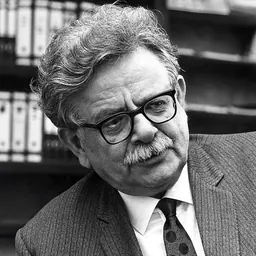
People in Veronica Wedgwood's life
Named in this biography and alive at the same time



Related people
Same field, nearest in time



Contemporaries
People whose lives overlapped Veronica Wedgwood's






Frequently asked questions
Who was Veronica Wedgwood?
English historian (1910–1997)
When was Veronica Wedgwood born?
Veronica Wedgwood was born on 20 July 1910 in Northumberland.
When did Veronica Wedgwood die?
Veronica Wedgwood died on 9 March 1997 in Greater London, London.
What was Veronica Wedgwood's occupation?
Veronica Wedgwood was a historian of Modern Age, historian and translator.
What nationality was Veronica Wedgwood?
Veronica Wedgwood was British.
Sources & further reading
· Wikipedia: Veronica Wedgwood
Cite this page
APA: Biography.guide. (2026). Veronica Wedgwood. https://biography.guide/veronica-wedgwood/
MLA: "Veronica Wedgwood." Biography.guide, https://biography.guide/veronica-wedgwood/.
Chicago: "Veronica Wedgwood." Biography.guide. https://biography.guide/veronica-wedgwood/.
Data last updated: 2026-09-20 · Spot an error? Report a correction.
Page generated 2026-09-27 05:12 UTC