
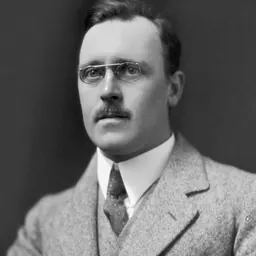
About Vernon L. Grose
Lived 1928 – 2025 (aged 96). Vernon L. Grose was an American engineer and military flight engineer, known for California State Board of Education, NASA and National Transportation Safety Board.
Vernon Leslie Grose (born June 27, 1928) was an American author, academic, aerospace engineer, air disaster analyst, risk management expert, and former member of the National Transportation Safety Board (NTSB). In 1969, he was appointed to NASA's Safety Advisory Group for Space Flight. In 1974, he was honored with NASA's Silver Snoopy Award, presented by Brigadier General Thomas P. Stafford, veteran astronaut of the Gemini 6A, Gemini 9A, and Apollo 10 space programs.
In 1983, he was appointed by President Ronald Reagan to the National Transportation Safety Board, where he pioneered the concept of multiple causation of accidents. Following his appointment to the NTSB, he was appointed to serve as a member of the National Highway Safety Advisory Committee. In 1997, Vice President Al Gore requested his assistance and expertise on the White House Commission on Aviation Safety and Security. Following the September 11 attacks on the World Trade Center and the crash of United Airlines Flight 93 in Pennsylvania, Grose testified before the US Congress on behalf of the NTSB, presenting findings of the Board's formal investigation into the attacks.
Grose served as an executive and consultant with several organizations and corporations. , he served as the Chairman of Omega Systems Group in Arlington, Virginia. He provided keynote addresses and lectured in academic, government, and religious settings for over 50 years. He also served as a member of the faculty, adjunct professor, and guest lecturer at universities throughout the world, including Germany, Mexico, China, Spain, and the US. In 1969, he garnered national press when he addressed the California State Board of Education regarding science guidelines for teaching science and evolution in the public school system. He successfully proposed academic guidelines that supported teaching creation as a scientific theory, alongside the teaching of evolution. As a result of the Board of Education's decision to incorporate alternative scientific theories into their curriculum, other states throughout the US followed suit and revised their academic guidelines accordingly.
Personal background Vernon Leslie Grose was born on June 27, 1928, in Spokane, Washington. He was the son of Wesley and Pearl (née Quantz) Grose. His father was an automobile mechanic, while his mother was a telephone operator for the Pacific Northwest Bell Telephone Company. His siblings include sister, Lois, and brother, Gerald. Grose was raised in northwest Spokane, graduating from North Central High School in 1946. In 1997, Grose was honored as an inaugural recipient of the North Central High School Distinguished Alumnus Award. Fellow recipients included Spokane Mayor, Jack Geraghty; US Congressman, George Nethercutt; Jerry Sage, WWII prisoner of war portrayed by Steve McQueen in the movie, the Great Escape; and musician Don Eagle, who toured with the USO during WWII and appeared in A Connecticut Yankee in King Arthur's Court (with fellow-Spokanite Bing Crosby), Night Has a Thousand Eyes (with Edward G. Robinson), and The Strip (with Mickey Rooney).
Following high school, Grose enrolled at Whitworth University in north Spokane, earning a Bachelor of Science degree in Physics in 1950. He served as a member of Whitworth's Alumni Association Board of Directors from 1968 to 1970. Whitworth University honored him with the 2013 Distinguished Alumni Award. He earned the Master of Science degree in Systems Management in 1967, from the University of Southern California. In 1951, following his graduation, he began serving with the United States Air Force. In 1952, he was commissioned as an Electronics Officer, later serving in Technical Intelligence with the Air Force Reserve. He retired in 1972 with the rank of captain.
He married Phyllis Jean Heine in Spokane on April 14, 1951, at the First Assembly of God church. Together, they had six children, Rhonda Susan Chumley, Brenda Ruth Tutmarc, Lynnda Lorelle Owens, Wesley Paul Grose, Bradley Wayne Grose, and Nanette Jill Shotwell. In 1959, Grose moved to California, where they lived through 1983. They relocated to the Washington D.C. area in 1983, when he was sworn into public office with the National Transportation Safety Board. , Grose and his wife resided in Arlington, Virginia.
Grose joined the staff of Northrop Ventura in Rancho El Conejo, California, in 1962, serving as the Director of Applied Technology. He was responsible for the development of management curricula and system technology studies. While serving as Vice President of the school through 1981, Grose provided training for management of eight NASA field centers, including Kennedy Space Center, Marshall Space Flight Center, Ames Research Center, Dryden Flight Research Center at Edwards Air Force Base, Lewis Research Center, Langley Research Center, Goddard Space Flight Center, and the Lyndon B. Johnson Space Center in Houston, Texas.
He has served as a member of the faculty, adjunct professor, and guest lecturer at universities throughout the world, including Germany, China, Spain, and the US. He served as an adjunct professor with USC in Los Angeles from 1967–1969.
He taught for UCLA in its Mexican Institute of Development course in Mexico City in 1976.
As California governor, Ronald Reagan, appointed Grose to several state government committees, councils, and boards focusing on a range of issues from the implementation of technology to addressing and resolving socio-economic and judicial problems. Appointments were made to the Governor's Select Committee on Law Enforcement Problems, serving from 1972 to 1973; the California Council on Criminal Justice, serving from 1971 to 1973; and the Board of Directors of the California Crime Technological Research Foundation, serving from 1972 to 1975. In 1972, he was appointed to the California Curriculum Development Commission, which is responsible for approving textbooks and curriculum for public schools throughout the state. He served on the Commission through 1975.
Grose was appointed to the Panel on Human Error in Merchant Marine Safety in 1972, by the National Academy of Sciences.
He was honored with NASA's Silver Snoopy Award in 1974, in recognition of professional service related to spaceflight safety and mission success, specifically for providing "interesting and highly motivational insight into the management aspects of system safety as applied to space programs". in recognition of his professional background and comprehensive knowledge of air, land, and sea modes of travel and transportation. As a member of the NTSB, he oversaw the organization's investigation of major accidents. From 1984 to 1985, he served through the White House as an expert consultant assigned to NASA's chief engineer in Washington D.C. In 1985, he was assigned to serve as a consultant to the EPA Associate Administrator for Research and Development. In 1986, President Reagan appointed Grose to the National Highway Safety Advisory Commission, which serves under the direction of the National Highway Traffic Safety Administration.
Grose founded Omega Systems Group in 1995. He served as the chairman of the organization from 1981–83, and again from 1986 to the present. The organization offers consulting in risk management and loss prevention, along with providing expertise witness services. Omega Systems Group is known for developing management risk methodology for use by organizations in a variety of fields. Under the guidance of Grose, the organization designed and developed a risk management methodology, known as SMART (Systems Methodology Applied to Risk Termination). The technique is a corporate budget system for addressing and mitigating legal, political, social, economic, and technological loss. The system has been used by AT&T, Exxon, NASA, and the Washington Metropolitan Area Transit Authority. In 1984, SMART was successfully utilized to combat terrorism at the Summer Olympics in Los Angeles.
In 1997, Vice President Al Gore requested his assistance and expertise on the White House Commission on Aviation Safety and Security, which was established by President Bill Clinton following the TWA Flight 800 disaster over the Atlantic Ocean on July 17, 1996. Also known as the Gore Commission, the study was organized and designed to review and implement strategies to improve civil aviation safety, ensure aviation security, and modernize air traffic control policies, standards, and technologies. After gathering recommendations, which primarily focused on increasing security measures, the Commission finalized its report and forwarded it to President Clinton, eight months after the disaster. As a result of the study, Congress earmarked over $400 million to enhance commercial airlines with improved security measures and new explosives detection technology.
California Science Framework Another wave of controversy occurred during this period, and that was the teaching of evolution in the public schools, and other science concepts and ideas that touched on beliefs, religion, values and morals (e.g. teaching human sexuality, human reproduction, and birth control in biology classes, for example). But it was Darwin's evolutionary theory that resulted in court cases, and laws being passed to regulate the teaching of evolution (such as giving equal time to "creation science" if "evolution science" was presented in a science class.
A phenomenon that reached its pinnacle during this time was the general scrutiny of textbooks, especially in biology, Earth science, social studies, and literature. In the 1960s, when BSCS, whose textbooks emphasized Darwin's theory of evolution (in contrast to many high school biology texts as the time), submitted its books for state adoption in the lucrative market of Texas, serious trouble surfaced. The Reverend Ruel Lemmons led a protest (that reached the Texas Governor's office) to the get the BSCS textbooks banned claiming the books were pure evolution, completely materialistic and atheistic. The books were not banned, but there were changes made to lighten their evolutionary emphasis. Nelkin reports that BSCS had to specify that evolution theory was a theory, not a fact, and that it had been modified, not strengthened by recent research.
Further, a group of fundamentalists began to develop a world view of creation based on the story in Genesis in the Holy Bible. The creationists rejected the notion of a 5 billion year old Earth, instead claiming that biological life began approximately five to six thousand years ago. One of the forceful voices in the creation science movement was Henry Morris. In an article published in the American Biology Teacher, he set out the differences, from his point of view, between the creation model and the evolution model. Essentially the creationists "theorized" that all living things were brought about by the acts of a Creator. The evolutionary model proposed that all living things were brought about by naturalistic processes due to properties inherent in inanimate matter. The creationists, in their literature, set the creation model alongside the evolutionary model, and insisted that good science education would provide alternative views on the same topic, and let the students evaluate them to form their own position.
In 1969, the California State Advisory Committee on Science Education, appointed by the California State Board of Education, compiled and presented a set of recommendations and proposed curriculum guidelines for public school science courses. This report was entitled "The Science Framework for California Schools". The Science Framework on Science for California Schools sets forth the guidelines for the adoption of science textbooks (currently over $40 million are spent on science books in California during the science adoption year). Grose wrote and presented a document arguing that evolutionary theory was biased and should be taught only if alternative views were presented. He convinced the board of education to modify its position on the teaching of evolution. The Board modified the Science Framework on Science for California Schools so that the theory of creation would be included in textbooks. The board inserted the following statement into the framework:
The "evolutionists were incredulous that creationists could have any influence." A number of individuals and groups such as National Association of Biology Teachers (NABT), the National Academy of Science, and the Academic Senate of the University of California protested and lobbied against the state board's ruling. The solution to the creation - evolution issue resulted only after the state board had received numerous complaints about the earlier decision. In 1972 the California Board of Education decided to approve a statement prepared by its curriculum committee by proposing neutrality in science textbooks. Dogmatic statements in science books would be removed, and replaced with conditional statements. Textbooks dealing with evolution would have printed in them a statement indicating that science cannot answer all questions about origins, and that evolution is a theory, not a fact. Some textbooks, even in the 1990s, contain statements to this effect, usually printed on the inside cover. The effect of this policy change prevented textbook publishers from having to include in science books, a section on "creation science." The board's decision, which was called the Antidogmatism Statement, caused publishers to rethink the way they were presenting science information in textbooks.
Grose spoke before the California State Board of Education in 1969, addressing science guidelines for teaching science and evolution in the public school system, specifically in regards to teaching evolution as fact, while failing to consider or include other theories within the curriculum. In response to the encounter and resulting publicity, he established The Alpha Foundation, which serves families and the academic community by researching and publishing scientific materials in correlation with teaching creation as a scientific theory, alongside the teaching of evolution. As a result of the California State Board of Education's decision to incorporate alternative scientific theories within the student curriculum, other states throughout the US followed suit and revised their academic guidelines. In accordance with the Board's decision, the following content was added to the California Science Framework, affecting the teaching of science in K-12 classrooms in public schools throughout the US: All scientific evidence to date concerning the origin of life implies at least a dualism or the necessity to use several theories to fully explain the relationships between established data points. This dualism is not unique to this field of study, but is also appropriate in other scientific disciplines such as the physics of light. While the Bible and other philosophical treatises also mention creation, science has independently postulated the various theories of creation. Therefore creation in scientific terms is not a religious or philosophical belief. Also note that creation and evolutionary theories are not necessarily mutual exclusives. Some of the scientific data, for example the regular absence of transitional forms, may be best explained by a creation theory, while other data, for example transmutation of species, substantiate a process of evolution. 1971: Appointment to the California Council on Criminal Justice by Governor Ronald Reagan American Institute of Aeronautics and Astronautics
Media appearances
Grose regularly appeared on various news media programs, providing commentary pertaining to current events in relation to risk and analysis of aviation crashes, terrorist attacks, and major domestic and international disasters. He gave over 100 interviews on CNN, providing commentary as their Risk and Aviation Analyst. He was a featured guest on the NBC morning television program, Today, Good Morning America, Prime Time Live, NBC Nightly News, Hardball with Chris Matthews, Air France Flight 447, Swissair Flight 111, Egyptair Flight 990, AIRES Colombia Flight 8250, Garuda Indonesia Flight 152, and the crash that killed John F. Kennedy Jr. and his passengers. On September 11, 2001, his interview with Fox News was being televised at the moment that United Airlines Flight 175 flew into the World Trade Center Tower 2. Articles presenting his analysis of current events and disasters have been published in Time Magazine, USA Today, U.S. News & World Report, the Chicago Tribune, the Los Angeles Times, the Washington Post, and the Christian Science Monitor.
Filmography 2004: Conspiracy? (TV series documentary reporting on the crash of TWA Flight 800) as himself/former National Transportation Safety Board Member 2007: Best Evidence (TV series documentary reporting on the crash of TWA Flight 800) as himself/former National Transportation Safety Board Member
Published works Grose, Vernon L. (1987). Managing Risk: Systematic Loss Prevention for Executives, Prentice Hall, 404 pages. Grose, Vernon L. (2006). Science But Not Scientists, AuthorHouse, 740 pages. Grose, Vernon L. (2012). Purpose in a Random World, Amazon Digital Services, ASIN B00AB85LT6
Don’t just read it —
keep it.
Full-length biographies made to live with: read them, listen on the way to work, watch them tonight.
- E-book
- Audio
- Video
Instant download · yours to keep · every purchase keeps this site free
Important facts
People in Vernon L. Grose's life
Named in this biography and alive at the same time




Related people
Same field, nearest in time



Contemporaries
People whose lives overlapped Vernon L. Grose's

Frequently asked questions
Who was Vernon L. Grose?
American aerospace engineer
When was Vernon L. Grose born?
Vernon L. Grose was born on 27 June 1928 in Spokane.
When did Vernon L. Grose die?
Vernon L. Grose died on 14 April 2025.
What was Vernon L. Grose's occupation?
Vernon L. Grose was an engineer and military flight engineer.
What was Vernon L. Grose known for?
Vernon L. Grose was known for California State Board of Education, NASA and National Transportation Safety Board.
What nationality was Vernon L. Grose?
Vernon L. Grose was American.
Sources & further reading
Cite this page
APA: Biography.guide. (2026). Vernon L. Grose. https://biography.guide/vernon-l-grose/
MLA: "Vernon L. Grose." Biography.guide, https://biography.guide/vernon-l-grose/.
Chicago: "Vernon L. Grose." Biography.guide. https://biography.guide/vernon-l-grose/.
Data last updated: 2026-09-22 · Spot an error? Report a correction.
Page generated 2026-09-27 05:28 UTC