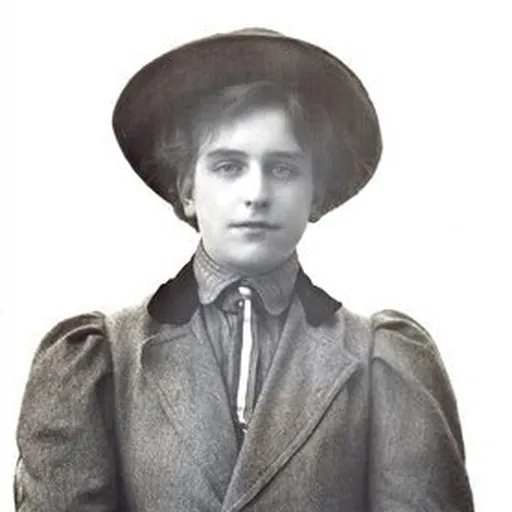
About Vera Wentworth
Lived 1890 – 1957 (aged 66–67). Vera Wentworth was a British suffragette.
Vera Wentworth (born Jessie Alice Spink, 14 March 1890 – 5 August 1957) was a British suffragette, nurse and playwright. She notably door-stepped and then assaulted the Prime Minister on two occasions. She was incarcerated for the cause of women's enfranchisement on seven occasions and was force fed, after which she wrote "Three Months in Holloway."
Early life Wentworth was born in 1890, to Harry Laing Spink and his wife, Rachel Amanda Spink . She had one sibling, a brother called William Wilfrid Spink and her father had a chemists shop. After leaving school she found work in a shop going on to become an active trade unionist. In 1907, she formally changed her name to Vera Wentworth, possibly because her parents were embarrassed by her involvement in the suffragette movement. Her sentence was six weeks in prison and an extra day was added to Wentworth's sentence after she carved "Votes for Women" into her cell wall with hairpins.
Wentworth joined a secret spin-off group called the Young Hot Bloods, which pledged to undertake "danger duty" in the name of women’s suffrage. Of the older suffragettes, only Emmeline Pankhurst was permitted to sit in on their meetings at a tea shop on London’s Strand. Elder suffragist Emily Blathwayt found Wentworth so charming but wayward that she affectionately referred to her as "the young hooligan we know." Rebecca West described her as “a little terror, rather a handsome girl”.
Visits to Bristol Millicent Browne planting a tree at Eagle House (suffragette's rest) with Mary Phillips, Vera Wentworth, Elsie Howey and Annie Kenney Wentworth then visited Bristol from Wimbledon in January 1909, Wentworth planted a chamaecyparis nutkaensis conifer tree on 4 July 1909.
Assaults on politicians In March 1909, with Elsie Howey, Vera accosted anti-suffrage Bristol Liberal MP Augustine Birrell at Bristol Temple Meads railway station. Wentworth was sentenced to another three months in prison when she and Howey were arrested for demonstrating outside H. H. Asquith's house. Wentworth was imprisoned for 14 days, She later wrote that "at four o’clock on Tuesday afternoon they brought a nasal tube. They forced me onto my bed and six wardresses held me down. I resisted all I could but it was impossible to hold out against them. That was done twice a day until I came out." and stated that she became his girlfriend. However, as the WSPU increased in the use of more violent action he distanced himself from them, as he was a pacifist, and all personal acquaintances appear to have ended by around 1910.
Play and education New York, August 1913. "Suffragettes on hike to Boston." Front to back - Elsie McKenzie, Elisabeth Freeman, Vera Wentworth and "Colonel" Ida Craft (with sash). 'Asquith' the horse pulled the caravan. According to contemporary reports he needed much urging, hence his name!Wentworth achieved her ambition of attending a university when she started at St Andrews University in 1912 and studied there until 1914. Whilst studying she wrote the one-act suffrage play An Allegory. In March 1912, Wentworth took part in a West End window smashing campaign. from New York to Boston, via Stamford, Norwalk, Bridgeport, Milford, New Haven, Wallingford, Meriden, New Britain, Hartford, Marlboro, Waltham to Harvard Square, Cambridge, Massachusetts arriving on 30 August. Finally, on Labour Day, 1 September 1913, they departed at 11 am with other suffragists, to hold a meeting on Boston Common at 12.30 pm.
During the hike, Wentworth was ordered to police headquarters in Hartford, Connecticut, accused of violating city ordinances.
World War I On 4 August 1914 World War I began. The WSPU did a deal with government and they agreed to end all protests in return for having all of their prisoners released. Wentworth respected this line and ceased work with the WSPU. Following this she resided in Hendon, Middlesex with Daisy Carden. She later joined League for Peace. . In 1939 they were living in St Pancras, London, with Vera described as ‘Authoress’ and Daisy as ‘Hospital Clerk’.
Death Wentworth died in Elizabeth Garrett Anderson Hospital in London in 1957. She bequeathed all her assets to Daisy Carden in her will, who outlived her by 35 years .
Don’t just read it —
keep it.
Full-length biographies made to live with: read them, listen on the way to work, watch them tonight.
- E-book
- Audio
- Video
Instant download · yours to keep · every purchase keeps this site free
Important facts
People in Vera Wentworth's life
Named in this biography and alive at the same time

Related people
Same field, nearest in time

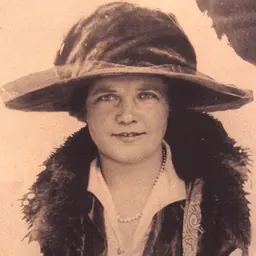
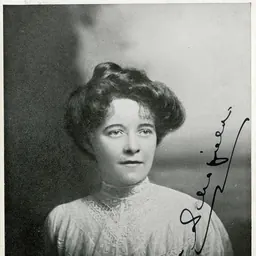
Contemporaries
People whose lives overlapped Vera Wentworth's
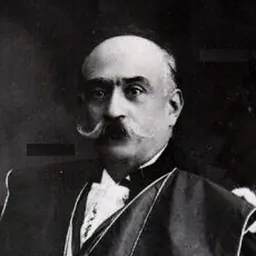




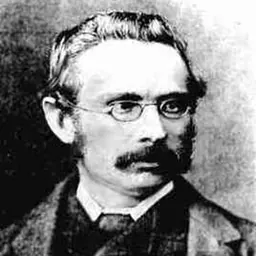
Frequently asked questions
Who was Vera Wentworth?
UK suffragette
When was Vera Wentworth born?
Vera Wentworth was born in 1890.
When did Vera Wentworth die?
Vera Wentworth died on 5 August 1957 in Elizabeth Garrett Anderson and Obstetric Hospital.
What was Vera Wentworth's occupation?
Vera Wentworth was a suffragette.
What nationality was Vera Wentworth?
Vera Wentworth was British.
Sources & further reading
Cite this page
APA: Biography.guide. (2026). Vera Wentworth. https://biography.guide/vera-wentworth/
MLA: "Vera Wentworth." Biography.guide, https://biography.guide/vera-wentworth/.
Chicago: "Vera Wentworth." Biography.guide. https://biography.guide/vera-wentworth/.
Data last updated: 2026-09-23 · Spot an error? Report a correction.
Portrait: Wikimedia Commons · author & licence
Page generated 2026-09-27 05:07 UTC