
About Vera John-Steiner
Lived 1930 – 2017 (aged 87). Vera John-Steiner was an American linguist, psychologist and university teacher.
Vera (Veronka) John-Steiner (1930–2017) was a Hungarian-American educational psychologist and activist. Her theoretical framework was heavily influenced by the work of Lev Vygotsky. In 2007, the American Educational Research Association honored her with its Lifetime Achievement Award.
John-Steiner was a professor of Linguistics and Educational Psychology at the University of New Mexico for over 40 years.
Honors and awards William James Book Award from the American Psychological Association for Notebooks of the Mind: Explorations of Thinking (1989) University of New Mexico, College of Education OFAC grant "Collaborative Cognition: A Study of Patterns and Practices" (1994) University of New Mexico, College of Education RAC grant "Shared and Contrasting Perceptions of Collaboration by Dyads and Small Groups" (1995) Distinguished Contributions to Social Contexts in Education Research – Lifetime Achievement Award from the American Educational Research Association (2007)
In her time at the University of Chicago, John-Steiner opposed McCarthyism as she became more involved in student political activities. In addition, her participation in the Civil Rights Movement presented her with the opportunity to engage with notable figures such as Paul Robeson, W.E.B DuBois, and Malcolm X. Her educational journey led to faculty positions at the University of California Los Angeles, the University of Rochester, and Yeshiva University. She subsequently moved to Santa Fe, NM with her second husband, Stan Steiner, and joined the faculty of the University of New Mexico as a Regents Professor.
John-Steiner died on December 6, 2017, at the age on 87 years old at her home in Santa Fe.
John-Steiner is well-known for expanding ideas of Lev Vygotsky, specifically his concept of the Zone of Proximal Development, an educational psychology term which details how a learner's environment is shaped by educational contexts. Her work expanded Vygotsky's framework to encompass collaboration, specifically as it relates to pedagogy and educator-learner relationships, which was valuable in furthering understanding of how emotional and affective factors influence an individual's learning and creative development. John-Steiner also built upon seminal models and theories of intelligence by Jerome Bruner and Howard Gardner, and established new frameworks for interdisciplinary models of creativity. Her work led to insights about the use of "invisible tools" that creative thinkers accumulate as they develop their ideas. Under this framework, creative thinkers have access to mental reservoirs of experiences (e.g., memories, anxiety and other emotions, mentorship and other relationships), which they draw on when making novel contributions to their respective fields. This book focused on how the creative experience is shaped by development, motivation, and sociocultural differences. John-Steiner's subsequent book, "Creative Collaboration" focused on interpersonal dynamics and how creative thought is shaped by partnerships, friendships, collaborations, and communities. She utilized biographies and conducted semi structured interviews when possible to establish a well informed study of collaborative relationships.
John-Steiner was passionate about the diversity of human cognition, and rejected the idea that there is a single framework that defines human thought, otherwise known as cognitive universalism. In her essay "Cognitive Pluralism: A Whorfian Analysis," John-Steiner expanded upon language as it relates to thought, further developing the Sapir-Whorf hypothesis, or the idea that one's language community affects how people interpret and categorize the world around them.
After retirement, John-Steiner published "Loving and Hating Mathematics: Challenging the myths of mathematical life" (2010), coauthored with Rueben Hersh. According to reviewers, Borwein and Osborn, the book aims to dispel common myths about how learners and educators interact with mathematics.
Academic and social impact The book "Constructing a Community of Thought: Letters on the Scholarship, Teaching, and Mentoring of Vera John Steiner," is a collection of letters addressed to John-Steiner, which highlight and validate her contributions to teaching and mentoring generations of students and scholars. In his letter to John-Steiner, Peter Smagorinsky of the University of Georgia describes John-Steiner as humble, gracious, and wise. He defines her as someone who "defied orthodoxy" in both her political leanings as well as her academic philosophy and pedagogy.
Books Cole, M., John-Steiner, V., Scribner, S., & Souberman, S. (Eds.). (1978). Mind in society: the development of higher psychological processes. Harvard University Press. Connery, M. C., John-Steiner, V., & Marjanovic-Shane, A. (Eds.). (2010). Vygotsky and creativity: A cultural-historical approach to play, meaning making, and the arts. Peter Lang. Hersh, R., & John-Steiner, V. (2010). Loving and hating mathematics: Challenging the myths of mathematical life. Princeton University Press. John-Steiner, V. (1971). Early childhood bilingual education. Modern Language Association. John-Steiner, V. (1986). Notebooks of the mind: explorations of thinking. Oxford University Press. John-Steiner, V. (2000). Creative collaboration. Oxford University Press. John-Steiner, V., Cazden, C., & Hymes, D. (Eds.). (1972). The functions of language in the classroom. Teacher’s College Press. John-Steiner, V., Panofsky, C., & Smith, L. (Eds.) (1994). Sociocultural approaches to language & literacy: an interactionist perspective. Cambridge University Press.
Representative papers Hersh, R., & John-Steiner, V. (2016). The origin of insight in mathematics. In R. Leikin & B. Sriraman (Eds.) Creativity and Giftedness: Advances in Mathematics Education (pp. 135–146). Cham. John-Steiner, V., & Hersh, R. (2014). Creative transformations of ethical challenges. In S. Moran, D. Cropley, &. J. C. Kaufman (Eds.)The Ethics of Creativity (pp. 205–220). Palgrave Macmillan. John-Steiner, V., & Mahn, H. (1996). Sociocultural approaches to learning and development: A Vygotskian framework. Educational Psychologist, 31(3–4), 191–206. John-Steiner, V., Meehan, T. M., & Mahn, H. (1998). A functional systems approach to concept development. Mind, Culture, and Activity, 5(2), 127–134. Mahn, H., John-Steiner, V., & Csikszentmihalyi, M. (1996). Psychological uses of complexity theory. The American Journal of Psychology, 109(3), 465–475.
Don’t just read it —
keep it.
Full-length biographies made to live with: read them, listen on the way to work, watch them tonight.
- E-book
- Audio
- Video
Instant download · yours to keep · every purchase keeps this site free
Important facts
People in Vera John-Steiner's life
Named in this biography and alive at the same time
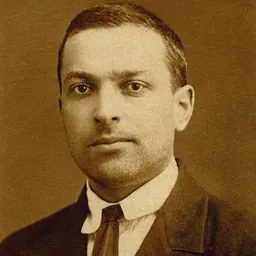


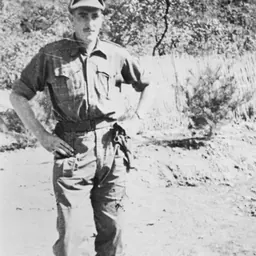



Related people
Same field, nearest in time

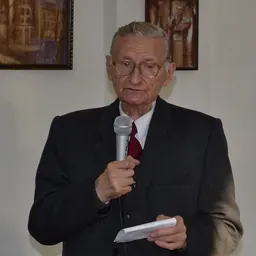



Contemporaries
People whose lives overlapped Vera John-Steiner's

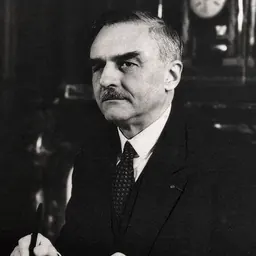

Frequently asked questions
Who was Vera John-Steiner?
linguist
When was Vera John-Steiner born?
Vera John-Steiner was born on 13 June 1930.
When did Vera John-Steiner die?
Vera John-Steiner died on 6 December 2017.
What was Vera John-Steiner's occupation?
Vera John-Steiner was a linguist, psychologist and university teacher.
What nationality was Vera John-Steiner?
Vera John-Steiner was American.
Sources & further reading
· Wikipedia: Vera John-Steiner
Cite this page
APA: Biography.guide. (2026). Vera John-Steiner. https://biography.guide/vera-john-steiner/
MLA: "Vera John-Steiner." Biography.guide, https://biography.guide/vera-john-steiner/.
Chicago: "Vera John-Steiner." Biography.guide. https://biography.guide/vera-john-steiner/.
Data last updated: 2026-09-20 · Spot an error? Report a correction.
Page generated 2026-09-27 05:03 UTC