
About Vazha Abakelia
Lived 1948 – 2019 (aged 70). Vazha Abakelia was a politician and lawyer.
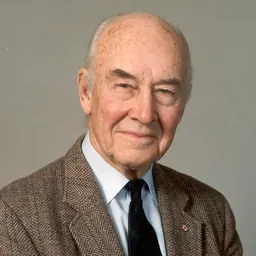
Vazha Abakelia (; 26 October 1948 – 12 July 2019) was a Georgian jurist, judge, prosecutor, academic, and politician who served as the first Prosecutor General of Georgia following the country's restoration of independence in 1991. He held senior judicial and legislative positions during the late Soviet and early post-Soviet periods, including as a Supreme Court judge and member of the Supreme Council, and played a prominent role during the 1991-92 overthrow of President Zviad Gamsakhurdia. After his removal from office during the coup, Abakelia remained active in Georgia's legal system and public life as a district prosecutor, university professor, and outspoken critic of the presidency of Mikheil Saakashvili.
Biography Early life and family Vazha Abakelia was born on 26 October 1948 in Gegechkori, then part of the Georgian Soviet Socialist Republic. He later moved to Tbilisi, where he pursued higher education and professional training. He graduated from Tbilisi State University with a degree in law and completed postgraduate studies there in 1978. By profession, he was a lawyer and legal scholar.
Between 1971 and 1979, Abakelia worked as a staff member of Communist Party organizations in Tbilisi.
Abakelia was born into a family with a strong background in public service. His father, Boris Abakelia, was a public figure and jurist who served as Prosecutor of Martvili, a member of the Criminal Law Collegium of the Supreme Court, and Prosecutor of the Stalin District of Tbilisi. His mother, Tamar Jvebenava, was a renown physician who served as head of the Martvili District Health Department. After the family relocated to Tbilisi, she was appointed Chief Physician of the Saburtalo District Polyclinic.
Abakelia was married to Lela Abakelia, a physician. The couple had three children: Boris, Nino, and Tamar. Their daughter Tamar Abakelia pursued a career in ballet and became a soloist with Moscow's Bolshoi Theatre at a young age.
Judicial career From 1980 to 1990, Vazha Abakelia served as a People's Judge in the Nadzaladevi District of Tbilisi. His appointment followed a family tradition in the legal profession, as his father had held senior judicial and prosecutorial positions within the Soviet legal system.
During his tenure, Abakelia presided over a range of civil and administrative cases. One of the most notable involved Grigoryi Goldstein, a refusenik affiliated with the dissident Georgian Helsinki Group. Goldstein, an engineer who had developed a new type of aerial radar, had been arrested in 1977 and subsequently dismissed from his employment after being barred from leaving the Soviet Union. He later filed a lawsuit against his employer, arguing that his dismissal was unlawful. Acting in his capacity as People's Judge, Abakelia ruled in favor of Goldstein, ordering his reinstatement and the payment of compensation. Upon his appointment, Abakelia became First Deputy Chairman of the Supreme Court and Chairman of the Criminal Law Collegium, two of the most senior judicial positions in the newly reconstituted court. As Chairman of the Criminal Law Collegium, Abakelia presided over judicial panels within that collegium and oversaw staffing and organizational matters related to criminal cases at the high court.
Abakelia's tenure on the Supreme Court coincided with a period of rapid institutional change, as Georgia's judiciary was being reorganized following the collapse of Soviet authority. In public statements, he took a clear stance against capital punishment, calling for the abolition of the death penalty. In interviews, he argued that effective crime prevention depended primarily on swift apprehension, effective investigation, and the integrity of law enforcement, rather than on the severity or length of criminal sentences.
In November 1991, just 11 months after his election to the Supreme Court, Abakelia resigned from the court following his appointment as Prosecutor General.
Prosecutor General On 21 November 1991, Vazha Abakelia was appointed by President Zviad Gamsakhurdia Prosecutor General of Georgia, becoming the first person to be appointed to the office after the restoration of Georgian independence, confirmed by the Supreme Council on 25 November. He succeeded Vakhtang Razmadze, a Soviet-era holdover who had resigned and subsequently aligned himself with the armed opposition to Gamsakhurdia.
Protesters fleeing after forces of the Military Council fire at them. Abakelia served as Prosecutor General during the 1991-92 coup Abakelia assumed office during a period of escalating political crisis and inherited a Prosecutor's Office with extensive investigative and supervisory powers, largely unchanged from the Soviet institutional framework. His appointment was criticized by opposition forces, who portrayed it as a continuation of Communist-era governance due to his previous membership in the Communist Party. Nonetheless, upon taking office, Abakelia moved to assert prosecutorial authority over the growing armed challenge to the central government. He summoned district prosecutors from across Georgia to Tbilisi and instructed them to begin gathering evidence against opposition leaders, including Tengiz Kitovani and Tengiz Sigua.
During the same period, Abakelia opened a criminal case against Anzor Maisuradze, a close associate of Kitovani, in connection with the firebombing of the Supreme Court building.
As fighting intensified in Tbilisi in late December 1991, Abakelia remained aligned with President Gamsakhurdia. On 28 December, after several days of armed clashes, Gamsakhurdia instructed Abakelia to contact Moscow in an attempt to halt Russian support for the opposition-led Military Council in exchange for Georgia's possible accession to the Commonwealth of Independent States. Abakelia contacted his Russian counterpart, Valentin Stepankov, but the effort failed to produce an agreement.
On 3 January 1992, amid the collapse of the central government's authority, Military Council forces seized the Prosecutor General's Office. According to contemporary reporting by The Washington Post, officials within the Prosecutor's Office reported to the headquarters of the Military Council and pledged allegiance in defiance of Abakelia's instructions. That same day, Abakelia and his staff were forcibly removed from the building, and Razmadze was reinstated as Prosecutor General. On 5 January 1992, Jaba Ioseliani, chairman of the Military Council, signed a decree formally dismissing Abakelia from office. President Gamsakhurdia fled Tbilisi shortly thereafter and left Georgia on 6 January.
Following the coup, Abakelia was left without employment and lived in difficult economic circumstances during the ensuing civil war.
While serving under the Shevardnadze administration, Abakelia publicly lamented the death of Gamsakhurdia in 1993, describing it as a national tragedy, and broke with the official position of the government. In 2005, he was summoned for questioning by a special parliamentary commission investigating the events of 1991–1992, although the commission did not publish a final report. later serving as Head of its Social Sciences Department. He earned the degree of Doctor of Juridical Sciences and worked as a full-time professor. In parallel, he held teaching positions at Tbilisi Teaching University and Tbilisi State University, where he lectured on economic relations.
Abakelia continued to comment publicly on legal and political developments in Georgia. In 2014, he drew controversy for a statement opposing the country's Anti-Discrimination Act, alleging that the legislation had been imposed under pressure from the United States and likening the U.S. ambassador at the time, Richard B. Norland, to a Soviet-era Communist Party official. Civil society organizations cited the remarks as an example of anti-American rhetoric associated with figures sympathetic to the governing Georgian Dream coalition.
In subsequent years, Abakelia supported a range of legal reform initiatives. In 2016, he joined a group of experts advocating a comprehensive rewrite of Georgia's Criminal Code, which he criticized as a product of the "zero-tolerance" policies of the Saakashvili era, calling for a liberalization of the criminal code to end what he viewed as punitive prosecutorial practices. During the 2018 selection process for Prosecutor General, he was among a group of former judicial figures and political organizations associated with the presidency of Zviad Gamsakhurdia that nominated Gia Berdzenadze for the position; the nominee failed to advance beyond the first round.
Although Abakelia was an early supporter of the Georgian Dream government led by Bidzina Ivanishvili and favored strong prosecution of former officials linked to the Saakashvili administration, he later called for the resignation of Prosecutor General Otar Partskhaladze after revelations that Partskhaladze had previously served a prison sentence in Germany. After 2012, Abakelia supported the Georgian Dream government and called for criminal accountability of former UNM officials. He publicly praised Justice Minister Tea Tsulukiani and advocated a special tribunal modeled on the Nuremberg trials to prosecute figures associated with the previous administration.
Abakelia was also openly critical of international involvement in Georgia's legal reforms. He rejected several opinions issued by the Venice Commission on Saakashvili-era judicial changes, arguing that such endorsements reflected political alignment rather than neutral legal assessment. He viewed external recommendations from Western institutions as incompatible with Georgia's legal traditions and state sovereignty.
On criminal justice policy, Abakelia opposed capital punishment and called for its abolition during his tenure on the Supreme Court, arguing that the death penalty was incompatible with the inevitability of judicial error and that it could incentivize offenders to commit more serious crimes in order to eliminate witnesses. He also linked crime rates to broader social and economic conditions, at times attributing increases in violent crime to the psychological and social effects of capitalism, while arguing that rulings on murder cases should automatically involve a mental health assessment of accused murderers.
Don’t just read it —
keep it.
Full-length biographies made to live with: read them, listen on the way to work, watch them tonight.
- E-book
- Audio
- Video
Instant download · yours to keep · every purchase keeps this site free
Important facts
People in Vazha Abakelia's life
Named in this biography and alive at the same time






Related people
Same field, nearest in time




Contemporaries
People whose lives overlapped Vazha Abakelia's


Frequently asked questions
Who was Vazha Abakelia?
Georgian lawyer
When was Vazha Abakelia born?
Vazha Abakelia was born on 26 October 1948.
When did Vazha Abakelia die?
Vazha Abakelia died on 12 July 2019.
What was Vazha Abakelia's occupation?
Vazha Abakelia was a politician and lawyer.
Sources & further reading
Cite this page
APA: Biography.guide. (2026). Vazha Abakelia. https://biography.guide/vazha-abakelia/
MLA: "Vazha Abakelia." Biography.guide, https://biography.guide/vazha-abakelia/.
Chicago: "Vazha Abakelia." Biography.guide. https://biography.guide/vazha-abakelia/.
Data last updated: 2026-09-20 · Spot an error? Report a correction.
Page generated 2026-09-27 04:57 UTC