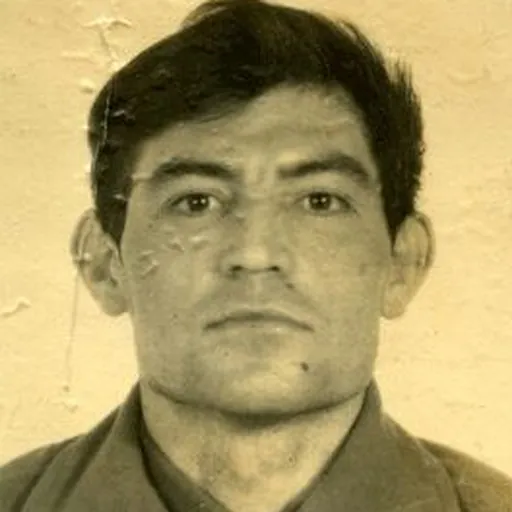
About Vasyl Stus
Lived 1938 – 1985 (aged 47). Vasyl Stus was a Russian journalist, poet, human rights defender, translator, writer and literary critic, known for Ukrainian Helsinki Group.
Vasyl Semenovych Stus (; 6 January 1938 – 4 September 1985) was a Ukrainian poet, translator, literary critic, journalist, and an active member of the Ukrainian dissident movement. For his political convictions, his works were banned by the Soviet regime and he spent 13 years in detention until his death in Perm-36—then a Soviet forced labor camp for political prisoners, subsequently The Museum of the History of Political Repression—after having declared a hunger strike on 4 September 1985. On 26 November 2005, the Ukrainian president Viktor Yushchenko posthumously awarded him the highest national title: Hero of Ukraine. Stus is widely regarded as one of Ukraine's foremost poets.
Biography Early life Vasyl Semenovych Stus was born on 6 January 1938 in the village of Rakhnivka, in Podolia (in the west of the Ukrainian Soviet Socialist Republic at the time) as the fourth and youngest child in a family of peasants. Prior to Vasyl's birth, the Stus family had, along with other peasant families throughout Ukraine, experienced the Soviet famine of 1930–1933. As landed peasants (kurkuls), the Stus family was subjected to local harassment and encouraged to join the kolkhoz in Rakhnivka, which they eventually did. In 1937, however, Stus's father, Semen, was given an offer to move to the Donbas, where there was a shortage of factory workers. After Vasyl's birth, Semen was joined by his wife Yilyna and their children, who moved to Stalino (now Donetsk), with the rigid, patriarchal social structure of rural Ukraine further encouraging the family's decision to move. Vasyl, however, did not initially join his parents and siblings, living in Rakhnivka with his grandparents as a child. Two years after his birth, Vasyl joined the rest of his family in Stalino.
In Stalino, Stus received a Russian-medium education. His knowledge of Ukrainian primarily came from Ukrainian folk music, which he learned from his mother. According to literary historian , Stus displayed significant aptitude in school, but his educational prospects were hampered by his family background, and he was barred from entering the faculty of journalism at Taras Shevchenko Kyiv State University in 1954. He instead studied at the Stalino Pedagogical Institute (now Donetsk National University), where he found a freer political climate. After graduating, he served in the Soviet Army for two years. In 1961, Stus was first published in the literary magazine.
After his military service, Stus worked as an editor for the newspaper Sotsialistychnyi Donbas (Socialist Donbas) between 1960 and 1963. In 1963, he entered a doctoral program at the Shevchenko Institute of Literature of Ukrainian Academy of Sciences in Kyiv. At the same time, he published his selected poetry.
In 1965, Stus married Valentyna Popeliukh; his son, Dmytro was born in 1966.
Dissident activities and first arrest
On 4 September 1965, during the premiere of Sergei Parajanov's film Shadows of Forgotten Ancestors in Kyiv's Ukrayina cinema, Vasyl Stus took part in a protest against the arrests of Ukrainian intelligentsia. As a result, he was expelled from the Institute on September 30 and later lost his job at the State Historical Archive. After that, he worked on a building site, a fireman, and an engineer, continuing his intensive work on poetry. In 1965, he submitted his first book Circulation (Круговерть) to a publisher, but it was rejected due to its discrepancy with Soviet ideology and artistic style. His next book of poetry Winter Trees (Зимові дерева) was also rejected, regardless of positive reviews from the poet Ivan Drach and the critic Eugen Adelgejm. In 1970, the book was published in Belgium.
On 12 January 1972, Stus was arrested for "anti-Soviet agitation and propaganda". His essay "Fenomen doby (skhodzhennia na Holhofu slavy)" (A Phenomenon of the Times (Ascending the Golgotha of Fame)), dedicated to Pavlo Tychyna, was used as the main evidence at his trial. He served a five-year sentence in a labor camp, and two-years in exile in Magadan Oblast.
Even in prison, Stus continued to write poetry, sending a handwritten book of verse to fellow dissident Nadiya Svitlychna. In 1978 the poet publicly renounced Soviet citizenship, claiming that being a citizen of the USSR equalled to slavery. In August 1979, having finished his sentence, Stus returned to Kyiv and worked in a foundry. He spoke out in defense of members of the Ukrainian Helsinki group (UHG). Stus himself joined the UHG in October 1979.
"In Kyiv I learned that people close to the Helsinki Group were being repressed in the most flagrant manner. This at least had been the case in the trials of Ovsiyenko, Horbal, Lytvyn, and they were soon to deal similarly with Chornovil and Rozumny. I didn’t want that kind of Kyiv. Seeing that the Group had been left rudderless, I joined it because I couldn’t do otherwise … When life is taken away, I had no need of pitiful crumbs. Psychologically I understood that the prison gates had already opened for me and that any day now they would close behind me – and close for a long time. But what was I supposed to do? Ukrainians were not able to leave the country, and anyway I didn’t particularly want to go beyond those borders since who then, here, in Great Ukraine, would become the voice of indignation and protest? This was my fate, and you don’t choose your fate. You accept it, whatever that fate may be. And when you don’t accept it, it takes you by force … However I had no intention of bowing my head down, whatever happened. Behind me was Ukraine, my oppressed people, whose honour I had to defend or perish". ("Z tabornoho zoshyta" ["From the camp notebook"], 1983).
Second arrest and trial
On 14 May 1980, prior to the 1980 Olympic Games in Moscow, he was arrested and received a 10-year sentence for "anti-Soviet activity". Viktor Medvedchuk, who was later influential in Ukrainian politics, defended Stus during this trial in 1980. In the closing speech from the defence Medvedchuk stated all of Stus' crimes deserved punishment; however, he also told the court that the defendant fulfilled his daily norm at the factory where he worked at the time, despite serious stomach problems. Medvedchuk claimed he could not have operated differently: "Stus denounced the Soviet government, and didn’t consider it to be legitimate. Everyone decides their own fate. Stus admitted he agitated against the Soviet government. He was found guilty by the laws of the time. When the laws changed, the case was dropped. Unfortunately, he died."
Death and burial
Vasyl Stus died after he declared hunger strike on 4 September 1985, in a Soviet forced labor camp for political prisoners Perm-36 near the village of Kuchino, Perm Oblast, Russian SFSR, where he had been transferred in November 1980. Danylo Shumuk reported that the commandant, Major Zhuravkov, committed suicide after the death of Stus. The immediate cause of Stus's death has never been cleared. In the Kuchino camp, out of 56 inmates kept there between 1980 and 1987, eight died, including four members of the Ukrainian Helsinki Group.
Camp authorities refused to transfer Stus's body to his relatives until the end of his term, and the poet was initially buried at the prison cemetery near the village of Borisovo. Only in summer 1989 was permission provided to Dmytro Stus to bring his father's remains to Kyiv, but bureaucratic hurdles forced the reburial to be postponed. Finally, on 19 November 1989 the remains of Vasyl Stus and two other Ukrainian political prisoners, Oleksa Tykhy and Yury Lytvyn, were brought back to Kyiv. After a memorial service at the Saint Sophia Cathedral, Mykhailo Horyn, Ivan Drach, Viacheslav Chornovil and Levko Lukianenko gave speeches over the graves. The funeral was ignored by most of the Soviet Ukrainian press, with only one article dedicating the event appearing in the newspaper Literaturna Ukraina.
In January 1989, the first non-governmental Vasyl Stus Prizes were awarded for "talent and courage". This Prize was set up by the Ukrainian Association of the Independent Creative Intelligentsia, and is awarded every year on the poet's date of birth in Lviv.
On 8 January 2008, the National Bank of Ukraine issued a commemorative coin dedicated to Vasyl Stus and on 25 January 2008 Ukrposhta issued a stamp in his memory.
In December 2008, a group of current and former students of the Donetsk National University sent an appeal to the Minister of Education, Ivan Vakarchuk, asking that the university be named after one of its alumni, Vasyl Stus. The Minister supported the initiative and approached the Rector of the university with a request to discuss the issue among staff and at the academic council. On February 17, 2009 62 out of 63 members of the university's academic council voted against renaming the university to Vasyl Stus or Volodomyr Degtyaryov (61 voted against this), 63 voted for not changing the name of the institute. On February 13, 2009, representatives of the university's students voted in the same fashion. The Donetsk National University, relocated to Vinnytsia due to the War in Donbas, was eventually renamed after Stus on 10 June 2016. The new name was approved by 75 votes out of 105 of the university's academic council.
After it was taken over by the pro-Russian rebels during the war in Donbas, the university building in Donetsk removed its commemorative plaque of Stus in 2015.
Stus is highly regarded among intellectuals in Ukraine.
Dozens of streets all over Ukraine are named in Vasyl Stus's honor, and the Kyiv Metro station Ploshcha Lva Tolstoho was voted to be renamed after him in a poll taken during the 2022 Russian invasion of Ukraine.
In October 2020, a Ukrainian court banned the distribution of Vakhtang Kipiani's book, The Case of Vasyl Stus, following a complaint by Viktor Medvedchuk, Stus's court appointed lawyer. and almost completely satisfied the complaint of the Vivat publishing house and the author of the book Vakhtang Kipiani. The first-instance court's ban on the distribution of the book and the use of Medvedchuk's name was also lifted. The publishing house announced its readiness to print a new edition of the book. Medvedchuk was fined 140,000 hryvnias as compensation for the publishing house's costs for handling the case. Medvedchuk did not appeal this court decision within the prescribed period, and thus it is considered final and entered into legal force.
In July 2026, the National Bank of Ukraine announced it will introduce a new 2,000-hryvnia banknote featuring the portrait of Vasyl Stus, which will go into circulation in September 2026.
Awards 1982 – Antonovych prize 1991 – Taras Shevchenko State Prize of Ukraine for the poetry book "Doroha boliu" published in 1990 1997 – Order of Prince Yaroslav the Wise IV degree, presented by Ukrainian President Kuchma 2005 – Hero of Ukraine Award, presented by Ukrainian President Yushchenko
Don’t just read it —
keep it.
Full-length biographies made to live with: read them, listen on the way to work, watch them tonight.
- E-book
- Audio
- Video
Instant download · yours to keep · every purchase keeps this site free
Important facts
People in Vasyl Stus's life
Named in this biography and alive at the same time
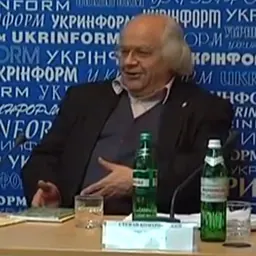
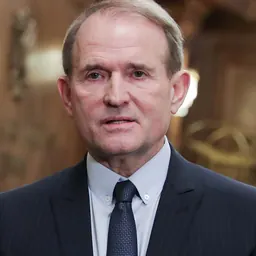

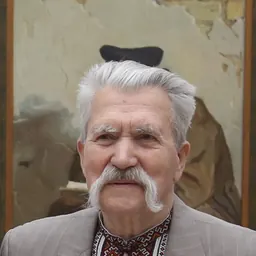


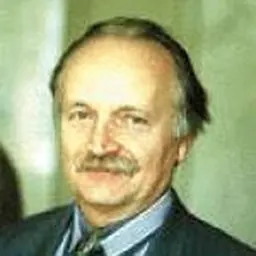
Related people
Same field, nearest in time


Contemporaries
People whose lives overlapped Vasyl Stus's



Frequently asked questions
Who was Vasyl Stus?
Ukrainian poet, publicist and dissident (1938–1985)
When was Vasyl Stus born?
Vasyl Stus was born on 6 January 1938 in Rakhnivka.
When did Vasyl Stus die?
Vasyl Stus died on 4 September 1985 in Perm-36.
What was Vasyl Stus's occupation?
Vasyl Stus was a journalist, poet, human rights defender, translator, writer and literary critic.
What was Vasyl Stus known for?
Vasyl Stus was known for Ukrainian Helsinki Group.
What nationality was Vasyl Stus?
Vasyl Stus was Russian.
Sources & further reading
Cite this page
APA: Biography.guide. (2026). Vasyl Stus. https://biography.guide/vasyl-stus/
MLA: "Vasyl Stus." Biography.guide, https://biography.guide/vasyl-stus/.
Chicago: "Vasyl Stus." Biography.guide. https://biography.guide/vasyl-stus/.
Data last updated: 2026-09-20 · Spot an error? Report a correction.
Portrait: Wikimedia Commons · author & licence
Page generated 2026-09-27 04:57 UTC