
About Vasily Titov
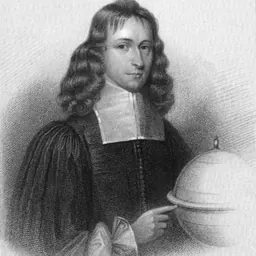
Lived 1650 – 1710 (aged 59–60). Vasily Titov was a Russian composer and singer.
Vasily Polikarpovich Titov (; c. 1650 – c. 1715) was a Russian composer, one of the foremost exponents of the so-called Moscow Baroque. Although Titov's works are not widely known today, he was famous during his lifetime, and his importance was acknowledged in Russia by both pre-revolutionary and Soviet musicologists.
Biography The scant biographical materials indicate that Titov was born in the 1650s. He joined Tsar Fedor's choir, the Gosudarevy Pevchie Diaki (Государевы Певчие Дьяки, The Tsar's Singers) when he was in his twenties; his salary is recorded in 1678. He quickly rose to prominence as both singer and composer. In the 1680s he collaborated with Simeon Polotsky (a famed churchman, man of letters and tutor to the children of Tsar Aleksey Mikhailovich), composing musical settings of Polotsky's psalter and an almanac of sacred poetry. In the 1680s Titov also joined Tsar Ivan's choir.
Style Titov wrote more than 200 compositions, all of them vocal music. They include complete settings of Divine Services (Sluzhby Bozhie, Службы Божие) and a psalter (by Simeon Polotsky), as well as numerous vocal concertos for feast days. His works range from short, three-voice pieces to large-scale compositions for 12- and 24-voice choirs. Titov was one of the most important followers of Nikolay Diletsky's Idea grammatiki musikiiskoi (1679), an influential treatise on composition. Znamenny Chant was another important influence on Titov's work: he even wrote a Service setting based entirely on the chant. The musical language is largely tonal; melodic lines are treated individually in horizontal manner, with many motivic ornaments. Titov's textures in his large-scale works suggest that these pieces were meant not to separate the choirs in alteration, but to unite them, so there is no direct connection to the antiphonal style of the Western Baroque. A characteristic feature is the so-called variantnost (вариантность), the linking of melodic motifs by continuous subtle alterations which is also an important element in Russian chant and folk polyphonic traditions.
The prayer Mnogaya leta (Многая лета), or Bol'shoe mnogoletie (Большое многолетие) proved to be the most enduring of Titov's compositions, possibly because its polyphony was more simple and therefore in line with the ideals of Classical music era. It was sung in Russian churches up to the October Revolution.
List of works Psaltïr' rifmovannaya (Псалтырь рифмованная or Псалтырь римфотворная, 1686), a setting of Simeon Polotsky's psalter, for 3 voices Mesyatseslov (Месяцеслов), a setting of Simeon Polotsky's almanac of devout verses, 12 pieces for 3 voices Services for 8, 16 and 24 voices 28 sacred concertos for 12 voices 12 concertos for feast days (1709) O divnoye chudo (О дивное чудо, O Marvellous Wonder), 8 voices Zadostoynik (Задостойник), festal hymn Mnogaya leta (Многая лета), prayer with psalm, settings for 6 and 3 voices
Don’t just read it —
keep it.
Full-length biographies made to live with: read them, listen on the way to work, watch them tonight.
- E-book
- Audio
- Video
Instant download · yours to keep · every purchase keeps this site free
Important facts
People in Vasily Titov's life
Named in this biography and alive at the same time

Related people
Same field, nearest in time


Contemporaries
People whose lives overlapped Vasily Titov's





Frequently asked questions
Who was Vasily Titov?
Russian composer
When was Vasily Titov born?
Vasily Titov was born in 1650.
When did Vasily Titov die?
Vasily Titov died in 1710 in Moscow.
What was Vasily Titov's occupation?
Vasily Titov was a composer and singer.
What nationality was Vasily Titov?
Vasily Titov was Russian.
Sources & further reading
· DBpedia: Vasily Polikarpovich Titov
Cite this page
APA: Biography.guide. (2026). Vasily Titov. https://biography.guide/vasily-titov/
MLA: "Vasily Titov." Biography.guide, https://biography.guide/vasily-titov/.
Chicago: "Vasily Titov." Biography.guide. https://biography.guide/vasily-titov/.
Data last updated: 2026-09-20 · Spot an error? Report a correction.
Page generated 2026-09-27 05:00 UTC