
About Vasiliy Ulrikh
Lived 1889 – 1951 (aged 61). Vasiliy Ulrikh was a Russian judge, lawyer, military personnel and politician.
Vasiliy Vasilievich Ulrikh (; 13 July 1889 – 7 May 1951) was a senior judge of the Soviet Union during most of the regime of Joseph Stalin. Ulrikh served as the presiding judge at many of the major show trials of the Great Purges in the Soviet Union.
Early life Vasili Ulrikh was born in Riga, Latvia, then a part of the Russian Empire. His father was a Latvian revolutionary of German descent, and his mother was a Russian noblewoman. Because of their open involvement in revolutionary activity, the entire family was sentenced to a five-year period of internal exile in Irkutsk, Siberia.
In 1910, young Ulrikh returned to his native Riga and began to study at the Riga Polytechnical Institute. He joined the Bolshevik faction of the Russian Social Democratic Labour Party in the same year.
He graduated in 1914, and with the beginning of World War I he was sent to the front as an officer.
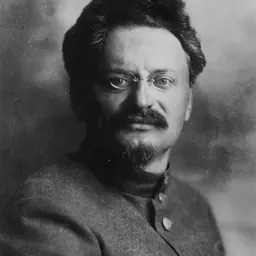
After the Bolshevik Revolution, Leon Trotsky secured him entrance into the Cheka. Ulrikh subsequently served on a number of military tribunals, and came to the attention of Stalin, who apparently liked the efficient way in which he carried out his duties and his terse, even laconic style of reporting these tribunals' actions.
Career
In 1926, Ulrikh became Chairman of the Military Collegium of the Supreme Court of the Soviet Union. It was in this capacity that he handed down the sentences of the Great Purge. Ulrikh sentenced Zinoviev, Kamenev, Bukharin, Tukhachevsky, Rodzaevsky, Beloborodov, Yezhov and many others. He attended the executions of many of these men, and occasionally performed executions himself. Ulrikh personally executed Yan Karlovich Berzin, former head of Red Army Intelligence Directorate, later called GRU.
During World War II, Ulrikh continued to hand down death sentences to people accused of sabotage and defeatism. He was also the chief judge during the Trial of the Sixteen leaders of the Polish Secret State and Home Army in 1945.
After the conclusion of the war, Ulrikh presided over a number of the early trials of the Zhdanovshchina.
In 1948, a number of top judges, including Ulrikh, were removed from their positions for severe drawbacks in the judicial system, including corruption and what were classified as political errors. Ulrikh was subsequently reassigned to be the course director at the Military Law Academy. He died of a heart attack on May 7, 1951, and was buried in the Novodevichy Cemetery in Moscow.
Opinions Anton Antonov-Ovseenko labeled him a "uniformed toad with watery eyes." Otto Tief, the last acting prime minister of Estonia before Soviet occupation, described Ulrikh as "a youthful, round-faced and plump blond man in a general's uniform, with a gentle smile on his face."
Don’t just read it —
keep it.
Full-length biographies made to live with: read them, listen on the way to work, watch them tonight.
- E-book
- Audio
- Video
Instant download · yours to keep · every purchase keeps this site free
Important facts
People in Vasiliy Ulrikh's life
Named in this biography and alive at the same time



Related people
Same field, nearest in time


Contemporaries
People whose lives overlapped Vasiliy Ulrikh's




Frequently asked questions
Who was Vasiliy Ulrikh?
Soviet jurist of Baltic German origin (1889–1951)
When was Vasiliy Ulrikh born?
Vasiliy Ulrikh was born on 13 July 1889 in Riga.
When did Vasiliy Ulrikh die?
Vasiliy Ulrikh died on 7 May 1951 in Moscow.
What was Vasiliy Ulrikh's occupation?
Vasiliy Ulrikh was a judge, lawyer, military personnel and politician.
What nationality was Vasiliy Ulrikh?
Vasiliy Ulrikh was Russian.
Sources & further reading
Cite this page
APA: Biography.guide. (2026). Vasiliy Ulrikh. https://biography.guide/vasiliy-ulrikh/
MLA: "Vasiliy Ulrikh." Biography.guide, https://biography.guide/vasiliy-ulrikh/.
Chicago: "Vasiliy Ulrikh." Biography.guide. https://biography.guide/vasiliy-ulrikh/.
Data last updated: 2026-09-20 · Spot an error? Report a correction.
Page generated 2026-09-27 05:25 UTC