
About Valerius Maximus
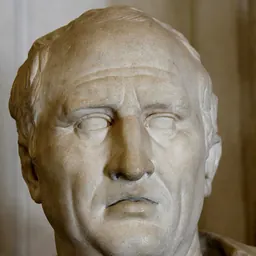
Lived 100 BC – 100. Valerius Maximus was a Roman historian, writer and poet.
Valerius Maximus was a 1st-century Latin writer and author of a collection of historical anecdotes: ("Nine books of memorable deeds and sayings", also known as De factis dictisque memorabilibus or Facta et dicta memorabilia). He worked during the reign of Tiberius (14 AD to 37 AD).
During the Middle Ages, Valerius Maximus was one of the most copied Latin prose authors, second only to Priscian. More than 600 medieval manuscripts of his books have survived as a result.
Biography Nothing is known of his life except that his family was poor and undistinguished, and that he owed everything to Sextus Pompeius (consul AD 14), proconsul of Asia, whom he accompanied to the East in 27. Pompeius was the center of a literary circle to which Ovid belonged; he was also an intimate friend of the most literary prince of the imperial family, Germanicus. Although he shared the same name as a prestigious family of the Republic, John Briscoe says "it is unlikely in the extreme" that Valerius Maximus belonged to the patrician Valerii Maximi. He suggests instead that he was either a descendant of the plebeian Valerii Tappones or Triarii, or earned the Roman citizenship thanks to the patronage of a Valerius of the Republic.
His attitude towards the imperial household is controversial: he has been represented as a mean flatterer of Tiberius, of the same type as Martial. Chisholm in 1911 argued however that, if the references to the imperial administration are carefully scanned, they will be seen to be extravagant neither in kind nor in number: few will now grudge Tiberius, when his whole action as a ruler is taken into account, such a title as salutaris princeps, which seemed to a former generation a specimen of shameless adulation. A quarter of a century later still, however, H J Rose claimed that Valerius "cares nothing for historical truth if by neglecting it he can flatter Tiberius, which he does most fulsomely". Valerius has also used sources that are now lost, preserving some glimpses into the much debated and very imperfectly recorded reign of Tiberius; as well as some fragmentary information on Hellenistic art; and a revealing glimpse into the early imperial consensus on the need for the orderly logic and stability of the ancient Roman religion, in a politically unsettled world.
Legacy
The collection of Valerius was much used for school purposes, and its popularity throughout the Middle Ages is attested by the large number of manuscripts in which it has been preserved: indeed, B. G. Niebuhr went so far as to claim that it was then "the most important book next to the Bible". Like other schoolbooks it was epitomised: one complete epitome, probably of the 4th or 5th century, bearing the name of Julius Paris, has come down to us; also a portion of another by . Dante for example used Valerius for details in his account of the generosity and modesty of Pisistratus.
Although in the manuscripts of Valerius a tenth book is given, which consists of the so-called Liber de Praenominibus, this is the work of some grammarian of a much later date.
Editions and translations Editions by C. Halm (1865), C. Kempf (1888), contain the epitomes of Paris and Nepotianus. New editions have been produced by R. Combès (1995-) with a French translation, J. Briscoe (1998), and D.R. Shackleton Baily (2000) with an English translation. Recent discussions of Valerius' work include W. Martin Bloomer, Valerius Maximus and the Rhetoric of the New Nobility (Chapel Hill, 1992), Clive Skidmore, Practical Ethics for Roman Gentlemen: the Work of Valerius Maximus (Exeter, 1996), and Hans-Friedrich Mueller, Roman Religion in Valerius Maximus (London, 2002).
A translation into Dutch was published in 1614, and was read by Rembrandt and other artists (and their patrons), stimulating interest in some new subjects such as Artemisia drinking her husband's ashes.
600 manuscripts of Valerius have survived, 800 when counting epitomes, more than any other Latin prose writer after the grammarian Priscian. Most manuscripts date from the late Middle Ages, but 30 predates the 12th century.
Don’t just read it —
keep it.
Full-length biographies made to live with: read them, listen on the way to work, watch them tonight.
- E-book
- Audio
- Video
Instant download · yours to keep · every purchase keeps this site free
Important facts
People in Valerius Maximus's life
Named in this biography and alive at the same time



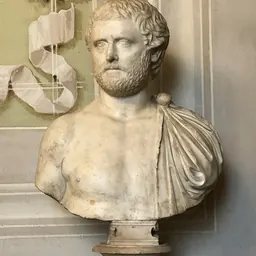

Related people
Same field, nearest in time
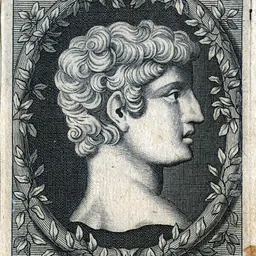

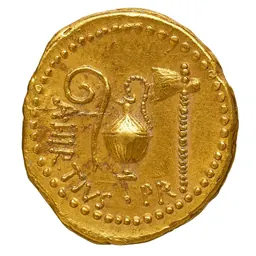

Contemporaries
People whose lives overlapped Valerius Maximus's

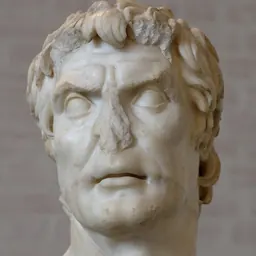


Frequently asked questions
Who was Valerius Maximus?
early 1st century AD Roman professional rhetorician, historian and author
When was Valerius Maximus born?
Valerius Maximus was born in 100 BC in Ancient Rome.
When did Valerius Maximus die?
Valerius Maximus died in 100.
What was Valerius Maximus's occupation?
Valerius Maximus was a historian, writer and poet.
What nationality was Valerius Maximus?
Valerius Maximus was Roman.
Sources & further reading
Cite this page
APA: Biography.guide. (2026). Valerius Maximus. https://biography.guide/valerius-maximus/
MLA: "Valerius Maximus." Biography.guide, https://biography.guide/valerius-maximus/.
Chicago: "Valerius Maximus." Biography.guide. https://biography.guide/valerius-maximus/.
Data last updated: 2026-09-26 · Spot an error? Report a correction.
Page generated 2026-09-27 05:15 UTC