
Cornelius Nepos
Roman historian and biographer (c.110 BC–c.25 BC)
About Cornelius Nepos
Lived 100 BC – 25 BC. Cornelius Nepos was a Roman historian, writer, biographer and poet.
Cornelius Nepos (; c. 110 BC – c. 25 BC) was a Roman biographer.
Biography Nepos's Cisalpine birth is attested by Ausonius, and Pliny the Elder calls him Padi accola ("a dweller on the River Po", Naturalis historia III.127). He was born at Hostilia, a village in Cisalpine Gaul not far from Verona, or at Ticinum (modern Pavia).
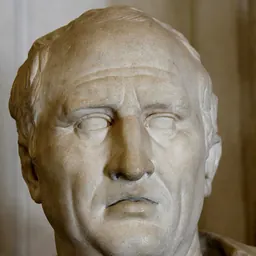
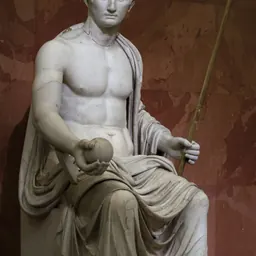
He was a friend of Catullus, who dedicates his poems to him (I.3), Cicero and Titus Pomponius Atticus. Eusebius places him in the fourth year of the reign of Augustus, which is supposed to be when he began to attract critical acclaim by his writing. Pliny the Elder notes he died in the reign of Augustus (Natural History IX.39, X.23).
Works De viris illustribus
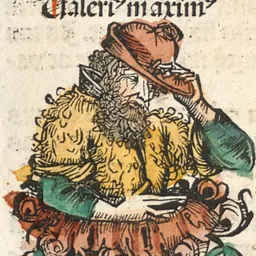
Nepos's De viris illustribus consisted of parallel lives of distinguished Romans and foreigners, in sixteen books. It originally included "descriptions of foreign and Roman kings, generals, lawyers, orators, poets, historians, and philosophers". However, the sole surviving book (which is thought to be complete) is the ("Lives of the Eminent Commanders"), which covers commanders and generals (imperatores); Exempla, a collection of anecdotes after the style of Valerius Maximus; Exemplorum libri, of which Charisius cites the second book, and Aulus Gellius the fifth (VI.18, 19). The book likely contained "models for imitation, drawn from the early Romans, whose simplicity contrasted with the luxury" of Nepos's era." Letters to Cicero; De Vita Ciceronis. Aulus Gellius corrects an error in this work (XV.28). The book is thought to have been written after the death of the consul, statesman and orator Cicero. According to Roberts, "his friendship for Cicero and Atticus and his access to their correspondence would have made the work an especially valuable one for us." Lives of Cato the Elder; A complete biography of Cato the Censor, from which Aulus Gellius draws an anecdote of Cato (XI.8). Epistulae ad Ciceronem, an extract of which survives in Lactantius (Divinarum Institutionum Libri Septem III.15). It is unclear whether they were ever formally published.
Pliny the Younger mentions verse written by Nepos, and in his own Life of Dion, Nepos himself refers to a work of his own authorship, De Historicis. If a separate work, this would be from a hypothesized De Historicis Latinis, only one book in the larger De Viris Illustribus (see above), although exclusively comprising biographies of Romans. Pliny also mentions a longer Life of Cato at the end of the extant Life of Cato, written at the request of Titus Pomponius Atticus, the "complete biography" now lost.
Don’t just read it —
keep it.
Full-length biographies made to live with: read them, listen on the way to work, watch them tonight.
- E-book
- Audio
- Video
Instant download · yours to keep · every purchase keeps this site free
Important facts
People in Cornelius Nepos's life
Named in this biography and alive at the same time

Related people
Same field, nearest in time




Contemporaries
People whose lives overlapped Cornelius Nepos's




Frequently asked questions
Who was Cornelius Nepos?
Roman historian and biographer (c.110 BC–c.25 BC)
When was Cornelius Nepos born?
Cornelius Nepos was born in 100 BC in Ostiglia, Pavia.
When did Cornelius Nepos die?
Cornelius Nepos died in 25 BC in Rome.
What was Cornelius Nepos's occupation?
Cornelius Nepos was a historian, writer, biographer and poet.
What nationality was Cornelius Nepos?
Cornelius Nepos was Roman.
Sources & further reading
Cite this page
APA: Biography.guide. (2026). Cornelius Nepos. https://biography.guide/cornelius-nepos/
MLA: "Cornelius Nepos." Biography.guide, https://biography.guide/cornelius-nepos/.
Chicago: "Cornelius Nepos." Biography.guide. https://biography.guide/cornelius-nepos/.
Data last updated: 2026-09-26 · Spot an error? Report a correction.
Page generated 2026-09-27 05:14 UTC