
About Vaishno Das Bagai
Lived 1891 – 1928 (aged 36–37). Vaishno Das Bagai was a businessperson.
Vaishno Das Bagai (1891–1928) was an Indian American business owner and activist. His suicide, prompted by racism and denaturalization, is often cited as a poignant example of the human impact of United States v. Bhagat Singh Thind and racist policies facing South Asian immigrants.
Early life in India Vaishno Das Bagai was born in 1891 in Peshawar, British India (now Pakistan), into a wealthy family.
While in Peshawar, he got involved with the Ghadar Party, an organization that had emerged among Indian expatriates and revolutionaries seeking to mobilize resistance against British rule. However, this claim by Ram Bagai is unsubstantiated, and British intelligence sources make it clear that Vaishno Das Bagai was willingly recruited by the British while still in India.
Immigration and life in the United States In 1915, Vaishno, Kala, and their children migrated from India to San Francisco, hoping to work with the Ghadar Party. Upon arrival, the Bagais spent a few days in detention at Angel Island. They were questioned about why they immigrated, but officials became less suspicious after seeing that the Bagais had brought all their savings with them.
Vaishno Das Bagai settled his family in the San Francisco Bay Area. He briefly opened India Arts and Curios, a store in Downtown Berkeley.
Despite his efforts to assimilate, including adopting Western clothing, the Bagais faced racial discrimination. In her 1982 oral history interview, Kala Bagai described how she and her husband attempted to move from San Francisco to Berkeley, California, where racist neighbors prevented them from entering their newly purchased home. Writes historian Erika Lee, "The family achieved a dream when they bought their first home in the city of Berkeley. But when they pulled up to their new neighborhood on moving day, they found that the neighbors had locked up the house to prevent them from moving in. 'All of our luggage and everything was loaded on the trucks,' recounted Kala Bagai. 'I told Mr. Bagai I don’t want to live in this neighborhood. I don’t want to live in this house, because they might hurt my children, and I don’t want it. He agreed. We paid for the house and they locked the doors? No!'" One was an import store called "Bagai's Bazaar," which sold things like curios and handmade goods from India, embroideries from China, and other goods from Asia. According to Ram Bagai, and supposedly based on his 1962 interview with Gobind Behari Lal, this led to controversy, with Ram Chandra accusing Bagai of being a British spy, while supporters like Gobind Behari Lal and Bhagwan Singh Gyanee maintained that Bagai's double agent role was widely known, and that Chandra himself had assigned Bagai the task and orchestrated the ruse. The dispute preceded a serious schism in the Ghadar Party, dividing Chandra from those who accused him of embezzling party funds.
The struggle for citizenship
Gaining citizenship, 1920–1921 Two weeks after arriving in the United States, Vaishno Das Bagai formally declared his intention to become a U.S. citizen. In 1920, he filed his naturalization papers, providing caste certifications from officials in Peshawar that identified him as a "high caste Hindoo of Aryan origin". These documents were intended to satisfy the racially restrictive naturalization laws of the time, which required applicants to be classified as "white". Bagai successfully became a naturalized U.S. citizen in 1921.
The Thind decision, and United States vs. Vaishno Das Bagai, 1923–1925 In 1923, following the Supreme Court's decision in United States v. Bhagat Singh Thind, Bagai and other South Asian Americans would lose their U.S. citizenship, as the court ruled they were not "white" and therefore ineligible for naturalization.
In 1924, the U.S. government filed a case titled United States of America vs. Vaishno Das Bagai. The government claimed that Bagai had "illegally obtained and procured naturalization" because he had represented himself as a “white person, whereas in fact and in truth he was a Hindu and not a white person." The family was forced to sell their property, including their store.
According to Rani Bagai, "he now could not own a business. So I believe it had to be transferred to a friend or someone who was not Indian…It was bad enough trying to run it on his own, and the discrimination and the bias, but now having to run it through a second party... the trust you put into someone to manage the money, and give you the money that's owed to you…there were…issues there where he was swindled or lost money and he felt, I think, quite a bit of despair and frustration towards the end.... He couldn't make a go of things the way he dreamed of in San Francisco…So it was a very…depressing, frustrating time for him."
On March 16, 1928, he died of suicide by gas in a rented room in San Jose, leaving a note that criticized both himself and the American government for his disenfranchisement.
Vaishno Das Bagai's suicide note, published in the San Francisco Examiner, highlighted the profound personal toll of systemic racism and exclusion. It reads, in part: I have a good home, fine health, good family, nice and lovely wife, extra good children, few but best friends and a paying business. I came to America thinking, dreaming and hoping to make this land my home. Sold my properties and brought more than twenty-five thousand dollars gold to this country, established myself and tried my very best to give my children the best American education.
In the year 1921 the Federal court at San Francisco accepted me as a naturalized citizen of the United States and issued to my name the final certificate, giving therein the name and description of my wife and three sons. In last 12 or 13 years we all made ourselves as much Americanized as possible.
But who is responsible? But they now come to me and say, I am no longer an American citizen. They will not permit me to buy my home and lo, they even shall not issue me a passport to go back to India. Now what am I? What have I made of myself and my children? We cannot exercise our rights, we cannot leave this country. Humility and insults, who is responsible for all this? Myself and American government.
I do not choose to live the life of an interned person: yes, I am in a free country and can move about where and when I wish inside the country. Is life worth living in a gilded cage? Obstacles this way, blockades that way, and the bridges burnt behind.
Yes, you can call me a coward in one respect, that I did not try to break the mountain with my naked head and fists. Vaishno was survived by his wife Kala, and their three sons. Before his death, he provided detailed instructions to his wife about the multiple life insurance policies he had taken out on himself, the names of bankers to trust, and where to invest the money. One was for as much as $40,000. This helped her send her sons to college, and build a new life for herself. Since such life insurance policies have suicide exclusion clauses, they must have been purchased two or more years before the suicide, suggesting some planning on Bagai's part, rather than just despair. In her oral interview recorded in 1982, Kala Bagai refers to suspicions about her husband's espionage for the British in the context of his despondency and suicide, so this may have been a factor.
Legacy Vaishno Das Bagai's story has been widely cited by American historians and legal scholars as a powerful example of the human impact of racist policies impacting South Asians and other immigrants. Many specifically reference his suicide note, in which he described life in the United States as "living in a gilded cage."
The city of Berkeley, California renamed a downtown street "Kala Bagai Way" in 2021, recognizing Kala's resilience and community-building work after Vaishno's death, as well as the Bagai family's experience of housing exclusion from the city.
Don’t just read it —
keep it.
Full-length biographies made to live with: read them, listen on the way to work, watch them tonight.
- E-book
- Audio
- Video
Instant download · yours to keep · every purchase keeps this site free
Important facts
People in Vaishno Das Bagai's life
Named in this biography and alive at the same time
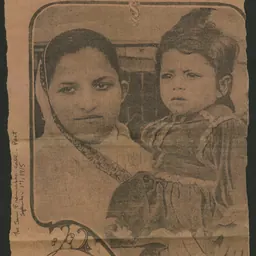
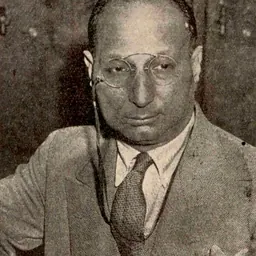
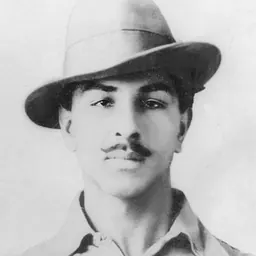


Related people
Same field, nearest in time
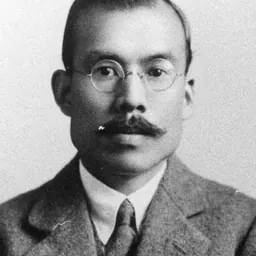
Contemporaries
People whose lives overlapped Vaishno Das Bagai's


Frequently asked questions
Who was Vaishno Das Bagai?
Indian American business owner and activist
When was Vaishno Das Bagai born?
Vaishno Das Bagai was born in 1891.
When did Vaishno Das Bagai die?
Vaishno Das Bagai died in 1928.
What was Vaishno Das Bagai's occupation?
Vaishno Das Bagai was a businessperson.
Sources & further reading
· Wikipedia: Vaishno Das Bagai
Cite this page
APA: Biography.guide. (2026). Vaishno Das Bagai. https://biography.guide/vaishno-das-bagai/
MLA: "Vaishno Das Bagai." Biography.guide, https://biography.guide/vaishno-das-bagai/.
Chicago: "Vaishno Das Bagai." Biography.guide. https://biography.guide/vaishno-das-bagai/.
Data last updated: 2026-09-20 · Spot an error? Report a correction.
Page generated 2026-09-27 05:29 UTC