
Vaclav Smil
Science author and distinguished professor University of Manitoba
About Vaclav Smil
Born 1943. Vaclav Smil is a Canadian and Czech geographer, economist, university teacher, scientist, writer and science communicator.
Vaclav Smil (; born December 9, 1943) is a Czech-Canadian scientist and policy analyst. He is Distinguished Professor Emeritus in the Faculty of Environment at the University of Manitoba in Winnipeg, Manitoba, Canada. His interdisciplinary research interests encompass energy, environmental, food, population, economic, historical and public policy studies. He has also applied these approaches to energy, food and environmental affairs of China.
Early life and education Smil was born during World War II in Plzeň, at that time in the German Protectorate of Bohemia and Moravia (present-day Czech Republic).
Smil completed his undergraduate studies and began his graduate work (culminating in the RNDr., an intermediate graduate degree similar to the Anglo-American Master of Philosophy credential, in 1965) at the Faculty of Natural Sciences of Charles University in Prague, where he took up to 35 hours of lectures a week, 10 months a year, for five years.
Career In 1972, Smil took his first job offer at the University of Manitoba where he remained for decades, until his retirement. Smil stresses the need for energy prices to reflect their true costs, including greenhouse gas emissions, and promotes a decrease in the demand for fossil fuels through energy-saving measures.
Position on economic growth Smil believes economic growth has to end, that all growth is logistic rather than exponential, and that humans could consume much lower levels of materials and energy.
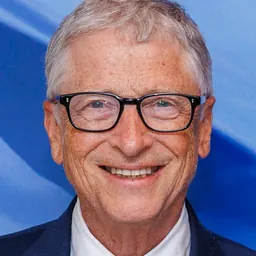
Reception Included among Smil's admirers is Microsoft co-founder Bill Gates, who has said: "I wait for new Smil books the way some people wait for the next Star Wars movie."
Smil is known for being "intensely private", shunning the press while letting his books speak for themselves. and the recipient of the American Association for the Advancement of Science Award for Public Understanding of Science and Technology in 2000. In 2010, he was named by Foreign Policy magazine to its list of FP Top 100 Global Thinkers. In 2013, he was appointed by the Governor General to the Order of Canada. In the fall of 2013, he was the EADS Distinguished Visitor at the American Academy in Berlin.
He has been an invited speaker in more than 300 conferences and workshops in the US, Canada, Europe, Asia and Africa, has lectured at many universities in North America, Europe and East Asia and has worked as a consultant for many US, European Union and international institutions.
His book How the World Really Works: The Science Behind How We Got Here and Where We're Going was a nominee for the 2022 Balsillie Prize for Public Policy.
Publications
Books
2025 : How to Feed the World: The History and Future of Food. Viking/Penguin. 2023 : Invention and Innovation: A Brief History of Hype and Failure. The MIT Press. 2023 : Size: How It Explains the World. Viking/Penguin. 2022 : How the World Really Works: A Scientist's Guide to Our Past, Present and Future. Viking/Penguin. 2021 : Grand Transitions: How the Modern World Was Made. Oxford University Press. 2020 : Numbers Don't Lie: 71 Things You Need To Know About The World. Penguin. 2019 : Growth: From Microorganisms to Megacities. The MIT Press. 2017 : Energy and Civilization: A History. The MIT Press. 2015 : Natural Gas: Fuel for the 21st Century. Wiley. 2015 : Power Density: A Key to Understanding Energy Sources and Uses. The MIT Press. 2013 : Making the Modern World: Materials and Dematerialization. Wiley. 2013 : Made in the USA: The Rise and Retreat of American Manufacturing. The MIT Press. 2013 : Should We Eat Meat? Evolution and Consequences of Modern Carnivory. Wiley. 2013 : Harvesting the Biosphere; What We Have Taken from Nature. The MIT Press. 2012 : Japan’s Dietary Transition and Its Impacts. The MIT Press. 2010 : Prime Movers of Globalization: The History and Impact of Diesel Engines and Gas Turbines. The MIT Press. 2010 : Energy Myths and Realities: Bringing Science to the Energy Policy Debate. The AEI Press. 2010 : Energy Transitions: History, Requirements, Prospects. Praeger. 2010 : Why America Is Not a New Rome. MIT Press. 2008 : Global Catastrophes and Trends: The Next Fifty Years. The MIT Press. 2008 : Oil: A Beginner's Guide. Oneworld Publications. 2008 : Energy in Nature and Society: General Energetics of Complex Systems. The MIT Press. 2006 : Energy: A Beginner's Guide. Oneworld Publications. 2006 : Transforming the Twentieth Century: Technical Innovations and Their Consequences. Oxford University Press. 2005 : Creating the Twentieth Century: Technical Innovations of 1867–1914 and Their Lasting Impact. Oxford University Press. 2004 : China’s Past, China’s Future. RoutledgeCurzon. 2003 : Energy at the Crossroads: Global Perspectives and Uncertainties. The MIT Press. 2002 : The Earth's Biosphere: Evolution, Dynamics and Change. The MIT Press. 2001 : Enriching the Earth: Fritz Haber, Carl Bosch and the Transformation of World Food Production. The MIT Press. 2000 : Feeding the World: A Challenge for the 21st Century. The MIT Press. 1998 : Energies: An Illustrated Guide to the Biosphere and Civilization. The MIT Press. 1997 : Cycles of Life: Civilization and the Biosphere. Scientific American Library. 1994 : Energy in World History. Westview Press. 1993 : China's Environment: An Inquiry into the Limits of National Development. M. E. Sharpe. Winner of the 1995 Joseph Levenson Book Prize. 1993 : Global Ecology: Environmental Change and Social Flexibility. Routledge. 1991 : General Energetics: Energy in the Biosphere and Civilization. Wiley. 1988 : Energy in China's Modernization. M.E. Sharpe. 1987 : Energy Food Environment: Realities Myths Options. Oxford University Press. 1985 : Carbon Nitrogen Sulfur: Human Interference in Grand Biospheric Cycles. Plenum Press. 1984 : The Bad Earth: Environmental Degradation in China. M.E. Sharpe. 1983 : Biomass Energies: Resources, Links, Constraints. Plenum Press. 1982 : (in collaboration with P. Nachman and T. V. Long, II). Energy Analysis in Agriculture: An Application to U.S. Corn Production. Westview Press. 1980 : (in collaboration with W. E. Knowland). Energy in the Developing World. Oxford University Press. 1976 : China's Energy: Achievements, Problems, Prospects. Praeger.
Articles
"Good Eats". Inference, vol. 5, no. 1 (December 12, 2019) "Sputnik at 60". IEEE Spectrum, September 26, 2017. "A Skeptic Looks at Alternative Energy". IEEE Spectrum, July 2012. "Energy innovation as a process: Lessons from LNG". Master Resource: A Free-Market Energy Blog, January 11, 2010. "Two decades later: Nikkei and lessons from the fall". The American, December 29, 2009. "The Iron Age & coal-based coke: A neglected case of fossil-fuel dependence". Master Resource: A Free-Market Energy Blog, September 17, 2009. "U.S. energy policy: The need for radical departures". Issues in Science and Technology, Summer 2009:47–50. "Long-range energy forecasts are no more than fairy tales". Nature 453:154 (2008). "Moore's curse and the great energy delusion". The American 2(6): 34–41 (2008). "Water news: bad, good and virtual". American Scientist, 96:399–407 (2008). "On meat, fish and statistics: The global food regime and animal consumption in the United States and Japan". Japan Focus, October 19, 2008. James N. Galloway, Marshall Burke, G. Eric Bradford, Rosamond Naylor, Walter Falcon, Ashok K. Chapagain, Joanne C. Gaskell, Ellen McCullough, Harold A. Mooney, Kirsten L. L. Oleson, Henning Steinfeld, Tom Wassenaar and Vaclav Smil. "International trade in meat: The tip of the pork chop". Ambio 36:622–629 (2007). "The two prime movers of globalization: history and impact of diesel engines and gas turbines". Journal of Global History, 3:373–394 (2007). "Global material cycles". Encyclopedia of Earth, June 2, 2007. "The unprecedented shift in Japan's population: Numbers, age, and prospects". Japan Focus, May 1, 2007. "Light behind the fall: Japan's electricity consumption, the environment, and economic growth". Japan Focus, April 2, 2007. "21st century energy: Some sobering thoughts". OECD Observer, 2006. "Peak oil: A catastrophist cult and complex realities". World Watch 19: 22–24 (2006). Naylor, R., Steinfeld, H., Falcon, W., Galloway, J., Smil, V., Bradford, E., Alder, J., Mooney, H. "Losing the links between livestock and land". Science 310:1621–1622. "The next 50 years: Unfolding trends:. Population and Development Review, 31: 605–643 (2005). "Feeding the world: How much more rice do we need?" In: Toriyama K., Heong K.L., Hardy B., eds. Rice is life: scientific perspectives for the 21st century. Proceedings of the World Rice Research Conference held in Tokyo and Tsukuba, Japan, November 4–7, 2004. Los Baños (Philippines): International Rice Research Institute, pp. 21–23. "The next 50 Years: Fatal discontinuities". Population and Development Review, 31: 201–236 (2005). "Improving efficiency and reducing waste in our food system". Environmental Sciences, 1:17–26 (2004).
Filmography Surviving Progress, a 2011 Canadian documentary in which Smil appears Inside Bill's Brain: Decoding Bill Gates, a 2019 Netflix Documentary in which Smil appears
Don’t just read it —
keep it.
Full-length biographies made to live with: read them, listen on the way to work, watch them tonight.
- E-book
- Audio
- Video
Instant download · yours to keep · every purchase keeps this site free
Important facts
People in Vaclav Smil's life
Named in this biography and alive at the same time



Related people
Same field, nearest in time


Contemporaries
People whose lives overlapped Vaclav Smil's


Frequently asked questions
Who is Vaclav Smil?
science author and distinguished professor University of Manitoba
When was Vaclav Smil born?
Vaclav Smil was born on 9 December 1943 in Plzeň.
What is Vaclav Smil's occupation?
Vaclav Smil is a geographer, economist, university teacher, scientist, writer and science communicator.
What nationality is Vaclav Smil?
Vaclav Smil is Canadian and Czech.
Sources & further reading
Cite this page
APA: Biography.guide. (2026). Vaclav Smil. https://biography.guide/vaclav-smil/
MLA: "Vaclav Smil." Biography.guide, https://biography.guide/vaclav-smil/.
Chicago: "Vaclav Smil." Biography.guide. https://biography.guide/vaclav-smil/.
Data last updated: 2026-09-20 · Spot an error? Report a correction.
Page generated 2026-09-27 05:22 UTC