
About V. Shantaram
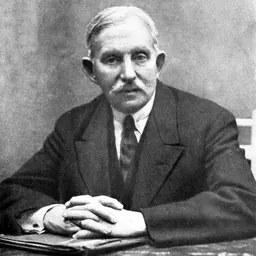
Lived 1901 – 1990 (aged 88). V. Shantaram was an Indian film director, film producer, screenwriter, film actor, actor and director.
Shantaram Rajaram Vankudre (18 November 1901 – 30 October 1990), also known as V. Shantaram or Shantaram Bapu, was an Indian film director, producer, screenwriter, actor and editor known for his work in Hindi and Marathi films. He is best known for films such as, Amar Bhoopali (1951), Jhanak Jhanak Payal Baaje (1955), Do Aankhen Barah Haath (1957), Navrang (1959), Duniya Na Mane (1937), Pinjara (1972), Chani, Iye Marathiche Nagari and Zunj.
Career V. Shantaram started his film career doing odd jobs in Maharashtra Film Co. owned by Baburao Painter at Kolhapur. He went on to debut as an actor in the silent film Surekha Haran in 1921.
Shantaram, fondly known as Annasaheb (अण्णासाहेब), had an illustrious career as a filmmaker for almost seven decades. He was one of the early filmmakers to realize the efficacy of the film medium as an instrument of social change and used it successfully to advocate humanism on one hand and expose bigotry and injustice on the other. V. Shantaram had a very keen interest in music. It is said that he "ghost wrote" music for many of his music directors, and took a very active part in the creation of music. Some of his songs had to be rehearsed several times before they were approved by V. Shantaram. He was praised by Charlie Chaplin for his Marathi film Manoos. Chaplin reportedly liked the film to a great extent.
He directed his first film Netaji Palkar, in 1927. In 1929, he founded the Prabhat Film Company along with Vishnupant Damle, K.R. Dhaiber, S. Fatelal and S.B. Kulkarni, which made Ayodhyecha Raja, the first Marathi language film in 1932 under his direction. He left Prabhat co. in 1942 to form "Rajkamal Kalamandir" in Mumbai. In time, "Rajkamal" became one of the most sophisticated studios of the country.
Shantaram introduced his daughter Rajshree and Jeetendra in the 1964 film Geet Gaya Patharon Ne. He also introduced his third wife Sandhya's niece Ranjana Deshmukh into the Marathi film industry through Chandanachi Choli Ang Ang Jaali, directed by his son Kiran Shantaram in 1975. Ranjana dominated the Marathi silver screen in the '70s and '80s.
The Dadasaheb Phalke Award was conferred on him in 1985. He was posthumously awarded the Padma Vibhushan in 1992.
His autobiography Shantarama was published in Hindi and Marathi.
The V. Shantaram Award was constituted by Central Government and Maharashtra State Government. The V. Shantaram Motion Picture Scientific Research and Cultural Foundation, established in 1993, offers various awards to film-makers. The award is presented annually on 18 November. Shantaram was maternal cousin of famous Marathi film director Master Vinayak, (father of Bollywood actress Nanda) as well as Baburao Pendharkar and Bhalji Pendharkar. He used to live at Panhala near Kolhapur in Maharashtra state before moving to Pune and then ultimately Bombay.
Personal life In 1921, aged 20, he married 12-year-old Vimalabai in a match arranged by their families. They had four children: son Prabhat Kumar (whom Shantaram named after his movie company) and daughters Saroj, Madhura and Charusheela. Saroj, the eldest daughter, is married to Soli Engineer, a Parsi, and they run the Grand Hotel in Mumbai and the Valley View Grand Resort at Panhala near Kolhapur, built on Shantaram's farmhouse, which was inherited by Saroj. Shantaram's second daughter, author Madhura, is the wife of Pandit Jasraj and mother of music director Shaarang Dev Pandit and of TV personality Durga Jasraj. Shantaram's third daughter, Charusheela, is the mother of former film actor Siddharth Ray.
In 1941, Shantaram married actress Jayashree (née Kamulkar), with whom he had worked in several films, including Shakuntala (1942). He had three children with Jayashree: a son, the Marathi film director and producer Kiran Shantaram, and two daughters, the actress Rajshree and Tejashree. The couple divorced in 1956.
In 1956, just before the law was changed to prohibit polygamy for Hindus, Shantaram married another of his leading ladies, the actress Sandhya (née Vijaya Deshmukh), who had starred in his films Amar Bhoopali and Parchaiyan and would go on to star in many of his future films like Do Aankhen Barah Haath, Jhanak Jhanak Payal Baaje, Navrang, Jal Bin Machhli Nritya Bin Bijli and Sehra. They did not have any children together.
Death Shantaram died on 30 October 1990 in Mumbai. He was survived by his three wives and seven children.
Vimalabai died in 2008 after being bedridden for four years. Jayashree died peacefully in her sleep in 2003. Sandhya (Vijaya Deshmukh) died in 2025.
Filmography
As actor Surekha Haran (1921) Savkari Pash (1925) Sinhagad (1933) Parchhain (1952) Do Ankhen Barah Haath (1957) Stree (1961)
As producer Bhakticha Mala (1944) Maali (1944) Banwasi (1948) Sehra (1963) Geet Gaya Patharon Ne (1964) Vanvaas (1967) Ladki Sahyadri Ki (1966) Jal Bin Machhli Nritya Bin Bijli (1971) Raja Rani Ko Chahiye Pasina (1978) Jhanjhaar (1987)
As director
Maharashtra Film Company Netaji Palkar (1927)
Prabhat Film Company Gopal Krishna (1929) Udaykal (1930) Rani Saheba (1930) Khooni Khanjar (1930) Chandrasena (1931) Maya Machindra (1932) Agnikankan (1932) Ayodhyecha Raja (1932) Sinhagad (1933) Sairandhri (1933) Amrit Manthan (1934) Dharmatma (1935) Chandrasena (1935) Amar Jyoti (1936) Duniya Na Mane (1937) Kunku (1937) Manoos (1939) Aadmi (1939) Padosi (1941)
Rajkamal Kalamandir Shakuntala (1943) (1946) Lokshahir Ram Joshi (1947) Apna Desh (1949) Dahej (1950) Amar Bhoopali (1951) Teen Batti Char Raasta (1953) Surang (1953) Subah Ka Tara (1954) Jhanak Jhanak Payal Baaje (1955) Do Aankhen Barah Haath (1957) Navrang (1959) Stree (1961) Sehra (1963) Geet Gaya Patharon Ne (1964) Ladki Sahyadri Ki (1966) Boond Jo Ban Gayee Moti (1967) Jal Bin Machhli Nritya Bin Bijli (1971) Pinjra (1973) Jhanjhaar (1987)
Source: IMDB
Awards and recognition
Recognition
2017 – on 18 November 2017, Google honored Shantaram on his 116th Birthday with a Google Doodle on their Indian front page. 1952 – Amar Bhoopali (The Immortal Song) competed at the 1952 Cannes Film Festival.
Awards 1952 Cannes Film Festival – Vulcan Award - Technical Grand Prize for Direction 1955 – All India Certificate of Merit for Best Feature Film – Jhanak Jhanak Payal Baaje 1955 – President's Silver Medal for Best Feature Film in Hindi – Jhanak Jhanak Payal Baaje 1957 – President's Silver Medal for Best Feature Film in Hindi – Do Aankhen Barah Haath 1958 – Berlin International Film Festival, Silver Bear (Special Prize) – Do Aankhen Barah Haath 1985 – Dadasaheb Phalke Award 1992 – Padma Vibhushan (posthumous)
Don’t just read it —
keep it.
Full-length biographies made to live with: read them, listen on the way to work, watch them tonight.
- E-book
- Audio
- Video
Instant download · yours to keep · every purchase keeps this site free
Important facts
Family & relationships
People in V. Shantaram's life
Named in this biography and alive at the same time




Related people
Same field, nearest in time



Contemporaries
People whose lives overlapped V. Shantaram's

Frequently asked questions
Who was V. Shantaram?
Indian film director and actor (1901–1990)
When was V. Shantaram born?
V. Shantaram was born on 18 November 1901 in Kolhapur State.
When did V. Shantaram die?
V. Shantaram died on 30 October 1990 in Mumbai.
What was V. Shantaram's occupation?
V. Shantaram was a film director, film producer, screenwriter, film actor, actor and director.
What nationality was V. Shantaram?
V. Shantaram was Indian.
Sources & further reading
Cite this page
APA: Biography.guide. (2026). V. Shantaram. https://biography.guide/v-shantaram/
MLA: "V. Shantaram." Biography.guide, https://biography.guide/v-shantaram/.
Chicago: "V. Shantaram." Biography.guide. https://biography.guide/v-shantaram/.
Data last updated: 2026-09-20 · Spot an error? Report a correction.
Page generated 2026-09-27 05:28 UTC