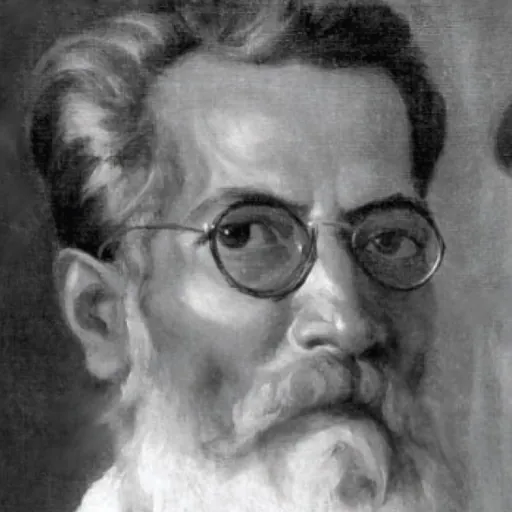
About Baburao Painter
Lived 1890 – 1954 (aged 63). Baburao Painter was an Indian film director and painter, known for Filmmaking, Painting and Sculpture.
Baburao Krishnarao Mestry, popularly known as Baburao Painter (3 June 1890 – 16 January 1954) was an Indian filmmaker and artist. He was a man of many talents with proficiency in painting, sculpture, film production, photography, and mechanical engineering.
Early life
Baburao was born in a simple family on 3 June 1890 in Kolhapur, Maharashtra. He had only studied till class four or five in a Marathi medium school. His father Krishnarao Mestry was a blacksmith and carpenter by profession, but he also excelled in painting, stone and marble sculpting along with ivory carving. Baburao inherited art from his father and learned the basics of the same from him. He also taught himself to paint and sculpt in academic art school style. In the company of his cousin brother Anandrao, he also became fascinated with oil painting, photography and film making.
Stage backdrop artist Noted theatre artist Keshavrao Bhosale, the owner of Lalit Kaladarsh Natak Mandali (theater troupe), hailed from Kolhapur. In 1909, he invited the brothers to Mumbai to paint the stage backdrops for the plays. Between 1910 and 1916, they painted numerous backdrops for Sangeet Natak troupes like Kirloskar Natak Mandali, plays of Bal Gandharva and Gujarati Parsi theatres. The realistic stage setting and perspective-style curtains that they painted brought them immense popularity and they emerged as leading painters of stage backdrops in Western India. For their incredible work, they were addressed with the moniker painter and subsequently came to be known as Baburao Painter and Anandrao Painter.
Indigenous camera While in Mumbai, the brothers became avid film goers after watching Raja Harishchandra (1913), directed by Dadasaheb Phalke. On their way back to Kolhapur, they decided to make a silent film. Anandrao started working on his own indigenous camera for film making. They had bought a movie projector from a Mumbai flea market and set up Shivaji Theatre, their own movie hall in Kolhapur, thinking that if they started running a cinema, they would raise money for film production. But that did not happen and the camera remained incomplete due to Anandrao's untimely demise in 1916.
Nonetheless, Baburao was determined to complete the camera. To remind him of his resolve, he kept his beard from the age of twenty three till the end of his life. Along with his disciple V. G. Damle, Baburao required two years to build the camera by doing many experiments on a lathe machine. He captured local scenes with the camera, like children jumping to swim in Rankala Lake and women washing clothes on the banks of the Panchganga River. As there was no laboratory in Kolhapur to wash the films strips, he also created the chemistry and printing machine. When he went to the theater and saw the clips, he was overjoyed to see Anandrao's dream of making an indigenous camera come true. which was set up on the site of today's Keshavrao Bhosale Natyagriha (previously the Palace Theatre). V. G. Damle, S. Fatehlal, writer Nanasaheb Sarpotdar and Baburao Pendharkar were with him at the time of establishment. Initially, Painter was short on funds to produce a movie. Shahu of Kolhapur had helped him by providing land for the studio, an electric generator and other related facilities. Whereas, Tanibai Kagalkar, a well known singer at the time, also helped him by offering Rs.1000 for film production.
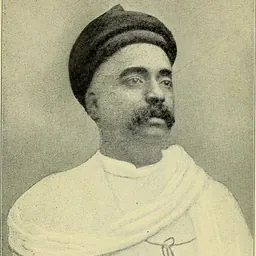
For his next venture, Baburao managed to convince Gulab Bai (a.k.a. Kamaladevi) and Anusuya Bai (a.k.a. Sushiladevi) to act in Sairandhri, making it among the first Indian films to feature women artists. It was based on the mythological tale of Kichak Vadh (Slaying of Kichaka) and got censored for its graphic depiction of Bhima slaying Kichaka. The movie was released on 7 February 1920 at the Aryan theatre in Pune. When Bal Gangadhar Tilak saw the film, he was so impressed by Baburao's work that he honored him with the title Cinema Kesari and a gold medal.
The second silent film, Surekha Haran (1921) also benefited him financially. This was when Baburao bought the best camera of the time, manufactured by Bell & Howell. However, while filming his third silent film Markandeya, a fire broke out in the waste film stock of the company. All his film footage and the indigenous camera were gutted by fire. Only the Bell & Howell camera had survived. Sardar Nesarikar saved the studio from this crisis by providing a capital of Rs. 12,000 and thereby became a partner of the company.
In addition to mythology, Baburao also made films like Sinhagad (1923), Kalyan Khajina (1924) and Sati Padmini (1924), which were based on historical stories. The film drew attention to social problems and broke the norms of conventional studio film making at the time. Despite being a great silent film, it did not do well. So Baburao returned to his mainstay, the historical and mythological stories. He changed the concept of set designing from painted curtains to solid three-dimensional lived in spaces and introduced artificial lighting. As early as 1921–22, he understood the importance of publicity and was the first to issue booklets with details & stills of the film. Sairandhari (1920) was the first Indian film to be censored by the colonial government whereas Savkari Pash (1925) was India's first social genre film with a focus on realism. When Baburao directed the film Vishwamitra (1952) in Mumbai, it also did not fare well. Subsequently, he retired and returned to Kolhapur. He got back to painting and sculpture, his original vocation. Kalyan Khajina (1924): This film won a medal at the British Empire Exhibition in Wembley, London. Savkari Pash (1925): Considered to be Painter's artistic masterpiece. Remake of Savkari Pash as a talkie (1936). J. B. H. Wadia on the two versions of Savkari Pash said,"I faintly remember the silent Savkari Pash... But it was only when I saw the talkie version that I realized what a great creative artist he (Baburao) was. I go into a trance when I recollect the long shot of a dreary hut photographed in low key, highlighted only by the howl of a dog." Pratibha (1937) Rukmini Swayamvar (1946) Lokshahir Ram Joshi (1947) Vishwamitra (1952): Last film by Baburao Painter.
W. E. Gladstone Solomon, then principal of the Sir J.J. School of Art, had felicitated him for a watercolor poster of a silent film. Seeing his work, experts of the field had said that, "These magnificent artistic posters and banners are worthy of being housed in a museum where they will provide lasting value." He had also made eye-catching covers for N. S. Phadke's books like Jadugar, Daulat, Atkepar, Gujgoshti etc. These attractive covers added to the popularity of the novels and also became masterpieces in his oeuvre. group compositions, mythological subjects, and a few landscapes. His artworks exhibit sound technical skills, elegance and freshness. Just like Raja Ravi Varma, his paintings have a beautiful blend of Indian subjects with western techniques. He was inclined towards the romanticism outlook of Pre-Raphaelite painters in 19th-century England. His noted sculptures include that of Shivaji Maharaj, Mahatma Gandhi and the bust of Jyotirao Phule. Baburao continued to produce work in various art mediums till the end of his life.
Personal life Baburao married Lakshmibai in 1927 and had eight children - six daughters and two sons.
Death and legacy Baburao died of heart attack in Kolhapur on 16 January 1954. After his death, N. C. Phadke dedicated an entire issue of his Anjali magazine to Baburao, highlighting his all-round accomplishments in the art and film industry. In this issue, he praised Painter as Kalamaharshi (Great art sage), a title that is posthumously used with his name.
In November 2002, Kalamaharshi Baburao Painter Film Society (KBPFS) was established in Kolhapur, named after the stalwart. It organizes film screenings, retrospective and film related programmes to engage film enthusiasts and inculcate a taste for good cinema. The film society also organizes the Kolhapur International Film Festival and has completed eight editions in 2020. As a part of the festival, the society has felicitated accomplished film makers with the Kalamaharshi Baburao Painter Award. Noted recipients of this award include Girish Kasaravalli (2015), Shaji N. Karun (2016), Sumitra Bhave (2017) and Govind Nihalani (2019).
The National Film Archive of India, Pune had organized an exhibition on Painter in June 2015 to commemorate his 125th birth anniversary. It showcased photographs, posters and publicity material of the films made by him.
Don’t just read it —
keep it.
Full-length biographies made to live with: read them, listen on the way to work, watch them tonight.
- E-book
- Audio
- Video
Instant download · yours to keep · every purchase keeps this site free
Important facts
People in Baburao Painter's life
Named in this biography and alive at the same time


Related people
Same field, nearest in time


Contemporaries
People whose lives overlapped Baburao Painter's



Frequently asked questions
Who was Baburao Painter?
Indian film maker and artist (1890-1954)
When was Baburao Painter born?
Baburao Painter was born on 3 June 1890 in Kolhapur State.
When did Baburao Painter die?
Baburao Painter died on 16 January 1954 in Kolhapur.
What was Baburao Painter's occupation?
Baburao Painter was a film director and painter.
What was Baburao Painter known for?
Baburao Painter was known for Filmmaking, Painting and Sculpture.
What nationality was Baburao Painter?
Baburao Painter was Indian.
Sources & further reading
Cite this page
APA: Biography.guide. (2026). Baburao Painter. https://biography.guide/baburao-painter/
MLA: "Baburao Painter." Biography.guide, https://biography.guide/baburao-painter/.
Chicago: "Baburao Painter." Biography.guide. https://biography.guide/baburao-painter/.
Data last updated: 2026-09-21 · Spot an error? Report a correction.
Portrait: Wikimedia Commons · author & licence
Page generated 2026-09-27 04:58 UTC