
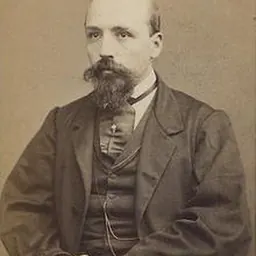
V. S. Srinivasa Sastri
Moderate Indian National Congress Leader from Madras Presidency.
About V. S. Srinivasa Sastri
Lived 1869 – 1946 (aged 76). V. S. Srinivasa Sastri was an Indian politician and freedom fighter.
Valangaiman Sankaranarayana Srinivasa Sastri (22 September 1869 – 17 April 1946) was an Indian politician, administrator, educator, orator and Indian independence activist. He was acclaimed for his oratory and command over the English language. Srinivasa Sastri was born to a poor temple priest in the village of Valangaiman near Kumbakonam, India. He completed his education at Kumbakonam and worked as a school teacher and later, headmaster in Triplicane, Madras. He entered politics in 1905 when he joined the Servants of India Society. Sastri served as a member of the Indian National Congress from 1908 to 1922, but later resigned in protest against the non-cooperation movement. Sastri was one of the founding members of the Indian Liberal Party. In his later days, he was strongly opposed to the partition of India.
Early life and educational career
Srinivasa Sastri was born in the town of Valangaiman, Madras Presidency, India on 22 September 1869. His father, Vaidik Sankaranarayana Sastri, was a Hindu priest. He was educated at the Native High School in Kumbakonam and in 1887, graduated from Pachaiyappa's College, Chennai, with a first class degree in English and Sanskrit. On graduation, he found employment as a teacher at Municipal College, Salem.
Srinivasa Sastri married Parvathi in 1885. His granddaughters are, Parvathy, married to Ramamurti (Retd.G.M of NLC) and Kausalya, married to the renowned Indian scientist and nephew of Sir C. V. Raman, S. Ramaseshan.
In 1894, Srinivasa Sastri was appointed headmaster of Hindu High School, Triplicane and served for a period of eight years, until 1902. During this period, he achieved fame for his proficiency in English and his good administrative skills. In his late years, he also served as Vice-Chancellor of the Annamalai University. He delivered the Kamala lectures in Calcutta University which are widely cherished and remembered. He was one of the pioneers of the Co-operative movement and started India's first co-operative society, the Triplicane Urban Co-operative Society (TUCS) in 1904.
Srinivasa Sastri met Indian independence activist Gopal Krishna Gokhale for the first time in 1906. He joined the Indian National Congress in 1908 and became the Secretary of the Madras District Congress Committee in 1911. As a member of the Congress, he was instrumental in bringing about a pact between the Congress and the Muslim League. As a member of the Viceregal council, Srinivasa Sastri was also a part of the British delegation which participated in the Washington Naval Conference and a signatory to the Five Power Naval Disarmament Treaty. During one of his speeches on "The Political Situation in India", he was accused of being a British agent and attacked by a mob and had to be hastily escorted away by mounted police.
In 1922, the Government of India sent Sastri on delegations to Australia, New Zealand and Canada in order to investigate the conditions of Indians living in those countries. Due to his efforts, the Government of Australia passed the Commonwealth Electoral Act enlarging the franchise to include "natives of British India". However, on Srinivasa Sastri's departure from South Africa as India's Agent in 1928, Smuts recognized Sastri as the "most respected man in South Africa". The delegation submitted a controversial report titled Conditions of Indian labour in Malaya which was published in Madras and Kuala Lumpur, the very same year.
With Sastri's support and encouragement, dissidents of the Transvaal British Indian Association (TBIA) founded the Transvaal Indian Congress (TIC) on 18 December 1927. During 1930–31, he participated in the Round Table Conferences in London to discuss India's future and was instrumental in bringing about the Gandhi-Irwin Pact. In 1935, Sastri was appointed Vice-Chancellor of Annamalai University, in Tamil Nadu, and served from 1935 to 1940. At the peak of the Second World War, he participated in a 15-member Indian delegation which appealed to the British Prime Minister, Winston Churchill to provide dominion status to India. He strongly opposed Muslim League demands for the partition of India. The constitution of the committee was strongly condemned by the Madras Presidency Tamil Sangam and its Secretary E. M. Subramania Pillai who felt that Srinivasa Sastri was biased in favour of Sanskrit and hence, Anti-Tamil. The deliberations of the Sastri Committee provoked widespread agitations in Madras Presidency. The committee was eventually reshuffled by Provincial Education Minister T. S. Avinashilingam Chettiar soon after the demise of Srinivasa Sastri and balanced with the introduction of more members supporting the replacement of Sanskrit loan words.
Srinivasa Sastri's health began to deteriorate in early 1946. In January, Srinivasa Sastri was admitted to the General Hospital, Madras.
Silver-Tongued Orator of the British Empire
Srinivasa Sastri was known for his mastery over the English language and his oratory. The Master of Balliol, Arthur Lionel Smith swore that he had never realized the beauty of the English language until he heard Sastri. and he was so called all over the United Kingdom.
Relation with Mahatma Gandhi
Honours
Sastri was made a member of the Privy Council of the United Kingdom in 1921. The then Viceroy offered to make Sastri Knight Commander of the Order of the Star of India in 1928, but he declined the offer. This was followed by the Freedom of the City of Edinburgh on 9 January 1931.
Sastri's biography, The Right Honourable V.S. Srinivasa Sastri: A Political Biography (1963), written by his long-time political secretary P. Kodanda Rao won the Watumull Memorial Prize in 1966.
Works
Don’t just read it —
keep it.
Full-length biographies made to live with: read them, listen on the way to work, watch them tonight.
- E-book
- Audio
- Video
Instant download · yours to keep · every purchase keeps this site free
Important facts
People in V. S. Srinivasa Sastri's life
Named in this biography and alive at the same time


Related people
Same field, nearest in time




Contemporaries
People whose lives overlapped V. S. Srinivasa Sastri's



Frequently asked questions
Who was V. S. Srinivasa Sastri?
Moderate Indian National Congress Leader from Madras Presidency.
When was V. S. Srinivasa Sastri born?
V. S. Srinivasa Sastri was born on 22 September 1869 in Valangaiman.
When did V. S. Srinivasa Sastri die?
V. S. Srinivasa Sastri died on 17 April 1946 in Mylapore.
What was V. S. Srinivasa Sastri's occupation?
V. S. Srinivasa Sastri was a politician and freedom fighter.
What nationality was V. S. Srinivasa Sastri?
V. S. Srinivasa Sastri was Indian.
Sources & further reading
· Wikipedia: V. S. Srinivasa Sastri
· DBpedia: V. S. Srinivasa Sastri
Cite this page
APA: Biography.guide. (2026). V. S. Srinivasa Sastri. https://biography.guide/v-s-srinivasa-sastri/
MLA: "V. S. Srinivasa Sastri." Biography.guide, https://biography.guide/v-s-srinivasa-sastri/.
Chicago: "V. S. Srinivasa Sastri." Biography.guide. https://biography.guide/v-s-srinivasa-sastri/.
Data last updated: 2026-09-20 · Spot an error? Report a correction.
Page generated 2026-09-27 05:30 UTC