
About Ursula Kuczynski
Lived 1907 – 2000 (aged 93). Ursula Kuczynski was a German actor, writer, intelligence agent, journalist, resistance fighter and spy.
Ursula Kuczynski (15 May 1907 – 7 July 2000), also known as Ruth Werner, Ursula Beurton and Ursula Hamburger, was a German Communist activist who spied for the Soviet Union during the 1930s and 1940s, most famously as the handler of nuclear scientist Klaus Fuchs. She moved to East Germany in 1950 when Fuchs was unmasked, and published a series of books related to her espionage activities, including her bestselling autobiography, Sonjas Rapport.
Sources concerned with her espionage work in the 1930s/40s sometimes use the cover name originally suggested to her in Shanghai by her fellow intelligence operative and lover Richard Sorge: "Sonja",
The children were academically gifted, and the household was prosperous,
Librarianship, marriage and politics In 1926 and 1927, she attended a librarianship academy while working at a lending library. She then took a job at Ullstein Verlag, a large Berlin publishing house. However, she lost this job in 1928 after participating in a May-Day Demonstration and/or on account of her Communist Party membership. Between December 1928 and August 1929 she worked in a New York book shop before returning to Berlin where she married Rudolf Hamburger, an architect and fellow member of the Communist Party. It was also at this time that she set up the Marxist Workers' Library (MAB) in Berlin. She headed up the MAB between August 1929 and June 1930. to another German expatriate, Richard Sorge, "Sonja" (the code name by which Kuczynski was known) operated a Russian spy ring under Sorge's direction. In Shanghai, she also met Roger Hollis, who later became the director of MI5, and Manfred Stern, who had run a spy network in the United States and was now a military advisor to the Chinese Communist Party.
In Fall 1931, Ursula sent her son Michael to live with her husband's parents (now relocated from Germany to Czechoslovakia) while she went to Moscow, where she undertook a seven-month training session before returning to China. They had settled in north Oxford, but soon moved on to the first of a succession of nearby villages, settling initially in Glympton, and then in Kidlington. are buried in the Great Rollright churchyard.
Living in Oxfordshire placed them conveniently close to her parents and Melita Norwood. Ursula thus hastened the development of the Soviet atomic bomb, Her communist sympathies were no secret, but British suspicions were insufficiently supported by evidence to justify her arrest. Her visitors were unaware of or unconcerned by her periodic, and apparently casual, meetings with Fuchs There was no mention of Klaus Fuchs, who was still alive in 1976 An uncensored German language version came out only in 2006,
In 1982 Ruth Werner became a member of the East German affiliate of PEN International.
She seems never to have regretted or seen the need to apologize for her espionage. In 1956, when Nikita Khrushchev made public the darker face of Communist Russia under Stalin, she was invited to comment. She was reluctant to join the criticism of the Soviet wartime leader:
It was not always easy [for the Soviet authorities] to differentiate between the mistakes of honest comrades and the actions of imperialist opponents. With so many guilty people it could certainly happen that the innocent became caught up. An unidentified GRU chief is reported to have observed during the war, "If we had five Sonyas in England, the war would end sooner". She could be more reticent about her contribution: "I was simply working as a messenger" ("Ich arbeitete ja bloß als Kurier".)
What is incontrovertible is that Ursula engaged in an exceptionally high-risk trade on behalf of Stalin's Intelligence machine without being shot by the enemy or sent to the Gulag by her own side. Her first husband, Rudolf Hamburger, who also worked for Soviet intelligence, fell foul of the Soviet regime in 1943 and was deported to the Gulag. He was released in 1952 but remained officially "banned" and was sent to Ukraine, only being permitted to return to East Germany in 1955. This type of experience was far from unusual among Soviet spies. Alexander Radó, with whom she had worked closely in the hills above Geneva, also spent long years in the Gulag. Richard Sorge, who recruited her to work for Moscow in the first place, was caught and hanged by the Japanese.
As far as her story has come into the public domain, Ursula suffered nothing more harrowing than a couple of pointed but ultimately inconclusive meetings with British Intelligence agents in 1947. She was able to escape to East Germany before her espionage activities became the subject of any trial or other retributive process. Simple survival represented a considerable achievement under the circumstances of her two decades in espionage, and seems to justify the media epithets she attracted to the effect that she was "Stalin's best female spy" ("Stalins beste Spionin").
Awards and honours 1937 Order of the Red Banner 1969 Order of the Red Banner 1978 National Prize of the German Democratic Republic 1978 Order of Karl Marx 1982 Patriotic Order of Merit 1986 Jubilee Medal "Forty Years of Victory in the Great Patriotic War 1941–1945" 1987 Patriotic Order of Merit Gold clasp 1990 Order of Friendship (awarded posthumously)
Don’t just read it —
keep it.
Full-length biographies made to live with: read them, listen on the way to work, watch them tonight.
- E-book
- Audio
- Video
Instant download · yours to keep · every purchase keeps this site free
Important facts
Family & relationships
People in Ursula Kuczynski's life
Named in this biography and alive at the same time
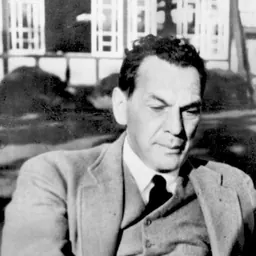
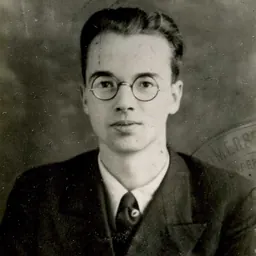
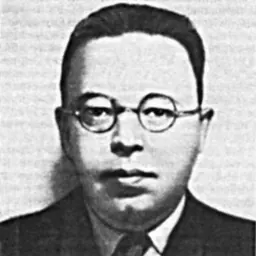




Related people
Same field, nearest in time

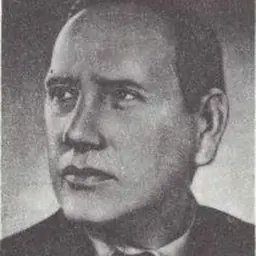

Contemporaries
People whose lives overlapped Ursula Kuczynski's


Frequently asked questions
Who was Ursula Kuczynski?
German spy (1907-2000)
When was Ursula Kuczynski born?
Ursula Kuczynski was born on 15 May 1907 in Berlin.
When did Ursula Kuczynski die?
Ursula Kuczynski died on 7 July 2000 in Berlin.
What was Ursula Kuczynski's occupation?
Ursula Kuczynski was an actor, writer, intelligence agent, journalist, resistance fighter and spy.
What nationality was Ursula Kuczynski?
Ursula Kuczynski was German.
Sources & further reading
Cite this page
APA: Biography.guide. (2026). Ursula Kuczynski. https://biography.guide/ursula-kuczynski/
MLA: "Ursula Kuczynski." Biography.guide, https://biography.guide/ursula-kuczynski/.
Chicago: "Ursula Kuczynski." Biography.guide. https://biography.guide/ursula-kuczynski/.
Data last updated: 2026-09-20 · Spot an error? Report a correction.
Page generated 2026-09-27 05:25 UTC