
About Ursula Klein
Born 1952. Ursula Klein is a German historian, philosopher, historian of science and university teacher, known for Paper tools.
Ursula Klein (born 1952) is a German historian of science, known for her cross-disciplinary work on the historical emergence of scientific and technological knowledge. She is a senior research scholar at the Max Planck Institute for the History of Science in Berlin, Germany. Her work has shown how experimentalists created specialised information technologies called "paper tools" to generate new knowledge systems. Her interpretation of such tools has been widely applied by historians, philosophers and sociologists of science and technology, and is seen as marking a foundational change in scientific reasoning and practice in the history of chemistry in the early 19th century.
She holds that there is no clear dividing line between science and technology, oftentimes using the term "technoscience" to represent the historical interface between scientific reasoning and the material forms of knowledge produced within specialised industrial or medical settings. In 2016 she received the HIST Award for Outstanding Achievement in the History of Chemistry from the American Chemical Society.
Education Klein completed her Higher State Exam in chemistry and biology in 1979. After studying chemistry and biology at the Free University of Berlin, she taught both subjects at the secondary level from 1980 to 1988. She earned her Ph.D. in philosophy (summa cum laude) from the University of Konstanz in 1993. She received Habilitation in philosophy from the University of Konstanz in 2000. She also serves on the editorial boards of Ambix, In addition to being named a member of Deutsche Akademie der Naturforscher/Leopoldina as of 2008, Ursula Klein also serves on the Human Rights Committee (HRC) of the Leopoldina. Klein introduced the concept of the paper tool through an examination of Berzelian formulas and their impact on inorganic and organic chemistry. Berzelian formulas were particularly important because they connected a world of signs with the world of laboratory experimentation. They enabled scientists to describe complex materials and reactions in organic chemistry in organized ways, similar to the ways in which chemists had identified and classified inorganic substances. In this way, paper tools acted as causal mechanisms and became the precursors of new theories. The idea of paper tools has been adopted since by others and applied to constructs such as periodic tables, Feynman diagrams Klein examines paper tools, models and experiments in terms of their impact on scientific reasoning and practice in early-nineteenth-century organic chemistry in her book Experiments, models, paper tools (2003).
In Materials in Eighteenth-Century Sciences (2007) Klein and Lefèvre discuss ways in which eighteenth century chemistry was grounded in a world of materials such as balsams, fats, salts, alloys, plant materials and blood, and practiced in a wide variety of settings including “apothecary's shops, foundries, assaying laboratories, arsenals, dye manufactories, distilleries, [and] coffee shops.” They then focus on a transitional period in eighteenth-century European chemistry, around 1830. At this time, methods of classification of substances changed, from focusing on experiential classification such as chemical composition, provenance, and properties of the substance, to more fundamental levels such as chemical structure and application. The book was praised for its breadth and "well-written exposition of an important change in materials science".
Materials and expertise in early modern Europe (2010) presents a nuanced understanding of the relationships between academic science and industrial technology in the late eighteenth century, examining the work of both artisans and scholars.
Technoscience Throughout her career, Klein has promoted the notion that theories and practices of science and technology overlap, creating what she and others such as Bruno Latour and Bernadette Bensaude-Vincent called "technoscience". Though she has explored meaning and materials of technoscience in reference to numerous European settings, her most influential work relates to experimentalists, industrialists and savants in Germany. She has explored the topic in Humboldts Preußen. Wissenschaft und Technik im Aufbruch (2015), discusses Alexander von Humboldt and his contemporaries in the context of the early development of Prussian science and technology. Other figures discussed include Andreas Sigismund Marggraf, Franz Karl Achard, Martin Heinrich Klaproth and Carl Abraham Gerhard.
Selected publications
Awards and honors 2016, HIST Award for Outstanding Achievement in the History of Chemistry, American Chemical Society 2008, Member, Deutsche Akademie der Naturforscher/Leopoldina
Don’t just read it —
keep it.
Full-length biographies made to live with: read them, listen on the way to work, watch them tonight.
- E-book
- Audio
- Video
Instant download · yours to keep · every purchase keeps this site free
Important facts
People in Ursula Klein's life
Named in this biography and alive at the same time
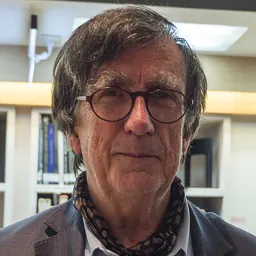
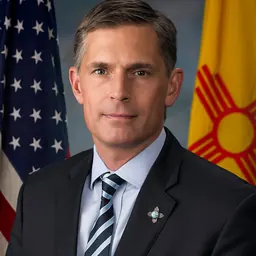


Related people
Same field, nearest in time
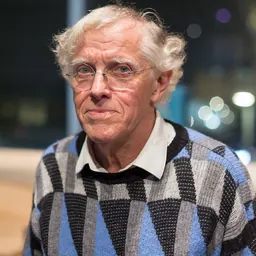
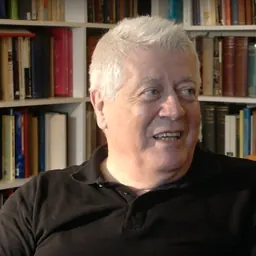

Contemporaries
People whose lives overlapped Ursula Klein's

Frequently asked questions
Who is Ursula Klein?
German historian of science
When was Ursula Klein born?
Ursula Klein was born on 6 July 1952.
What is Ursula Klein's occupation?
Ursula Klein is a historian, philosopher, historian of science and university teacher.
What is Ursula Klein known for?
Ursula Klein is known for Paper tools.
What nationality is Ursula Klein?
Ursula Klein is German.
Sources & further reading
Cite this page
APA: Biography.guide. (2026). Ursula Klein. https://biography.guide/ursula-klein/
MLA: "Ursula Klein." Biography.guide, https://biography.guide/ursula-klein/.
Chicago: "Ursula Klein." Biography.guide. https://biography.guide/ursula-klein/.
Data last updated: 2026-09-20 · Spot an error? Report a correction.
Page generated 2026-09-27 05:26 UTC