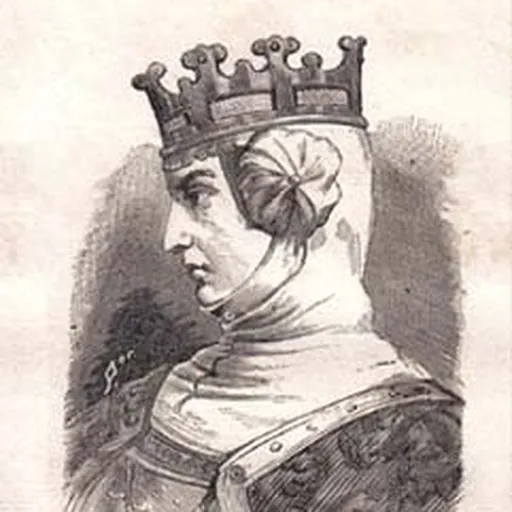
Urraca of Castile
Queen of Portugal
About Urraca of Castile
Lived 1186 – 1220 (aged 33–34).
Urraca of Castile (1186/28 May 1187 – 3 November 1220) was Queen of Portugal by marriage to Afonso II of Portugal. A daughter of Alfonso VIII of Castile and Eleanor of England, her maternal grandparents were Henry II of England and Eleanor of Aquitaine.
Early life Family and upbringing Urraca, born in 1187, was the second-born daughter of King Alfonso VIII of Castile (1155–1214) and Leonor of England (1161–1214). Alfonso and Leonor are believed to have had at least a dozen pregnancies, with only six children surviving into adulthood. Urraca's siblings who survived into adulthood were Berengaria, Blanche, Eleanor, Ferdinand and Constance. Urraca had two brothers, Ferdinand and Henry who died before being able to take the throne. Following Castilian aristocratic custom, Alfonso and Leonor named their male children after male ancestors and female children after female ancestors. The first few children were named after Alfonso's ancestors and the final four children were named after Eleanor's ancestors. All of them were named after ancestors who were rulers. Urraca was named after Alfonso's great-grandmother, who was the queen of Leon-Castile.
There is little documented evidence of Urraca's birth and early life. Unlike some of her contemporaries, she was rarely mentioned in charters or chronicles. In part, this was due to her gender and her not being the eldest daughter. She was never fated to rule and therefore played a different yet incredibly important role within the royal family. Royal succession gave preference to male heirs over female heirs. Since Urraca was neither a male heir nor the eldest daughter, she would never take the Castilian throne and therefore her life was not documented in as much detail as some of her siblings. Women in the Castilian kingdom were given the same rights to inheritance as males. This gave the surviving daughters of Alfonso and Leonor the potential to hold and exercise political power.
Urraca is first mentioned in the foundation charter of the monastery of Las Huelgas in Burgos, issued in 1187.
Sancho I clearly was concerned about Afonso II respecting his testamentary decisions, since he created a second copy of his will and required Afonso II to swear that he would uphold its provisions. When Sancho I eventually died, these properties did in fact go to his daughters; Afonso II, however, did not intend to keep the promise that he made to his father, as he considered the will to be invalid. The seizure of some of these properties, legally, were not within his grasp as King of Portugal due to them being in the family of Queen Dulce, not King Sancho I. While Afonso II had an argument as the son of Queen Dulce to have these properties, he did not have the authority as the king to seize this private property. Afonso's attempt to abrogate the document caused a civil war to break out between himself and his sisters, with the sisters locking themselves away in their castles and calling their followers to defend them and their interests against their brother. The monarchy had long been at odds with the clergy, but Sancho believed that leading the Christian crusade against Muslim forces in the south would bolster the ministry's support of his kingship. King Sancho's devotion to the faith, during this stage of his rulership, aligns with Urraca's support of the Christian faith and its growth. Amid her queenship, Queen Urraca supported the mission of Franciscan friars in Portugal encouraging them to build Franciscan houses in Portuguese cities such as Lisbon and Alenquer. This marriage in 1238 granted Afonso the title, Count of Bologne. Afonso spent much of his early life in France with his mother's side of the family, but made his way back to Portugal due to his brother, King Sancho II's shaky position as king. In 1248, Afonso took over as regent for his brother who had been deposed. Though at first Afonso seemed to represent foreign power which led to distrust by the people, his improvements and additions to Portugal, including the founding of monasteries and nunneries, brought him much respect and a good reputation. Afonso's struggles regarding his "foreign" status, though he was born in Portugal, parallel struggles that his mother, Urraca, may have faced as a foreign queen. Though of noble Castilian and English birth, Queen Urraca was not Portuguese which allowed for a distance or remoteness between her, the nobles, and the common people of Portugal when she became queen. This is most likely how King Afonso III, and the common people, felt during his succession to the throne of Portugal more than four decades after his mother.
King Afonso's positive reputation was questioned when he desired to marry Beatrice of Castile while his previous wife, Matilda of Boulogne, was still alive. This greatly upset the papacy, who had been supporters of Afonso since his ascension, and led to the marriage between the king and Beatrice, which occurred in 1253, to be delegitimized until after Maud's death in 1258. Afonso III had to focus on more than internal issues as the Portuguese reconquest had not been completed by his brother, King Sancho, when Afonso ascended to the throne. The papacy, which had largely been the catalyst in Afonso's ascension, expected King Afonso to complete the Portuguese recapture of the Holy Land and, recognizing the importance of papal support, King Afonso succeeded.
There are no definitive pictures of Urraca's tomb, though her sarcophagus most likely mirrors those of the other intricately carved coffins present in Alcobaça Monastery. The sarcophagus of Urraca's daughter-in-law, Beatrice of Castile, features complex and well-preserved carvings of men on the sides of the coffin and a relief of Beatrice lying on the top. Also present in the monastery are the tombs of King Pedro I, great-great-grandson of Urraca, and his mistress, Inês de Castro, some of the best representations of Gothic sculpture in Portugal. King Pedro and Inês' tombs feature lions, saintly reliefs, scenes from the couples life, as well as events from the life of Christ. Both life-size reliefs of Pedro and Inês are carried by angels. While Urraca's sarcophagus is most likely not this intricate, elements of both Queen Beatrice's coffin as well as Inês de Castro could be present on Urraca's tomb.
Issue Sancho II of Portugal Afonso III of Portugal Eleanor of Portugal, Queen of Denmark Fernando, Lord of Serpa
Don’t just read it —
keep it.
Full-length biographies made to live with: read them, listen on the way to work, watch them tonight.
- E-book
- Audio
- Video
Instant download · yours to keep · every purchase keeps this site free
Important facts
Family & relationships
People in Urraca of Castile's life
Named in this biography and alive at the same time

Contemporaries
People whose lives overlapped Urraca of Castile's





Frequently asked questions
Who was Urraca of Castile?
Queen of Portugal
When was Urraca of Castile born?
Urraca of Castile was born in 1186 in Kingdom of Castile.
When did Urraca of Castile die?
Urraca of Castile died on 3 November 1220 in Coimbra.
What nationality was Urraca of Castile?
Urraca of Castile's recorded nationality: Kingdom of Castile, Kingdom of Portugal.
Sources & further reading
· Wikipedia: Urraca of Castile
· DBpedia: Urraca of Castile, Queen of Portugal
Cite this page
APA: Biography.guide. (2026). Urraca of Castile. https://biography.guide/urraca-of-castile/
MLA: "Urraca of Castile." Biography.guide, https://biography.guide/urraca-of-castile/.
Chicago: "Urraca of Castile." Biography.guide. https://biography.guide/urraca-of-castile/.
Data last updated: 2026-09-24 · Spot an error? Report a correction.
Portrait: Wikimedia Commons · author & licence
Page generated 2026-09-27 05:08 UTC