
About Uri Zvi Grinberg
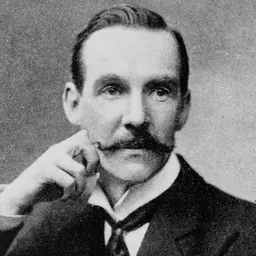
Lived 1896 – 1981 (aged 84). Uri Zvi Grinberg was an Israeli poet, politician, journalist, writer and opinion journalist.
Uri Zvi Greenberg (; September 22, 1896 – May 8, 1981; also spelled Uri Zvi Grinberg) was an Israeli poet, journalist and politician who wrote in Yiddish and Hebrew.
Widely regarded among the greatest poets in the country's history, he was awarded the Israel Prize in 1957 and the Bialik Prize in 1947, 1954 and 1977, all for his contributions to fine literature. Greenberg is considered the most significant representative of modernist Expressionism in Hebrew and Yiddish literature.
Biography Uri Zvi Greenberg was born in Bilyi Kamin, Galicia, Austria-Hungary (now in Ukraine), to a prominent Hasidic family. He was raised in Lemberg (now Lviv, Ukraine), and received a traditional Jewish religious education.
He was drafted into the Austrian army in 1915, and fought in World War I. While fording the Sava River under heavy Serbian fire, many of his comrades in arms died, or were severely wounded. The experience deeply affected him, and appeared in his writings for years to come. He deserted towards the end of the war in 1918, and fled to Lemberg. After returning to Lemberg, he was witness to the pogroms of November 1918. Greenberg and his family miraculously escaped being shot by Polish soldiers celebrating their victory over the Ukrainians, an experience which convinced him that all Jews living in the “Kingdom of the Cross” faced physical annihilation. After a brief stay in Berlin, he made aliyah to the Land of Israel (then Mandatory Palestine) in 1924. He went back to Poland in the 1930s, working as a Revisionist-Zionist activist until World War II erupted in 1939, when he returned to Israel. Greenberg was a resident of Ramat Gan. He was awarded the Israel Prize in 1957 for contributions to Hebrew literature, and the Knesset held a special session to honor him on his 80th birthday in 1976. In the wake of his iconoclastic depictions of Jesus in the second issue of Albatros, particularly his prose poem Royte epl fun veybeymer (Red Apples from the Trees of Pain). The magazine incorporated avant-garde elements both in content and typography, taking its cue from German periodicals like Die Aktion and Der Sturm.
The journal was banned by the Polish censors, and in November 1922 Greenberg fled to Berlin to escape prosecution. Greenberg published the last two issues of Albatros in Berlin before renouncing European society and immigrating to Israel in December 1923.
In his early days in Israel, Greenberg wrote for Davar, one of the main newspapers of the Labour Zionist movement. His works represent a synthesis of traditional Jewish values and an individualistic lyrical approach to life and its problems; he drew on Jewish sources such as the Bible, the Talmud and the prayer book, but was also influenced by European literature. In the second and third issues of Albatros, Greenberg invokes pain as a key marker of the modern era. This theme is illustrated in Royte epl fun vey beymer (Red apples from the tree of pain) and Veytikn-heym af slavisher erd (Pain-Home on Slavic Ground).
In his poems and articles, he warned of the fate in store for the Jews of the Diaspora. After the Holocaust, he mourned the fact that his terrible prophecies had come true.
Political activism
Greenberg predicted and warned in the decades before, of the coming destruction of European Jewry. He believed that the Holocaust was a "tragic but almost inevitable outcome of Jewish indifference to their destiny." He became more militant after the 1929 Hebron massacre and joined the Revisionist camp in 1930, representing the movement at several World Zionist Congresses, and in Poland. He founded Brit HaBirionim with Abba Ahimeir and Yehoshua Yeivin, a faction of the Revisionist movement, which adopted an activist policy of violating British mandatory regulations. Members of the group disrupted a British-sponsored census in the early 1930s, sounded the shofar in prayer at the Western Wall despite a British prohibition, held a protest rally when a British colonial official visited Tel Aviv, and tore down Nazi flags from German offices in Jerusalem and Tel Aviv. The British arrested hundreds of its members and the organization effectively ceased to exist.
Following Israeli independence in 1948, Greenberg joined Menachem Begin's Herut movement. He was elected to the first Knesset, but lost his seat in the two years later. After the Six-Day War, he joined the Movement for Greater Israel, which advocated Israeli sovereignty over Judea and Samaria.
Awards and recognition In 1947, 1954 and 1977, Greenberg was awarded the Bialik Prize for literature. In 1957, Greenberg was awarded the Israel Prize for his contribution to literature. In 1976, the Knesset held a special session in honor of his eightieth birthday.
Works In Yiddish: Evening Gold (פאַרנאַכטנגאָלד): collection from Grinberg’s early Neo-Romantic period. Mefisto (מעפיסטא): a long poem engaging with the “Faustian” world, influenced by its depictions by Oswald Spengler. In the Kingdom of the Cross (אין מלכות פֿון צלם): a long poem drawing on Grinberg’s experiences from the 1918 November Pogroms, intimately engaging with Christian Theology.
In Hebrew: A Great Terror and Moon (poetry), Hedim, 1925 (Eymah Gedolah Ve-Yareah) The Rising Masculinity (poetry), Sadan, 1926 (Ha-Gavrut Ha-Olah) A Vision of One of the Legions (poetry), Sadan, 1928 (Hazon Ehad Ha-Legionot) Anacreon at the Pole of Sorrow (poetry), Davar, 1928 (Anacreon Al Kotev Ha-Itzavon) House Dog (poetry), Hedim, 1929 (Kelev Bayit) A Zone of Defense and Address of the Son-of-Blood (poetry), Sadan, 1929 (Ezor Magen Ve-Ne`um Ben Ha-Dam) The Book of Indictment and Faith (poetry), Sadan, 1937 (Sefer Ha-Kitrug Ve-Ha-Emunah) From the Ruddy and the Blue (poetry), Schocken, 1950 (Min Ha-Kahlil U-Min Ha-Kahol) Streets of the River (poetry), Schocken, 1951 (Rehovot Ha-Nahar) In the Middle of the World, In the Middle of Time (poetry), Hakibbutz Hameuchad, 1979 (Be-Emtza Ha-Olam, Be-Emtza Ha-Zmanim) Selected Poems (poetry), Schocken Books, 1979 (Mivhar Shirim) Complete Works of Uri Zvi Greenberg, Bialik Institute, 1991 (Col Kitvei) At the Hub, Bialik Institute, 2007 (Ba-'avi ha-shir)
Don’t just read it —
keep it.
Full-length biographies made to live with: read them, listen on the way to work, watch them tonight.
- E-book
- Audio
- Video
Instant download · yours to keep · every purchase keeps this site free
Important facts
People in Uri Zvi Grinberg's life
Named in this biography and alive at the same time

Related people
Same field, nearest in time

Contemporaries
People whose lives overlapped Uri Zvi Grinberg's



Frequently asked questions
Who was Uri Zvi Grinberg?
Israeli poet (1896-1981)
When was Uri Zvi Grinberg born?
Uri Zvi Grinberg was born on 22 September 1896 in Bilyi Kamin.
When did Uri Zvi Grinberg die?
Uri Zvi Grinberg died on 8 May 1981 in Ramat Gan.
What was Uri Zvi Grinberg's occupation?
Uri Zvi Grinberg was a poet, politician, journalist, writer and opinion journalist.
What nationality was Uri Zvi Grinberg?
Uri Zvi Grinberg was Israeli.
Sources & further reading
Cite this page
APA: Biography.guide. (2026). Uri Zvi Grinberg. https://biography.guide/uri-zvi-grinberg/
MLA: "Uri Zvi Grinberg." Biography.guide, https://biography.guide/uri-zvi-grinberg/.
Chicago: "Uri Zvi Grinberg." Biography.guide. https://biography.guide/uri-zvi-grinberg/.
Data last updated: 2026-09-20 · Spot an error? Report a correction.
Page generated 2026-09-27 05:20 UTC