
Urban VII
Pope of the Catholic Church in September 1590
About Urban VII
Lived 1521 – 1590 (aged 69). Urban VII was a catholic priest, transitional deacon and catholic bishop.
Pope Urban VII (; ; 4 August 1521 – 27 September 1590), born Giovanni Battista Castagna, was head of the Catholic Church, and leader of the Papal States from 15 to 27 September 1590. His papacy is the shortest recognized in history.
Castagna, born in Rome in 1521, was a highly educated man who held various positions within the Catholic Church and the structures of the Papal States of his day. He served as Governor of Fano, Perugia, and Umbria and, as the Archbishop of Rossano, participated in the Council of Trent. Later, he was appointed as the Apostolic Nuncio to Spain and Venice and served as the Papal legate to Flanders and to Cologne. He was elevated to the cardinalate in 1583 by Pope Gregory XIII.
Upon the death of Pope Sixtus V, Castagna was elected as pope on 15 September 1590, taking the name Urban VII. He was known for his charity, public works projects, and strict opposition to nepotism. His papacy was short-lived as he died of malaria on 27 September 1590, after just 12 days in office. Urban VII is remembered for instituting the world's first known public smoking ban, threatening excommunication for those using tobacco in or near a church.
Biography Giovanni Battista Castagna was born in Rome in 1521 to a noble family as the son of Cosimo Castagna of Genoa and his wife Costanza Ricci-Giacobazzi of Rome.
Castagna studied at universities in Italy. Shortly after finishing his studies at the University of Bologna with the award of a doctorate in civil and canon law, he became an auditor to his uncle, Cardinal Girolamo Verallo, whom he accompanied as datary on a papal legation to France. resigning his post from his archdiocese in 1573.
Among other positions, Castagna was the Apostolic Nuncio to Venice from 1573 to 1577, governor of Bologna from 1576 to 1577. Apostolic Nuncio to Venice, Papal Legate to Flanders from 1573 to 1577 and to Cologne from 1578 to 1580.
On 12 December 1583 Pope Gregory XIII made Castagna a cardinalate and he became Cardinal-Priest of San Marcello al Corso.
Papacy Election
The reverse of a 1590 coin in honor of Urban VII, with a menorah and the legendSIC•LUCEAT•LUX•VESTRA(Let your light so shine – Matt. 5:16) After the death of Pope Sixtus V, a conclave was convoked to elect a successor. Ferdinando I de' Medici, Grand Duke of Tuscany had been appointed a cardinal at the age of thirteen but was never ordained to the priesthood. At the age of thirty-eight, he resigned from the cardinalate upon the death of his older brother, Francesco in 1587, to succeed to the title. There were suspicions that Francesco and his wife died of arsenic poisoning after having dined at Ferdinando's Villa Medici, although one story has Ferdinando as the intended target of his sister-in-law. Ferdinando's foreign policy attempted to free Tuscany from Spanish domination.
He was consequently opposed to the election of any candidate supported by Spain. He persuaded Cardinal Alessandro Peretti di Montalto, grand-nephew of Sixtus V, to switch his support from Cardinal Marco Antonio Colonna, which brought the support of the younger cardinals who had been appointed by the Sixtus.
Castagna, a seasoned diplomat, moderate and of proven rectitude, was elected as pope on 15 September 1590 and selected the pontifical name of "Urban VII".
His short reign gave rise to the world's first known public smoking ban, as he threatened to excommunicate anyone who "took tobacco in the porchway of or inside a church, whether it be by chewing it, smoking it with a pipe or sniffing it in powdered form through the nose".
Death Urban VII died in Rome on 27 September 1590 of malaria. He had reigned for only 12 days and died before he could be crowned.
His estate, valued at 30,000 to 32,000 scudi, for use as dowries for poor young girls.
Don’t just read it —
keep it.
Full-length biographies made to live with: read them, listen on the way to work, watch them tonight.
- E-book
- Audio
- Video
Instant download · yours to keep · every purchase keeps this site free
Important facts
People in Urban VII's life
Named in this biography and alive at the same time

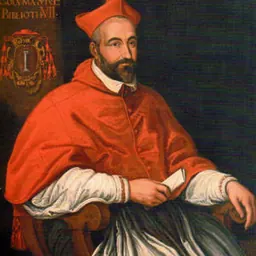

Related people
Same field, nearest in time
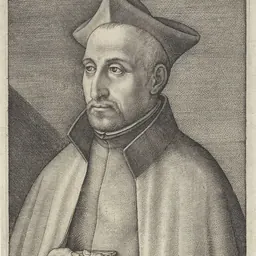
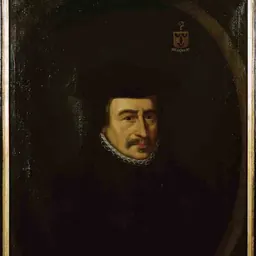

Contemporaries
People whose lives overlapped Urban VII's
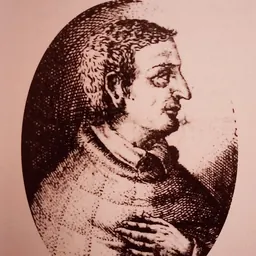


Frequently asked questions
Who was Urban VII?
pope of the Catholic Church in September 1590
When was Urban VII born?
Urban VII was born on 4 August 1521 in Rome.
When did Urban VII die?
Urban VII died on 27 September 1590 in Rome.
What was Urban VII's occupation?
Urban VII was a catholic priest, transitional deacon and catholic bishop.
Sources & further reading
Cite this page
APA: Biography.guide. (2026). Urban VII. https://biography.guide/urban-vii/
MLA: "Urban VII." Biography.guide, https://biography.guide/urban-vii/.
Chicago: "Urban VII." Biography.guide. https://biography.guide/urban-vii/.
Data last updated: 2026-09-20 · Spot an error? Report a correction.
Page generated 2026-09-27 05:31 UTC