
Unita Blackwell
American civil rights activist
About Unita Blackwell
Lived 1933 – 2019 (aged 86). Unita Blackwell was an American politician, political activist and human rights defender.
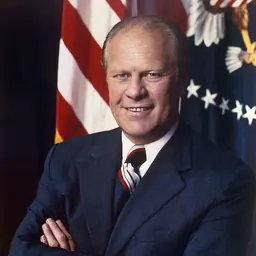
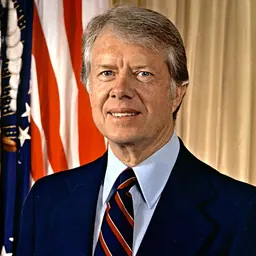
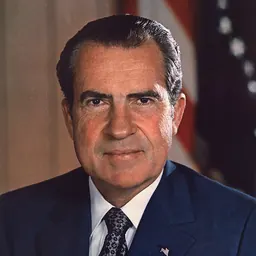
Unita Zelma Blackwell (March 18, 1933 – May 13, 2019) was an American civil rights activist who was the first African-American woman to be elected mayor in the U.S. state of Mississippi. Blackwell was a project director for the Student Nonviolent Coordinating Committee (SNCC) and helped organize voter drives for African Americans across Mississippi. She was also a leader of the US–China Peoples Friendship Association, a group dedicated to promoting cultural exchange between the United States and China. She also served as an advisor to six US presidents: Lyndon Johnson, Richard Nixon, Gerald Ford, Jimmy Carter, Ronald Reagan, and Bill Clinton.
Barefootin, Blackwell's autobiography, published in 2006, charts her activism.
Early life Blackwell was born U. Z. Brown on March 18, 1933, in Lula, Mississippi, to sharecroppers Virda Mae and Willie Brown. Blackwell's uncle gave her the name "U. Z.", which she kept until she was in the sixth grade, when her teacher told her that she needed "a real name, not just initials". Blackwell and her teacher decided on Unita Zelma.
Blackwell and her parents lived in Lula. Her grandfather had been murdered by a white plantation boss. In 1936, when she was three years old, Blackwell's father left the plantation on which he worked and fled to Memphis, Tennessee, fearing for his life after he confronted his boss about speaking to his wife. Blackwell and her mother left the plantation to live with him soon afterward. On June 20, 1938, Blackwell's parents separated due to religious differences. Blackwell and her mother went to West Helena, Arkansas, to live with Blackwell's great aunt so that she could have access to a better education. A quality education in Mississippi was not an option for Blackwell because the schools there were centered on the cultivation of crops and the plantation system. Black children were allowed to attend school for only two months at a time, before they were expected to go back to the cotton fields. While living in West Helena, Blackwell often visited her father in Memphis. During the summer months she would leave West Helena and live with her grandfather and grandmother in Lula, where she helped plant and harvest cotton. Blackwell spent a majority of her early years chopping cotton for $3 a day, in Mississippi, Arkansas, and Tennessee as well as peeling tomatoes in Florida. She was 14 when she finished the eighth grade, the final year of school at Westside, a school in West Helena for black children. Blackwell had to quit school to earn for her family. A few years later, they traveled to Clarksdale, Mississippi, and were married by a justice of the peace.
In January 1957, Blackwell became extremely ill and was taken to the hospital in West Helena where she was pronounced dead. She was later found to be alive in her hospital room, and claims to have had a near-death experience. On July 2, 1957, the couple's only son, Jeremiah Blackwell Jr. (Jerry), was born. In 1960, Jeremiah's grandmother, "Miss Vashti", died. A few months later, the Blackwells moved into the shotgun house that his grandmother had left to him, in Mayersville, Mississippi, a town of nearly five hundred people.
After settling in Mayersville, Blackwell began to get involved in the Civil Rights Movement. The following week she and seven others went to the courthouse to take a voter registration test so that they could vote. While they were outside the courthouse waiting to take the test, a group of white farmers from the area heard what was happening and tried to scare them off. Jeremiah and Unita lost their jobs the next day after their employer found out that they had been part of the group seeking to register to vote. After losing her job, Blackwell recounts her family's means of survival:
We had a garden; people would give us a pot of beans... SNCC was supposed to send us eleven dollars every two weeks. My husband worked three months of the year for the Army Corps of Engineers, then we'd buy lots of canned goods|Unita Blackwell
When the United States Commission on Civil Rights came to Mississippi in January 1965, Blackwell testified in front of them about her experiences with voter discrimination:
As a result of Blackwell's involvement with voter registration campaigns, she and other activists endured constant harassment.
SNCC and other movements
After meeting Fannie Lou Hamer in the summer of 1964 and hearing her experiences in the Civil Rights Movement, Blackwell decided to join the SNCC. As a project director for the SNCC, she organized voter registration drives across Mississippi. Later that year, she became a member on the executive committee of the Mississippi Freedom Democratic Party (MFDP), which provided a party for voters that SNCC had been registering to vote. In late August she and 67 other elected MFDP delegates traveled to the 1964 Democratic National Convention in Atlantic City, New Jersey, intending to get the MFDP seated as "the only democratically constituted delegation from Mississippi". They were eventually offered two at-large seats but refused that compromise; the event, particularly Hamer's nationally televised testimony before the credentialing committee, brought the party and the Mississippi civil rights movement into the public eye.
Blackwell was involved in the introduction of Head Start for black children in 1965 in the Mississippi Delta, a project led by Child Development Group of Mississippi.
In the late 1960s Blackwell worked as a community development specialist with the National Council of Negro Women. In the 1970s, through the National Council of Negro Women, she worked on a development program for low-income housing and encouraged people across the country "to build their own homes". The suit covered several issues including the students' use of the "freedom pins", and asked that the Issaquena County School District desegregate their schools per the Supreme Court ruling in Brown v. Board of Education. The United States District Court for the Southern District of Mississippi decided that the students were being disruptive with their use of the freedom pins, but directed that the school district had to desegregate their schools to comply with federal law, by the fall of 1965. The case was taken to the United States Court of Appeals for the Fifth Circuit in July 1966, where the previous decision by the District Court was upheld. Due to the case resulting in a desegregation plan, Blackwell referred to it as "one of the very first desegregation cases in Mississippi".
Blackwell's son and approximately 50 other children boycotted the school, because of its decision to not let the children wear the SNCC freedom pins. As a result, Blackwell and some other activists in the community decided that it was vital to educate those children. She helped open Freedom Schools in Issaquena County to resolve the issue. The schools became popular and continued to teach classes every summer until 1970, when the local schools finally desegregated.
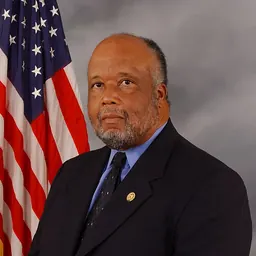
Political career and later life Starting in 1973, Blackwell participated in 16 diplomatic trips to China, including a trip with actress Shirley MacLaine in 1973 to film The Other Half of the Sky. As part of her commitment to better relations between the United States and China, Blackwell served for six years as president of the US–China Peoples Friendship Association, an association dedicated to promoting cultural exchange between the United States and China. As mayor, she oversaw the construction of several sets of public housing, the first time that federal housing had been built in Issaquena County. Blackwell obtained federal grant money that provided Mayersville with police and fire protection, a public water system, paved streets, housing accommodations for the elderly and disabled, and other infrastructure. The Mississippi Freedom Democratic Party sent Blackwell and 67 other delegates to the 1964 Democratic National Convention in New Jersey. Their voices at the convention helped contribute to the passage of the Civil Rights Act of 1964 and the Voting Rights Act of 1965. From 1990 to 1992, Blackwell was president of the National Conference of Black Mayors. In 1991, she co-founded the Black Women Mayors' Conference as a corollary to the National Conference of Black Mayors and served as its first president. Blackwell ran for Congress in 1993, but she was defeated by Bennie Thompson in the primary. She was subsequently reported as having been in the early stages of dementia. In 2014, it was reported that Blackwell lived in a nursing home on the Mississippi Gulf Coast.
Blackwell died at a hospital in Ocean Springs, Mississippi on May 13, 2019, Her survivors include her son, Jeremiah Jr., two grandchildren, two step grandchildren, and eight step great-grandchildren.
Personal life Blackwell married twice, first to Jeremiah Blackwell, from whom she was later divorced. Her second marriage, to Willie Wright, also ended in divorce. She had one son.
Tributes Blackwell is featured in Standing on My Sisters' Shoulders, a movie about the experiences of the women behind the civil rights movement in Mississippi.
Don’t just read it —
keep it.
Full-length biographies made to live with: read them, listen on the way to work, watch them tonight.
- E-book
- Audio
- Video
Instant download · yours to keep · every purchase keeps this site free
Important facts
People in Unita Blackwell's life
Named in this biography and alive at the same time



Related people
Same field, nearest in time






Contemporaries
People whose lives overlapped Unita Blackwell's




Frequently asked questions
Who was Unita Blackwell?
American civil rights activist (1933–2019)
When was Unita Blackwell born?
Unita Blackwell was born on 18 March 1933 in Lula, Coahoma County.
When did Unita Blackwell die?
Unita Blackwell died on 13 May 2019 in Biloxi.
What was Unita Blackwell's occupation?
Unita Blackwell was a politician, political activist and human rights defender.
What nationality was Unita Blackwell?
Unita Blackwell was American.
Sources & further reading
Cite this page
APA: Biography.guide. (2026). Unita Blackwell. https://biography.guide/unita-blackwell/
MLA: "Unita Blackwell." Biography.guide, https://biography.guide/unita-blackwell/.
Chicago: "Unita Blackwell." Biography.guide. https://biography.guide/unita-blackwell/.
Data last updated: 2026-09-20 · Spot an error? Report a correction.
Page generated 2026-09-27 05:27 UTC