
About Uncle Dave Macon
Lived 1870 – 1952 (aged 81). Uncle Dave Macon was an American singer, banjoist, songwriter, actor, singer-songwriter and musician.
David Harrison Macon (October 7, 1870 – March 22, 1952), known professionally as Uncle Dave Macon, was an American old-time banjo player, singer, songwriter, and comedian. Known as "The Dixie Dewdrop", Macon was known for his chin whiskers, plug hat, gold teeth, and gates-ajar collar; he gained regional fame as a vaudeville performer in the early 1920s before becoming the first star of the Grand Ole Opry in the latter half of the decade.
Macon's music is considered the ultimate bridge between 19th-century American folk and vaudeville music and the phonograph and radio-based music of the early 20th-century. Music historian Charles Wolfe wrote, "If people call yodelling Jimmie Rodgers 'the father of country music,' then Uncle Dave must certainly be 'the grandfather of country music'." Macon's polished stage presence and lively personality have made him one of the most enduring figures of early country music.
Early life and family Macon was born in Smartt Station (about five miles south of McMinnville), Tennessee, the son of Confederate Captain John Macon and his wife Martha Ramsey. He was the great-great nephew of Nathaniel Macon.
In 1884, when David Macon was 13 years old, his family moved to Nashville, Tennessee, to run the Old Broadway Hotel, which they had purchased. The hotel became a center for Macon and his growing musical interests, and was frequented by artists and troupers traveling along vaudeville circuit and circus acts. He attended Hume-Fogg High School in Nashville. His widowed mother sold the hotel and the family moved to Readyville, Tennessee, where his mother ran a stagecoach inn. Macon began entertaining passengers at the rest stop, playing a banjo on a homemade stage.
Professional career
Although Macon had long performed as an amateur and was well known for his showmanship, his first professional performance was in 1921 at a school in Morrison, Tennessee, during a Methodist church benefit. In 1923, during a performance for the Shriners in Nashville, Macon was seen by Marcus Loew of Loews Theatres, who offered him fifteen dollars if he would perform at a theater in Alabama. Macon accepted and went to Alabama. After the show he was approached by the manager of Loews Theatres in Birmingham, who wanted to hire him to perform there. Macon's salary was several hundred dollars a week. This led to offers from other theaters in the Loew's Vaudeville circuit. At the age of 50, Macon found himself a successful entertainer. A rival vaudeville circuit, the Keith-Albee-Orpheum Corporation, tried to hire him away from the Loew's circuit, but he refused. The session extended over several days and eighteen songs were recorded. In 1925, Macon and Harkreader added "Dancing Bob" Bradford, a buck dancer to their act, Their tours on the Loew's circuit now included comedy, buck-dancing and old time music. On November 6, 1925, Macon and Harkreader performed at the Ryman Auditorium—the future home of the Grand Ole Opry— in a benefit for the Nashville police force. The show was just three weeks before the Opry started as the WSM Barn Dance.
Macon was one of the first performers at the new WSM radio station. On December 26, 1925, Macon and fiddler Uncle Jimmy Thompson appeared together on the WSM Saturday night program. Macon's career with WSM lasted 26 years, but as he continued touring, he was not a regular performer in the years of the Grand Ole Opry. In early 1927, Macon formed the Fruit Jar Drinkers, composed of Macon, Sam McGee, Kirk McGee and Mazy Todd. The Fruit Jar Drinkers recorded for the first time on May 7, 1927. Although the group's repertoire was mainly traditional songs and fiddle numbers, they occasionally recorded religious songs, for which Macon would alter the group's name to the Dixie Sacred Singers. Between 1930 and 1952, Macon was often accompanied by his son Dorris who played the guitar. In 1940 Macon together with Opry founder George D. Hay, rising Opry star Roy Acuff, and Dorris Macon, received an invitation from Hollywood to take part in the Republic Pictures movie Grand Ole Opry. The film contains rare footage of Macon performing, including a memorable duet of "Take Me Back to My Carolina Home" with Dorris in which the 69-year-old Macon jumps out of his seat and dances throughout the second half of the song. Although Macon toured with Bill Monroe in the late 1940s, he was neither impressed by the new bluegrass style nor by the banjo picking of Monroe's bandmate Earl Scruggs. Macon also toured throughout the South with such Opry headliners as DeFord Bailey and Roy Acuff.
Death and legacy
Macon continued to perform until shortly before his death on March 22, 1952, at Rutherford County Hospital in Murfreesboro. He was buried at Coleman Cemetery near Murfreesboro. His funeral was visited by more than 5,000 people and his pallbearers were George D. Hay, Kirk McGee, Roy Acuff, and Bill Monroe. He was inducted posthumously into the Country Music Hall of Fame in 1966. A monument was erected near Woodbury. His son Dorris and several bandmates (often including Sam and Kirk McGee) made sporadic appearances on the Grand Ole Opry as the Fruit Jar Drinkers until the early 1980s.
"Uncle Dave Macon Days" is an annual bluegrass music and dance festival. "Uncle Dave," as the festival is locally known started in 1978 on the grounds of the Rutherford County Courthouse in Murfreesboro, TN. After many years of growth, the festival moved to the Historic Cannonsburgh Village park, a short distance from the city's downtown square. "Uncle Dave" is now held at Hop Springs Beer Park on John Bragg Hwy. just outside of Murfreesboro, TN in September of each year. (In the beginning, "Uncle Dave" was held the first full weekend in July of each year.) The festival once hosted the national old-time clogging and buck dancing competitions, and since 1986 has hosted the national old time banjo competition.
Macon's house, the Uncle Dave Macon House, still stands on Old Woodbury Pike in Kittrell, Tennessee, and is listed on the National Register of Historic Places.
In 2014, the bridge over Cripple Creek in Kittrell was renamed the Uncle Dave Macon Bridge.
Repertoire and style While Uncle Dave Macon recorded over 170 songs between 1924 and 1938, in his day he was most notable for his polished and lively stage presence. Bandmate Kirk McGee later described Macon's personality as a never-ending performance— "All day long, from morning till midnight, it was a show." While playing, Macon would often kick and stomp, and shout sporadically, taxing the skills of WSM's early volume-control engineers. His performance style can be discerned to some extent from his early recordings, in which he whoops and hollers amidst relatively aggressive vocal deliveries.
Macon played an open-backed Gibson banjo on most of his recordings, and while contemporary musicians did not consider him a particularly skillful banjo player, modern musicologists have identified no less than 19 picking styles on Macon's recordings. Macon claimed to have learned the song "Rock About My Saro Jane" from black stevedores working along the Cumberland River in the 1880s. In the song "From Earth to Heaven", Macon describes his days hauling goods between Woodbury and Murfreesboro for his shipping company. Macon's favorite hymn was "How Beautiful Heaven Must Be", which is inscribed on his monument near Woodbury. (1963) (Folkways) First Featured Star of the "Grand Ole Opry" (Decca Records) Country Gospel Song (1971) (Folkways) Early Recordings (Uncle Dave Macon) – County Records (1971) Go Long Mule – County Records (1972) The Gayest Old Dude In Town – Folk Variety Records (1973) At Home – Bear Family Records (1976) Laugh Your Blues Away – Rounder Records (1979) Keep My Skillet Good and Greasy – Old Homestead Records (1979) Country Music Hall of Fame Series – MCA Records (1992) Travelin' Down the Road – County/BMG Records (1995) Anthology of American Folk Music – Folkways (1997)
Don’t just read it —
keep it.
Full-length biographies made to live with: read them, listen on the way to work, watch them tonight.
- E-book
- Audio
- Video
Instant download · yours to keep · every purchase keeps this site free
Important facts
People in Uncle Dave Macon's life
Named in this biography and alive at the same time
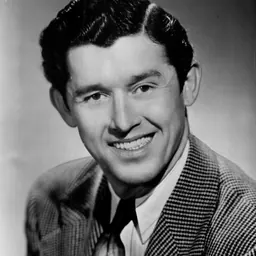





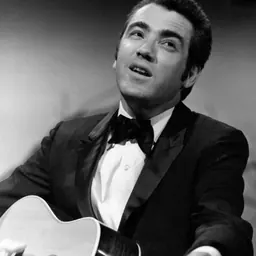
Related people
Same field, nearest in time
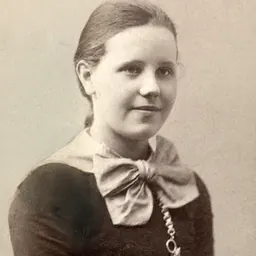

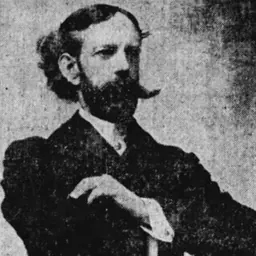

Contemporaries
People whose lives overlapped Uncle Dave Macon's


Frequently asked questions
Who was Uncle Dave Macon?
American musician (1870-1952)
When was Uncle Dave Macon born?
Uncle Dave Macon was born on 7 October 1870 in Tennessee.
When did Uncle Dave Macon die?
Uncle Dave Macon died on 22 March 1952 in Murfreesboro.
What was Uncle Dave Macon's occupation?
Uncle Dave Macon was a singer, banjoist, songwriter, actor, singer-songwriter and musician.
What nationality was Uncle Dave Macon?
Uncle Dave Macon was American.
Sources & further reading
Cite this page
APA: Biography.guide. (2026). Uncle Dave Macon. https://biography.guide/uncle-dave-macon/
MLA: "Uncle Dave Macon." Biography.guide, https://biography.guide/uncle-dave-macon/.
Chicago: "Uncle Dave Macon." Biography.guide. https://biography.guide/uncle-dave-macon/.
Data last updated: 2026-09-20 · Spot an error? Report a correction.
Page generated 2026-09-27 05:23 UTC