
About Roy Acuff
Lived 1903 – 1992 (aged 89). Roy Acuff was an American singer, singer-songwriter, composer, music publisher, politician and violinist.
Early life
Roy Claxton Acuff was born on September 15, 1903, in Maynardville, Tennessee, to Ida Florence ( Carr) and Simon E. Neill Acuff, the third of their five children. Acuff was of English ancestry; his ancestors came to North America during the colonial era, settling in the mountains of Virginia and the Carolinas. The Acuffs were a fairly prominent family in Union County. Roy's paternal grandfather, Coram Acuff, had been a Tennessee state senator, and his maternal grandfather was a local physician. Roy's father was an accomplished fiddler and a Baptist preacher, his mother was proficient on the piano, and during Roy's early years the Acuff house was a popular place for local gatherings. At such gatherings, Roy would often amuse people by balancing farm tools on his chin. He also learned to play the harmonica and jaw harp at an early age. His primary passion, however, was athletics. He was a three-sport standout at Central, and after graduating in 1925, was offered a scholarship to Carson-Newman University, but turned it down. He played with several small baseball clubs around Knoxville, worked at odd jobs, and occasionally boxed. The purpose of the entertainers was to draw a large crowd to whom Hauer could sell patent medicines (of suspect quality) for various ailments. As the medicine show lacked microphones, Acuff learned to sing loud enough to be heard above the din, a skill that later helped him stand out on early radio broadcasts. That year, guitarist Jess Easterday and Hawaiian guitarist Clell Summey joined Acuff to form the Tennessee Crackerjacks, who performed regularly on the Knoxville radio stations WROL and WNOX (the band moved back and forth between stations as Acuff bickered with their managers about compensation). The group split from ARC in 1937 over a separate contract dispute.
In spring 1940, Acuff and his band traveled to Hollywood, where they appeared with Hay and Macon in the motion picture Grand Ole Opry. Acuff appeared in several subsequent B movies, including O, My Darling Clementine (1943), in which he played a singing sheriff; Night Train to Memphis (1946), the title of which comes from a song Acuff recorded in 1940; and Home in San Antone (1949), in which he starred with Lloyd Corrigan and William Frawley.
Acuff and his band also joined Macon and other Opry acts at various tent shows held throughout the Southeast in the early 1940s. The crowds at these shows were so large that roads leading into the venues were jammed with traffic for miles.
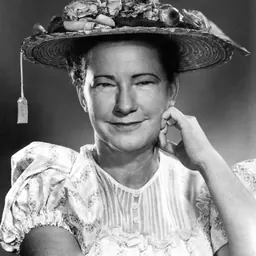
Acuff-Rose In 1942, Acuff and songwriter Fred Rose (1897–1954) formed Acuff-Rose Music. Acuff originally sought the company to publish his own music, but soon realized that demand from other country artists existed, many of whom had been exploited by larger publishing firms. Due in large part to Rose's ASCAP connections and gifted ability as a talent scout, Acuff-Rose quickly became the most important publishing company in country music. In 1946, the company signed Hank Williams, and in 1950, published their first major hit, Patti Page's rendition of "Tennessee Waltz". A life-sized statue of Acuff sits on a pew alongside a statue of Minnie Pearl in the lobby of Ryman Auditorium.
Political ambitions In 1943, Acuff was initiated into the East Nashville Freemasonic Lodge in Tennessee, of which he would remain a lifelong member. Later that same year, Acuff invited Tennessee Governor Prentice Cooper to be the guest of honor at a gala held to mark the nationwide premiere of the Opry's Prince Albert show. Cooper rejected the offer, however, and lambasted Acuff and his "disgraceful" music for making Tennessee the "hillbilly capital of the United States."
Later career After leaving the Opry, Acuff spent several years touring the Western United States, although demand for his appearances dwindled with the lack of national exposure and the rise of musicians such as Ernest Tubb and Eddy Arnold, who were more popular with younger audiences. In 1988, he received the Golden Plate Award of the American Academy of Achievement. In 1991, he was awarded the National Medal of Arts, and given a lifetime achievement award by the John F. Kennedy Center for the Performing Arts, the first country music act to receive the esteemed honor.
Death
Roy Acuff died at the Baptist Hospital in Nashville on November 23, 1992, of congestive heart failure at the age of 89. He is buried in the Hillcrest section (grave 6, lot 9) of Spring Hill Cemetery on Gallatin Road in Nashville.
Repertoire and legacy
Many of Acuff's songs show a strong Christian influence, most notably "Great Speckled Bird", "The Prodigal Son", and "Lord, Build Me a Cabin". Such songs were typically set to a traditional Anglo-Celtic melody, which is most apparent on "Great Speckled Bird" and the 1940 recording "The Precious Jewel". Acuff performed popular songs of the day, including Pee Wee King's "Tennessee Waltz" and Dorsey Dixon's "I Didn't Hear Nobody Pray", the latter of which he appropriated and renamed "Wreck on the Highway". He also recorded a version of the Cajun fiddler Harry Choates's "Jole Blon". Traditional recordings included "Greenback Dollar", which he probably learned from Clarence Ashley while on the medicine-show circuit, and "Lonesome Old River Blues", which he recorded with the Smoky Mountain Boys in the 1940s. Acuff and the Crazy Tennesseans recorded "Wabash Cannonball"—another traditional song—in 1936, although Acuff did not provide the vocals on this early recording. The better-known version of the song with Acuff providing the vocals was recorded in 1947. Two museums have been named in Acuff's honor—the Roy Acuff Museum at Opryland (now closed) and the Roy Acuff Union Museum and Library in his hometown of Maynardville. Acuff has a star on the Hollywood Walk of Fame located at 1541 Vine Street. He is pictured with other country singers at the new Smoky Mountain Opera in Pigeon Forge, Tennessee.
Discography
Albums
Singles Year Single Chart Positions Album US Country US CAN Country 1938 "Great Speckled Bird" — — — singles only "Steel Guitar Blues" — — — 1939 "You're the Only Star in My Blue Heaven" — — — "Smokey Mountain Rag" — — — 1940 "Streamlined Cannonball" — — — "Old Age Pension Check" — — — 1941 "The Precious Jewel" — — — "Worried Mind" — — — 1942 "It Won't Be Long (Till I'll Be Leavin'") — — — "Fireball Mail" — — — 1943 "Wreck on the Highway" — — — "Don't Make Me Go To Bed (And I'll Be Good)" — — — 1944 "Night Train to Memphis" — — — "The Prodigal Son" 4 13 — "I'll Forgive You But I Can't Forget" 3 21 — "Write Me Sweetheart" 6 — — 1945 "We Live in Two Different Worlds" — — — 1946 "Glory Bound Train" — — — "Blue Eyes Crying in the Rain" — — — 1947 "Wabash Cannonball" — — — "Freight Train Blues" — — — "I Saw the Light" — — — "Our Own (Jole Blon)" 4 — — 1948 "The Waltz of the Wind" 8 — — "Unloved and Unclaimed" 14 — — "This World Can't Stand Long" 12 — — "A Sinner's Death" 14 — — 1949 "Tennessee Waltz" 12 — — "Black Mountain Rag" — — — 1958 "Once More" 8 — — Once More – It's Roy Acuff 1959 "So Many Times" 16 — — "Come and Knock (On the Door of My Heart)" 20 — — 1965 "Freight Train Blues" 45 — — single only 1973 "Just a Friend" — — 77 Smoky Mountain Memories 1974 "Back in the Country" 51 — 15 Back in the Country "Old Time Sunshine Song" 97 — — 1989 "The Precious Jewel" (w/ Charlie Louvin) 87 — — single only
Guest singles Year Single Artist US Country Album 1971 "I Saw the Light" Nitty Gritty Dirt Band 56 Will the Circle be Unbroken 1985 "One Big Family" Heart of Nashville 61 single only
Don’t just read it —
keep it.
Full-length biographies made to live with: read them, listen on the way to work, watch them tonight.
- E-book
- Audio
- Video
Instant download · yours to keep · every purchase keeps this site free
Important facts
People in Roy Acuff's life
Named in this biography and alive at the same time






Related people
Same field, nearest in time


Contemporaries
People whose lives overlapped Roy Acuff's

Frequently asked questions
Who was Roy Acuff?
American country music singer and fiddler (1903-1992)
When was Roy Acuff born?
Roy Acuff was born on 15 September 1903 in Maynardville.
When did Roy Acuff die?
Roy Acuff died on 23 November 1992 in Nashville.
What was Roy Acuff's occupation?
Roy Acuff was a singer, singer-songwriter, composer, music publisher, politician and violinist.
What nationality was Roy Acuff?
Roy Acuff was American.
Sources & further reading
Cite this page
APA: Biography.guide. (2026). Roy Acuff. https://biography.guide/roy-acuff/
MLA: "Roy Acuff." Biography.guide, https://biography.guide/roy-acuff/.
Chicago: "Roy Acuff." Biography.guide. https://biography.guide/roy-acuff/.
Data last updated: 2026-09-25 · Spot an error? Report a correction.
Page generated 2026-09-27 05:12 UTC