
Umesh Vazirani
Indian theoretical computer scientist
About Umesh Vazirani
Born 2000. Umesh Vazirani is an American university teacher, computer scientist, mathematician, information scientist and electrotechnician, known for Bernstein-Vazirani algorithm.
Umesh Virkumar Vazirani is an Indian–American academic who is the Roger A. Strauch Professor of Electrical Engineering and Computer Science at the University of California, Berkeley, and the director of the Berkeley Quantum Computation Center. His research interests lie primarily in quantum computing. He is also a co-author of a textbook on algorithms.
Biography Vazirani received a BS from MIT in 1981 and received his Ph.D. in 1986 from UC Berkeley under the supervision of Manuel Blum.
He is the brother of University of California, Irvine professor Vijay Vazirani.
Research Vazirani is one of the founders of the field of quantum computing. His 1993 paper with his student Ethan Bernstein on quantum complexity theory defined a model of quantum Turing machines which was amenable to complexity based analysis. This paper also gave an algorithm for the quantum Fourier transform, which was then used by Peter Shor within a year in his celebrated quantum algorithm for factoring integers.
With Charles Bennett, Ethan Bernstein, and Gilles Brassard, he showed that quantum computers cannot solve black-box search problems faster than in the number of elements to be searched. This result shows that the Grover search algorithm is optimal. It also shows that quantum computers cannot solve NP-complete problems in polynomial time using only the certifier.
Awards and honors In 2005, both Vazirani and his brother Vijay Vazirani were inducted as Fellows of the Association for Computing Machinery, Umesh for "contributions to theoretical computer science and quantum computation" and Vijay for his work on approximation algorithms. Vazirani was awarded the Fulkerson Prize for 2012 for his work on improving the approximation ratio for graph separators and related problems (jointly with Satish Rao and Sanjeev Arora). In 2018, he was elected to the National Academy of Sciences.
Selected publications . A preliminary version of this paper was also published in STOC '87. . . .
Don’t just read it —
keep it.
Full-length biographies made to live with: read them, listen on the way to work, watch them tonight.
- E-book
- Audio
- Video
Instant download · yours to keep · every purchase keeps this site free
Important facts
People in Umesh Vazirani's life
Named in this biography and alive at the same time

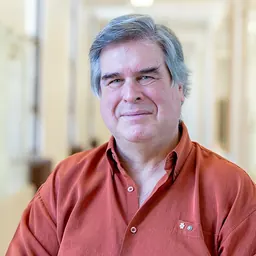



Related people
Same field, nearest in time
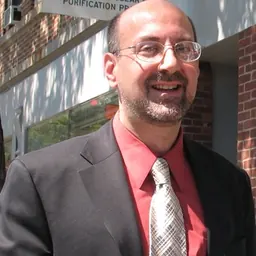



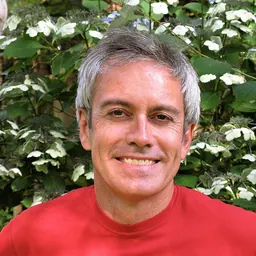

Contemporaries
People whose lives overlapped Umesh Vazirani's



Frequently asked questions
Who is Umesh Vazirani?
Indian theoretical computer scientist
When was Umesh Vazirani born?
Umesh Vazirani was born in 2000.
What is Umesh Vazirani's occupation?
Umesh Vazirani is a university teacher, computer scientist, mathematician, information scientist and electrotechnician.
What is Umesh Vazirani known for?
Umesh Vazirani is known for Bernstein-Vazirani algorithm.
What nationality is Umesh Vazirani?
Umesh Vazirani is American.
Sources & further reading
Cite this page
APA: Biography.guide. (2026). Umesh Vazirani. https://biography.guide/umesh-vazirani/
MLA: "Umesh Vazirani." Biography.guide, https://biography.guide/umesh-vazirani/.
Chicago: "Umesh Vazirani." Biography.guide. https://biography.guide/umesh-vazirani/.
Data last updated: 2026-09-20 · Spot an error? Report a correction.
Page generated 2026-09-27 05:04 UTC