
About Umberto Veruda
Lived 1868 – 1904 (aged 36). Umberto Veruda was an Italian and Austrian painter.
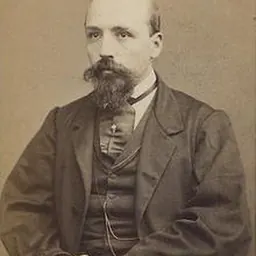
Umberto Veruda (6 April 1868, Trieste - 29 August 1904, Trieste) was an Austro-Hungarian painter, known for his portraits and upper-class society scenes.
Biography He was born to a family of modest means. He was introduced to the art of painting by a local artist, originally from Bologna, named Raffaele Astolfi (1829-1900); known for portraits in the Academic style. In 1884, at the age of sixteen, he went to Munich, where he was able to enroll at the Academy of Fine Arts, where his fellow Triestini, Carlo Wostry and Isidoro Grünhut, were also studying. His primary instructor was Alexander von Wagner. During this time, he was influenced by the works of Max Liebermann.
In 1887, he visited Paris for the first time and spent six months there drawing, rather than painting oils, with William Adolphe Bouguereau and Joseph Nicolas Robert-Fleury. After a short stay in Venice, where he studied the works of Favretto, Velàquez, Tintoretto and Titian, he returned to Trieste. In 1889, thanks to contributions from some private individuals who were impressed by his talent, he was able to study in Rome. After winning an art prize established by the Baroness Cecilia de Rittmeyer, he had sufficient means to stay there for two more years. Shortly after, the Galleria Nazionale d'Arte Moderna purchased his painting "Sii onesta" (Be Honest).
The next period of his life involved extensive travelling; to Berlin, Munich, Budapest, Vienna (where his works were especially successful), then back to Paris in 1897. He finally paid a visit to London, to study English art from the 18th and early 19th centuries. In 1903, he was invited to Blenheim Palace, where he painted portraits of several members of the Spencer family.
In the spring of 1904, his mother died tragically. His close friend, the author Italo Svevo, offered him the hospitality of his home in Burano, where he met with the painters and Pieretto Bianco (1875-1937); old acquaintances from Paris. In the middle of summer, he left Burano. He died shortly after, aged only thirty-six, but the cause of his death is unknown. A retrospective of his works was held in his honor, and a small monument was erected on his grave at the Cimitero di Sant'Anna. A street in Trieste has been named after him.
In 1932, the Circolo Artistico di Trieste placed a bust of Veruda in the Giardino Pubblico. It was created by the sculptor, Giovanni Mayer (1863-1946), a friend of Veruda's whose portrait he had painted. Veruda also appears as a character (the sculptor Stefano Balli) in Svevo's novel, Senilità; translated into English under the title As a Man Grows Older.
Selected paintings
Don’t just read it —
keep it.
Full-length biographies made to live with: read them, listen on the way to work, watch them tonight.
- E-book
- Audio
- Video
Instant download · yours to keep · every purchase keeps this site free
Important facts
People in Umberto Veruda's life
Named in this biography and alive at the same time
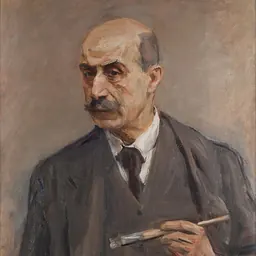

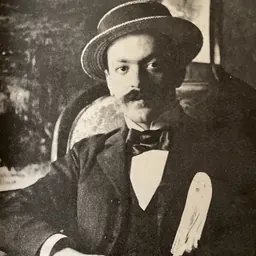


Related people
Same field, nearest in time
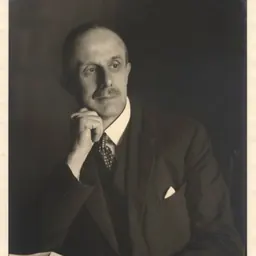
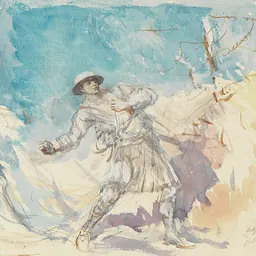
Contemporaries
People whose lives overlapped Umberto Veruda's

Frequently asked questions
Who was Umberto Veruda?
Austro-Italian painter (1868-1904)
When was Umberto Veruda born?
Umberto Veruda was born on 6 June 1868 in Trieste.
When did Umberto Veruda die?
Umberto Veruda died on 29 August 1904 in Trieste.
What was Umberto Veruda's occupation?
Umberto Veruda was a painter.
What nationality was Umberto Veruda?
Umberto Veruda was Italian and Austrian.
Sources & further reading
Cite this page
APA: Biography.guide. (2026). Umberto Veruda. https://biography.guide/umberto-veruda/
MLA: "Umberto Veruda." Biography.guide, https://biography.guide/umberto-veruda/.
Chicago: "Umberto Veruda." Biography.guide. https://biography.guide/umberto-veruda/.
Data last updated: 2026-09-20 · Spot an error? Report a correction.
Page generated 2026-09-27 05:20 UTC