
Umar Wirahadikusumah
4th Vice President of Indonesia
About Umar Wirahadikusumah
Lived 1924 – 2003 (aged 78). Umar Wirahadikusumah was an Indonesian politician, military personnel and general.
Umar Wirahadikusumah (; 10 October 1924 – 21 March 2003) was an Indonesian politician and former army general, who served as the fourth vice president of Indonesia, serving from 1983 until 1988. Previously, he was chair of the Audit Board of Indonesia from 1973 until 1983, and Chief of Staff of the Indonesian Army from 1969 until 1973.
Born to a noble Sundanese family, he was educated at the Europeesche Lagere School Tasikmalaya and Meer Uitgebreid Lager Onderwijs Pasundan. He entered the military in 1943, during the Japanese occupation. He would go on to serve in the Indonesian Army during and after the Indonesian National Revolution, seeing combat in the Madiun Affair and the PRRI rebellion. After hearing about the kidnapping of six Generals and seeing unidentified troops occupying the Merdeka Square, Umar sent word to Kostrad Commander, Major General Suharto of the events that had just unfolded and requested his assistance. Umar accepted Suharto's decision to assume command of the Army and supported him in his efforts to crack down on the attempted coup, gaining great trust from Suharto. In 1967, Umar became Deputy Army Chief of Staff before finally becoming the Army Chief of Staff himself in 1969. In 1973, his active military career came to an end and he became the Chairman of the State Audit Board (BPK), a position which he would hold until 1983.
In 1983, he was selected by Suharto to become vice president, a choice considered rather unexpected. As vice president, he combated corruption and held prayer services at the vice presidential palace. His term as vice president ended in March 1988 when he was replaced by Sudharmono. He died on 21 March 2003, due to heart and lung problems. His body was interred at the Kalibata Heroes' Cemetery, Jakarta.
Early life and education Umar Wirahadikusumah was born in Situraja, Sumedang, West Java on 10 October 1924, to a noble family. His father, Raden Rangga Wirahadikusumah, was the of Ciawi, and Tasikmalaya. While his mother, Raden Ratnaringrum, was the daughter of Patih Demang Kartamenda in Bandung. His brothers were Hasan, Sadikin (d. 2004), Mohammad, and Achmad Wirahadikusumah. Umar's mother died when he was a child, and he and his siblings were cared for by his grandmother, Nyi Raja Juwita, who at that time lived in Cicalengka. After his grandmother died, his father took him to Ciawi. While in Cicalengka, Umar entered kindergarten and elementary school at Hollandsch-Inlandsche School. He continued his education at the Europeesche Lagere School Tasikmalaya and Meer Uitgebreid Lager Onderwijs Pasundan, and he completed his education. leading to the mass killing of an estimated half a million people in 1965–1966. Although he was not part of Suharto's inner circle, Umar won great trust from Suharto for the assistance and support given in putting down the 30 September Movement. As Suharto began a rise which would see him end up as President of Indonesia, Umar's career also skyrocketed. In 1965, Suharto entrusted Umar to replace him as Commander of Kostrad. In 1967, Umar became Deputy Army Chief of Staff before finally becoming the Army Chief of Staff himself in 1969. In 1973, his active military career came to an end and he became the Chairman of the State Audit Board (BPK), a position which he would hold for 10 years. As Chairman of BPK, Umar was responsible for making sure that Government Departments, Ministries, and Agencies were using their money properly. During his tenure as Chairman of BPK, Umar made the grim assessment that not even one Government department was free from corruption.
Vice presidency (1983–1988)
In March 1983, Umar reached the pinnacle of his career. Suharto, who had been elected for a 4th term as president by the People's Consultative Assembly (MPR) selected Umar to be his vice president. This was considered to be a rather unexpected choice as Umar's stature in Indonesian politics paled in comparison to his two predecessors, Hamengkubuwono IX and Adam Malik. Despite being a low-key personality, Umar had a good reputation and was widely respected.
As vice president, Umar became one of the very few in the Suharto regime who chose to combat corruption. As a religious man, Umar had hoped that religion could be used to turn corruptors to do the right deeds. Umar also conducted surprise inspections (sometimes incognito) of regional towns and villages to monitor how government policies were affecting the people. During his vice presidency, Umar also held prayer services at the Vice Presidential Palace. Umar's term as vice president ended in March 1988 when he was replaced by Sudharmono. Many were disappointed to see him not continue for a second term as vice president. It was a testament to his good reputation that Sudharmono wanted to be sure of Umar's acceptance to not continue as vice president for another term.
Post-vice presidency (1988–2003) In May 1998, on the eve of Suharto's fall, Umar, together with Sudharmono and Try Sutrisno visited Suharto at his residence to discuss possible options. Umar died on 21 March 2003 due to heart and lung problems at 7:53 pm. at the Central Army Hospital (RSPAD) Gatot Subroto. He was interred at the Kalibata Heroes' Cemetery, Jakarta.
Personal life
Umar married Karlinah Djaja Atmadja on 2 February 1957, with whom he had two daughters. Umar was also the uncle of Agus Wirahadikusumah, a reformist military officer who himself became Commander of Kostrad. His brother, Sadikin, was the father of Reini Wirahadikusumah, rector of Bandung Institute of Technology from 2020 until 2025 and was the first woman to hold the position.
Honours National honours The following is a list of awards awarded to Umar by the Indonesian government:
Foreign honours The following is a list of awards awarded to Umar by foreign governments:
Don’t just read it —
keep it.
Full-length biographies made to live with: read them, listen on the way to work, watch them tonight.
- E-book
- Audio
- Video
Instant download · yours to keep · every purchase keeps this site free
Important facts
People in Umar Wirahadikusumah's life
Named in this biography and alive at the same time


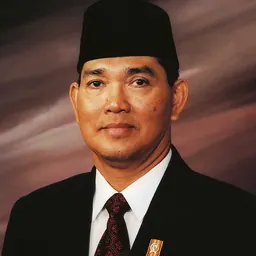

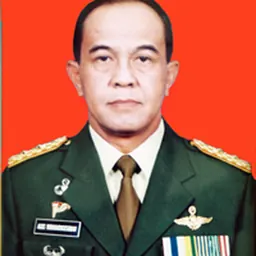

Related people
Same field, nearest in time



Contemporaries
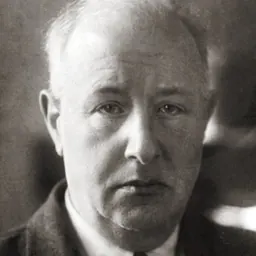
People whose lives overlapped Umar Wirahadikusumah's



Frequently asked questions
Who was Umar Wirahadikusumah?
4th Vice President of Indonesia (1983–1988)
When was Umar Wirahadikusumah born?
Umar Wirahadikusumah was born on 10 October 1924 in West Java.
When did Umar Wirahadikusumah die?
Umar Wirahadikusumah died on 21 March 2003 in Jakarta.
What was Umar Wirahadikusumah's occupation?
Umar Wirahadikusumah was a politician, military personnel and general.
What nationality was Umar Wirahadikusumah?
Umar Wirahadikusumah was Indonesian.
Sources & further reading
· Wikipedia: Umar Wirahadikusumah
· DBpedia: Umar Wirahadikusumah
Cite this page
APA: Biography.guide. (2026). Umar Wirahadikusumah. https://biography.guide/umar-wirahadikusumah/
MLA: "Umar Wirahadikusumah." Biography.guide, https://biography.guide/umar-wirahadikusumah/.
Chicago: "Umar Wirahadikusumah." Biography.guide. https://biography.guide/umar-wirahadikusumah/.
Data last updated: 2026-09-20 · Spot an error? Report a correction.
Page generated 2026-09-27 05:30 UTC