
About Ülo Õun
Lived 1940 – 1988 (aged 47). Ülo Õun was an Estonian and Russian sculptor and artist.
Ülo Õun (30 April 1940 – 7 March 1988) was an Estonian sculptor whose career began in the late 1960s and came to prominence in the 1970s. Õun mainly worked as a portrait and figural sculptor and was known for his works in colored plaster and bronze.
Early life and education Ülo Õun was born and raised in Tartu, one of two children of Ado and Alma Õun (née Lellep). He graduated from Tartu Secondary School No. 2 (now, the Miina Härma Gymnasium) in 1958. Afterward, he studied mathematics at Tartu State University (now, the University of Tartu) for a year, before enrolling at the State Art Institute of the Estonian SSR (now, the Estonian Academy of Arts) to study visual arts, with an emphasis on sculpting. He graduated from the institution in 1966.
In 1971, he became a freelance artist and began sculpting, mainly portraits and figural sculptures. He rose to national prominence in the 1970s, with a style that art critics have described as "friendly grotesque"; Õun's sculptures could not easily be associated with any art movement known in Estonia at that time or compared with any "significant work". Õun was fascinated by color, fluidity, and the variability of forms in his work and addressed the subjective spiritual nature of man.
One of Õun's most notable sculptures is Isa ja poeg (English: Father and Son), created in plaster in 1977. The sculpture depicts Õun and his 18-month-old son Kristjan nude, holding hands and standing at the same height. The sculpture caused a furor when it was initially exhibited at the Tallinn Art Hall in 1977. The sculpture was later unveiled for permanent display on Küüni Street on Child Protection Day, 1 June 2004, in Tartu central park, facing Town Hall Square. Isa ja poeg has become a well-known landmark of Tartu.
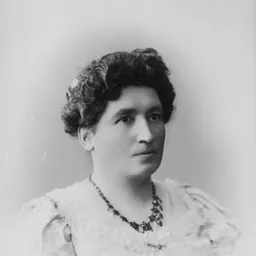
In 1978, Õun created portrait sculptures of Estonian cultural figures: painter Tiit Pääsuke, artist Kaljo Põllu, and actor and theater pedagogue Voldemar Panso, for which he won the Kristjan Raud Art Award the following year. Other portrait sculptures by Õun include those of composers Gustav Ernesaks and Veljo Tormis, author Eduard Vilde, actor and poet Juhan Viiding, actress Elle Kull, zoologist Harald Haberman, artists Jüri Palm and Villu Jõgeva, and actors and theater pedagogues Kaarel Ird, Theodor Altermann, Paul Pinna, and Mikk Mikiver.
In 1981 and 1984, he completed two monuments titled Monument to the Lives Lost in the Second World War . The first, in the town of Kallaste in Tartu County on the shore of Lake Peipus was a bronze sculpture of the nude torso of a nude young man with residual limb stumps which was erected on a high granite socle designed by architect Ike Volkov. Local complaints eventually reached high ranking Communist Party officials in Moscow and Soviet authorities had the sculpture's nudity covered by a pair of specially cast bronze "briefs".
Õun's artistic output was prolific during his twenty-year career. He held numerous solo and shared exhibitions, and his world can be found in several institutions and public installations throughout the country, including the Tartu Art Museum and the Art Museum of Estonia. Õun died in 1988, aged 47 and was interred in Tallinn's Forest Cemetery.
Legacy Several documentaries were made profiling Ülo Õun during his lifetime, the first significant one being the 1984 Arvo Iho directed , for Tallinnfilm.
In 2009, an exhibition of a selection of Õun's work curated by Juta Kivimäe titled (English: Ülo Õun. Artist on an Intermittent Trail of Discovery) was held at the Kumu museum in Tallinn. The exhibition was awarded the Best Exhibition of the Year by the Ministry of Culture of Estonia.
Don’t just read it —
keep it.
Full-length biographies made to live with: read them, listen on the way to work, watch them tonight.
- E-book
- Audio
- Video
Instant download · yours to keep · every purchase keeps this site free
Important facts
People in Ülo Õun's life
Named in this biography and alive at the same time


Related people
Same field, nearest in time



Contemporaries
People whose lives overlapped Ülo Õun's



Frequently asked questions
Who was Ülo Õun?
Estonian sculptor (1940-1988)
When was Ülo Õun born?
Ülo Õun was born on 30 April 1940 in Tartu.
When did Ülo Õun die?
Ülo Õun died on 7 March 1988 in Tallinn.
What was Ülo Õun's occupation?
Ülo Õun was a sculptor and artist.
What nationality was Ülo Õun?
Ülo Õun was Estonian and Russian.
Sources & further reading
Cite this page
APA: Biography.guide. (2026). Ülo Õun. https://biography.guide/ulo-oun/
MLA: "Ülo Õun." Biography.guide, https://biography.guide/ulo-oun/.
Chicago: "Ülo Õun." Biography.guide. https://biography.guide/ulo-oun/.
Data last updated: 2026-09-22 · Spot an error? Report a correction.
Page generated 2026-09-27 05:29 UTC