
About Veljo Tormis
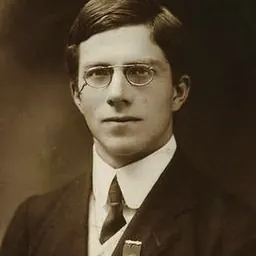
Lived 1930 – 2017 (aged 86). Veljo Tormis was an Estonian and Russian composer, film score composer, music educator, folklorist, music teacher and university teacher.
Veljo Tormis (7 August 1930 – 21 January 2017) was an Estonian composer, regarded as one of the great contemporary choral composers and one of the most important composers of the 20th century in Estonia. Internationally, his fame arises chiefly from his extensive body of choral music, which exceeds 500 individual choral songs, most of it a cappella. The great majority of these pieces are based on traditional ancient Estonian folksongs (regilaulud), either textually, melodically, or merely stylistically.
His composition most often performed outside Estonia, Curse Upon Iron (Raua needmine, 1972), invokes ancient Shamanistic traditions to construct an allegory about the evils of war. Some of his works were banned by the Soviet government, but because folk music was fundamental to his style most of his compositions were accepted by the censors.
More recently, Tormis' works have been performed and recorded by Tõnu Kaljuste with the Estonian Philharmonic Chamber Choir, and others. In the 1990s, Tormis began to receive commissions from some a cappella groups as the King's Singers and the Hilliard Ensemble.
Tormis famously said of his settings of traditional melodies and verse: "It is not I who makes use of folk music, it is folk music that makes use of me."
From his student days until his retirement from composition in 2000, Tormis composed over 500 individual choral songs, as well as other vocal and instrumental pieces, 35 film scores, and an opera. Despite the censorship of several of his more politically provocative works in the late 1970s and the 1980s, he remained an incredibly celebrated composer whose works were performed throughout the Soviet Union and Eastern Europe. In Eastern Europe, he is regarded as one of the great contributors to the 20th century repertory of choral music. Dissolution of the Soviet Union in 1991 has allowed increased access to the Soviet censored compositional output. The music of Tormis, along with other composers in the region, is experiencing increased rates of programing and publishing, allowing for increased appreciation of the choral and vocal music traditions.
Selected works Kihnu pulmalaulud (Kihnu Island Wedding Songs), 1959 Overture No. 2, 1959 Sügismaastikud (Autumn Landscapes), 1964 Luigelend (opera), 1965 Eesti kalendrilaulud (Estonian Calendar Songs), 1966–67 Maarjamaa ballaad (Ballad of Mary's Land), 1967 Raua needmine (Curse Upon Iron), 1972 Pikse litaania (Litany To Thunder), 1974 Eesti ballaadid (Estonian Ballads), 1980 Laulusild (Bridge of Song), 1981 Varjele, Jumalan soasta (God, Protect us from War), 1984 Unustatud rahvad (Forgotten Peoples), 1970–89 Piispa ja pakana (The Bishop And The Pagan), 1992 Incantatio maris aestuosi (Incantation for a Stormy Sea), 1996
Don’t just read it —
keep it.
Full-length biographies made to live with: read them, listen on the way to work, watch them tonight.
- E-book
- Audio
- Video
Instant download · yours to keep · every purchase keeps this site free
Important facts
People in Veljo Tormis's life
Named in this biography and alive at the same time
Related people
Same field, nearest in time



Contemporaries
People whose lives overlapped Veljo Tormis's

Frequently asked questions
Who was Veljo Tormis?
Estonian composer (1930–2017)
When was Veljo Tormis born?
Veljo Tormis was born on 7 August 1930 in Kuusalu Rural Municipality, Aru.
When did Veljo Tormis die?
Veljo Tormis died on 21 January 2017 in Tallinn.
What was Veljo Tormis's occupation?
Veljo Tormis was a composer, film score composer, music educator, folklorist, music teacher and university teacher.
What nationality was Veljo Tormis?
Veljo Tormis was Estonian and Russian.
Sources & further reading
Cite this page
APA: Biography.guide. (2026). Veljo Tormis. https://biography.guide/veljo-tormis/
MLA: "Veljo Tormis." Biography.guide, https://biography.guide/veljo-tormis/.
Chicago: "Veljo Tormis." Biography.guide. https://biography.guide/veljo-tormis/.
Data last updated: 2026-09-20 · Spot an error? Report a correction.
Page generated 2026-09-27 05:29 UTC