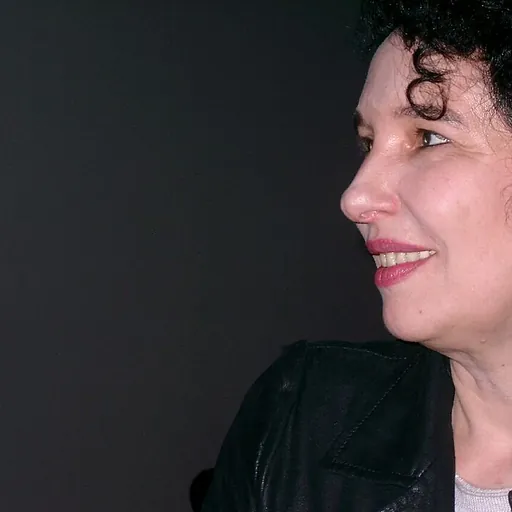
About Ulla Berkéwicz
Born 1951. Ulla Berkéwicz is a German translator, publisher, writer, stage actor and actor.
Ulla Berkéwicz (Ursula Unseld-Berkéwicz: born Ursula Schmidt) (born November 5, 1948) is a German actress, author and (more recently) publisher. The name "Berkéwicz", which she adopted in 1968 as a stage name, and by which she has since become generally known, is derived from the family name used by her Jewish grandmother, "Berkowitz".
Life Ursula Schmidt was born at Gießen, a midsized traditionally prosperous town in the hills to the north of Frankfurt. She was born on 5 November. For a number of years she told reporters she had been born in 1951, but the evident implausibility of this birth year in view of other conventional staging posts during her childhood and adolescence has become a talking point among commentators. That she was born on 5 November is relatively uncontested. After the Hitler nightmare ended he took a position at the main hospital at Hanau where in 1965 he accepted an appointment as "Ārztlicher Direktor" ("Medical Director"). Ursula's mother, Herta Stoepel, was an actress. The child grew up with her family in a large first floor "Jugendstil" apartment in Hanau shared with parents, grandparents and a much younger brother, impatient to grow to adulthood and follow her mother into the acting profession. Berkéwicz would later describe her childhood in an autobiographical essay as having taken place "somewhere between anarchy and milkshakes". The "Hanau 67 Milk Bar" was a focal point of her adolescence. Childhood tensions were created by contrasting familial backgrounds, combining "fanatical Nazis" and a Jewish grandmother through whom she was related to Holocaust victims.
She made her stage debut as Ulla Berkéwicz in 1970 at the Stuttgart State Theater, appearing in a Peter Palitzsch production. During the 1970s she undertook a succession of increasingly prominent stage engagements at major theaters in, most notably, Munich, Stuttgart, Cologne, Hamburg, Bochum and West Berlin. She was also undertaking occasional film work. In 1979/80 she took the lead role in "Geburt der Hexe" ("Birth of the witch"), a production from the set designer and film director Wilfried Minks, to whom, at that time, she was married. The production was inspired by historical themes.
In 1982 Ulla Berkéwicz published her first short story , "Josef stirbt" ("Josef dies"), a narrative in the first person, recalling the death of a ninety-year-old father. It was actually inspired by the death of her father-in-law. A paperback edition followed in 1985. The theme of death was one to which she would return. 1982 turned out to be the year during which she left the stage, relaunching herself as a freelance author and translator.
Organising the publication of her first narrative book, "Josef stirbt", brought Berkéwicz into contact with Suhrkamp Verlag, a widely respected publishing house based in Berlin. Suhrkamp agreed to publish "Josef stirbt".
After she was widowed in 2002 Unseld-Berkéwicz was accepted as a member of the Suhrkamp top management team. In October 2003 shareholders agreed a reconfiguration and expansion of the management team where by Berkéwicz took over as chair of the main board with Günter Berg as her deputy. The changes were made following consultation with the "Authors' Advisory Committee", comprising a number of the publisher's best known scholar-authors, including Jürgen Habermas, Alexander Kluge, Adolf Muschg and Hans Magnus Enzensberger. A particularly eye-catching appointment at this time was that of Heinrich Lübbert, Berkéwicz's former divorce lawyer, as general counsel, the publisher's top in-house lawyer. Unseld-Berkéwicz was suddenly a wealthy woman, and it also became known that Lübbert had become her testamentary executor and a board member at the "Peter-Suhrkamp-Stiftung" ("...foundation"), which had been set up by the firm's founder in 1984 as one of several moves designed to give authors an enhanced role in political-commercial decision making. This was part of a broader set of developments, which also included a succession of court hearings, that gave rise to recurring reports of ructions at the top of Suhrkamp Verlag over the next few years.
With effect from 10 December 2015 Ursula Unseld-Berkéwicz stepped down from the management board, to be succeeded by Jonathan Landgrebe. She created a supervisory board comprising Rachel Salamander, Sylvia Ströher and herself, which she herself chairs.
Membership Ulla Berkéwicz is a member of the internationally networked PEN Centre Germany organisation.
Published works
Awards 1983 Andreas Gryphius Prize, Förderpreis 1988 2015 Luther Rose Prize 2016 Moses Mendelssohn Medal
Don’t just read it —
keep it.
Full-length biographies made to live with: read them, listen on the way to work, watch them tonight.
- E-book
- Audio
- Video
Instant download · yours to keep · every purchase keeps this site free
Important facts
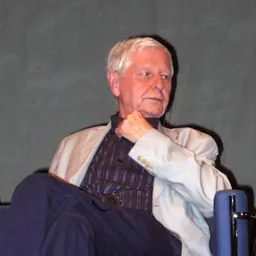
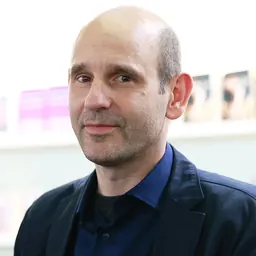
People in Ulla Berkéwicz's life
Named in this biography and alive at the same time



Related people
Same field, nearest in time


Contemporaries
People whose lives overlapped Ulla Berkéwicz's


Frequently asked questions
Who is Ulla Berkéwicz?
German author, translator and publisher
When was Ulla Berkéwicz born?
Ulla Berkéwicz was born on 5 November 1951 in Giessen.
What is Ulla Berkéwicz's occupation?
Ulla Berkéwicz is a translator, publisher, writer, stage actor and actor.
What nationality is Ulla Berkéwicz?
Ulla Berkéwicz is German.
Sources & further reading
Cite this page
APA: Biography.guide. (2026). Ulla Berkéwicz. https://biography.guide/ulla-berkewicz/
MLA: "Ulla Berkéwicz." Biography.guide, https://biography.guide/ulla-berkewicz/.
Chicago: "Ulla Berkéwicz." Biography.guide. https://biography.guide/ulla-berkewicz/.
Data last updated: 2026-09-22 · Spot an error? Report a correction.
Portrait: Wikimedia Commons · author & licence
Page generated 2026-09-27 04:58 UTC