
About Ulas Samchuk
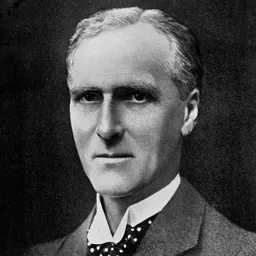
Lived 1905 – 1987 (aged 82). Ulas Samchuk was a Russian and Polish journalist, writer, opinion journalist and essayist.
Biography Samchuk was born on in the selo of Derman, Volhynian Governorate (present-day Derman Druha, Ukraine). In 1937, on the initiative of Yevhen Konovalets, a cultural office of the Ukrainian nationalist leadership headed by Oleh Olzhych was established. Prague became the centre of the Cultural Office, and one of the main institutions was the Section of artists, writers and journalists, chaired by Samchuk.
While Samchuks pre-war works did not appear antisemitic, to the contrary, they had described a childhood with close Jewish friends. During the war period his writings would go in the opposite direction, and would praise Hitler and call for support of the German army, while urging support to fight the "Judeo–Bolshevist" regime of the USSR,
In 1941 he returned to Volyn as a member of the Organization of Ukrainian Nationalists. During 1941–1942, he worked for the Nazis within the Reichskommissariat Ukraine, as chief editor of the pro-Nazi newspaper Volyn. During this time, he wrote of the Babi Yar massacre “Today is a great day for Kyiv, the German authorities met the passionate desires of Ukrainians, ordering all Jews, of which there are still 150,000 remaining, to leave Kyiv.”
On September 1, 1941, shortly before the Babi Yar massacres Samchuk wrote on page 2 of Volyn: “The element that settled our cities, whether it is Jews or Poles who were brought here from outside Ukraine, must disappear completely from our cities. The Jewish problem is already in the process of being solved.”
Later that month, in the article "Zavoiovuimo misto" (Let's conquer the City) Samchuk added the following: “All elements that reside in our land, whether they are Jews or Poles, must be eradicated. We are at this very moment resolving the Jewish question, and this resolution is part of the plan for the Reich’s total reorganization of Europe.” "The empty space that will be created, must immediately and irrevocable be filled by the real owners and masters of this land, the Ukrainian people" As an example on 30 November 1941, he wrote on witnessing the aftermath of destruction in Ternopil, caused during fighting between soviet partisan and Nazi forces, "All this occurred because of the will of the sons of Israel, who could find no better way of saving their native Soviet Union then by setting fire to the town as soon as the German army entered." He was released about one month later, and then began working for the Allgemeiner Deutscher Nachrichtendienst.
With Soviet forces approaching Galicia, Samchuk feared the repercussions of being a Nazi collaborato r. He fled to Nazi Germany in 1944, where he founded and headed the literary-artistic organization MUR.
In 1948, he emigrated to Canada, where he became the leader of the . During this time, he published several books and regularly contributed articles to the Ukrainian Quarterly. During this time, his work began to depict Jewish characters in a more positive light than his earlier works. Some scholars claim that these later works area form of "expiation and atonement". Most notably, Samchuk's 1959 novel What Fire Does Not Heal (Choho ne hoit ohon) ', has been called an "act of repentance". and is buried at the St. Volodymyr Ukrainian Cemetery in Oakville, Ontario.
Work
Samchuk published his first short story, "On Old Paths", in 1926 in the Warsaw magazine Nasha Besida. Samchuk's Volyn trilogy (I–III, 1932–1937) portrays a collective image of a Ukrainian young man of the late 1920s and early 1930s. This archetypal young man seeks to find Ukraine's place in the world.
Beginning in 1929, he began to collaborate regularly with magazines based across several European cities. These included the Lviv-based Literary-Scientific Bulletin and The Bells, Chernivtsi-based The Independent Thought, Berlin-based Nation-Building, and Antimony, whose publication location changed.
Samchuk concurrently wrote the novel Kulak (1932) about the eternal commitment of the Ukrainian peasant to tilling the land and the undying optimism of farmers. His next important work was the two-volume novel The Mountains Speak (1934) which explored Carpatho-Ukraine's struggle against Hungary.
Works Volyn (1932–1937, 1941-1942) Kulak (1932) Mountains Are Talking [Hory hovoriat] (1934) Where the River Flows [Kudy teche richka?] (1934) Maria (1934), (English translation, Maria. A Chronicle of a Life 1952) Youth of Vasyl Sheremeta (1946–1947) Moroz's Khutir [Moroziv khutir] (1948) Darkness [Temnota] (1957) Escape from oneself [Vtecha vid sebe] People or Servants? [Liudy chy chern] Five After Twelve [Pyat po dvanadtsiatiy] (1954) On a White Horse [Na bilomu koni] (1956) On a Black Horse [Na koni voronomu] (1975) What Fire Does Not Heal [Choho ne hoit ohon] (1959) On Solid Earth [Na tverdiy zemli] (1967) In the Footsteps of Pioneers: The Saga of Ukrainian America (1979)
Don’t just read it —
keep it.
Full-length biographies made to live with: read them, listen on the way to work, watch them tonight.
- E-book
- Audio
- Video
Instant download · yours to keep · every purchase keeps this site free
Important facts
People in Ulas Samchuk's life
Named in this biography and alive at the same time



Related people
Same field, nearest in time



Contemporaries
People whose lives overlapped Ulas Samchuk's




Frequently asked questions
Who was Ulas Samchuk?
Ukrainian writer (1905–1987)
When was Ulas Samchuk born?
Ulas Samchuk was born on 7 February 1905 in Derman.
When did Ulas Samchuk die?
Ulas Samchuk died on 9 July 1987 in Toronto.
What was Ulas Samchuk's occupation?
Ulas Samchuk was a journalist, writer, opinion journalist and essayist.
What nationality was Ulas Samchuk?
Ulas Samchuk was Russian and Polish.
Sources & further reading
Cite this page
APA: Biography.guide. (2026). Ulas Samchuk. https://biography.guide/ulas-samchuk/
MLA: "Ulas Samchuk." Biography.guide, https://biography.guide/ulas-samchuk/.
Chicago: "Ulas Samchuk." Biography.guide. https://biography.guide/ulas-samchuk/.
Data last updated: 2026-09-20 · Spot an error? Report a correction.
Page generated 2026-09-27 05:30 UTC