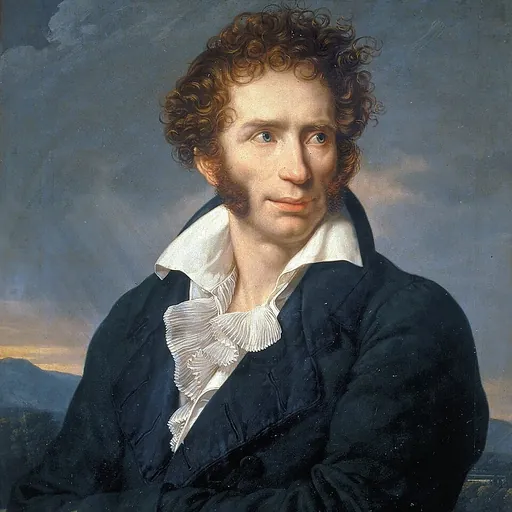
About Ugo Foscolo
Lived 1778 – 1827 (aged 49). Ugo Foscolo was an Italian poet, writer, playwright, translator and literary critic.
Ugo Foscolo (; 6 February 177810 September 1827), born Niccolò Foscolo, was an Italian writer, revolutionary and poet.
He is remembered for his 1807 long poem Dei Sepolcri, for writing what is considered the first modern Italian novel, The Last Letters of Jacopo Ortis (1798), and the carmen The Graces (1812).
Early life Foscolo was born in Zakynthos in 1778, in the Ionian Islands. His father Andrea Foscolo was an impoverished Venetian nobleman and medical doctor, and his mother Diamantina Spathis was Greek.
In 1788, upon the death of his father, who worked as a physician in Spalato (present-day Split, Croatia), the family moved to Venice, and Foscolo completed the studies he began at the Dalmatian grammar school at the University of Padua.
Amongst his Paduan teachers was the Abbé Melchiore Cesarotti, whose version of Ossian was very popular in Italy, and who influenced Foscolo's literary tastes; he knew both modern and Ancient Greek. His literary ambition revealed itself in the appearance in 1797 of his tragedy Tieste—a production that enjoyed a certain degree of success. Following the battle of Marengo (1800), he returned to Milan, and there gave the last touches to his "Ortis", published a translation of and commentary upon Callimachus, commenced a version of the Iliad and began his translation of Laurence Sterne's A Sentimental Journey Through France and Italy.
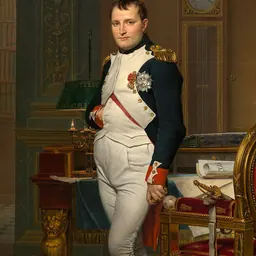
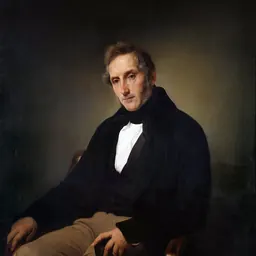
Following the defeat at Trafalgar (1805) and Napoleon's abandonment of his plans for invasion, Foscolo returned to Italy in 1806. Before leaving France, however, Foscolo once again met Alessandro Manzoni in Paris. Some seven years younger, Manzoni was still living in the house of his mother Giulia Beccaria. Studies have noted very close analogies (textual, metrical and biographical) between the poetry of Foscolo and Manzoni in the period 1801 to 1803, such as those between Foscolo's All'amica risanata ("To the healed friend"), an ode to Antonietta Fagnani Arese, and Manzoni's Qual su le cinzie cime ("Who, on the peaks of Cynthus")
In 1807, occasioned by Napoleon's 1804 decree forbidding burials within city limits, Foscolo wrote his Dei Sepolcri ("On Sepulchres"), which may be described as his sublime effort to seek refuge in the past from the misery of the present and the darkness of the future. The mighty dead are summoned from their tombs, as ages before they had been in the masterpieces of Greek oratory, to fight again the battles of their country.
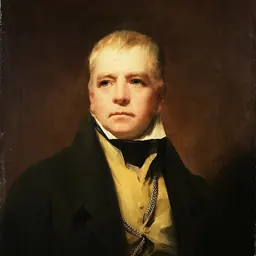
In January 1809, Foscolo was appointed to the chair of Italian rhetoric at the University of Pavia. In Pavia, Foscolo resided at the Palazzo Cornazzani, later home to Contardo Ferrini, to Ada Negri and to Albert Einstein, respectively. His inaugural lecture "On the origin and duty of literature", was conceived in the same spirit as his Dei Sepolcri. In his lecture, Foscolo urged his young countrymen to study literature, not in obedience to academic traditions, but in their relation to individual and national life and growth. His general bearing in society – as reported by Walter Scott – had not been such as to gain and retain lasting friendships. He died at Turnham Green on 10 September 1827, and was buried at St Nicholas Church, Chiswick, where his restored tomb remains to this day; it refers to him as the "wearied citizen poet", and incorrectly states his age as 50. Forty-four years after his death, on 7 June 1871, his remains were exhumed at the request of the King of Italy and taken to Florence, where with all the pride, pomp and circumstance of a great national mourning, found their final resting-place beside the monuments of Niccolò Machiavelli and Vittorio Alfieri, of Michelangelo and Galileo, in the church of Santa Croce, the pantheon of Italian glory he had celebrated in Dei Sepolcri.
As noted by historian Lucy Riall, the glorification of Ugo Foscolo in the 1870s was part of the effort of the Italian government of this time (successful in completing the Italian unification but at the cost of a head-on confrontation with the Catholic Church) to create a gallery of "secular saints" to compete with those of the Church and sway popular feeling in favor of the newly created Italian state.
References in modern culture Ugo Foscolo is the subject of a composition, La fuga di Foscolo, written in 1986 by Italian composer Lorenzo Ferrero. His sonnet "Alla sera" appears in the movie La meglio gioventù. His house in Edwardes Square in Kensington, west London, has an English Heritage blue plaque.
Works Poetry , ode (1797) [To Bonaparte the liberator], ode (1797) [To Luigia Pallavicini fallen from a horse], ode (1800) [To the healed (female) friend], ode (1802) , sonnet (1802) , sonnet (1802) , sonnet (1802) , sonnet (1802) , sonnet (1802) , sonnet (1802) , sonnet (1802) , sonnet (1802) [To the night (evening)], sonnet (1803) [To Zakinthos], sonnet (1803) [To the Muse], sonnet (1803) [In death of brother John], sonnet (1803) [Of the sepulchres], carmen (1807) [Of the Graces], short poem (1803–1827, unfinished)
Novels (1799–1801) [The last letters of Jacopo Ortis] (1802)
Plays [Thyestes] (1797) [Ajax] (1811) (1813)
Don’t just read it —
keep it.
Full-length biographies made to live with: read them, listen on the way to work, watch them tonight.
- E-book
- Audio
- Video
Instant download · yours to keep · every purchase keeps this site free
Important facts
Family & relationships
People in Ugo Foscolo's life
Named in this biography and alive at the same time

Related people
Same field, nearest in time

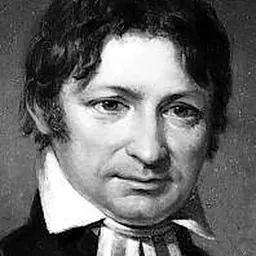
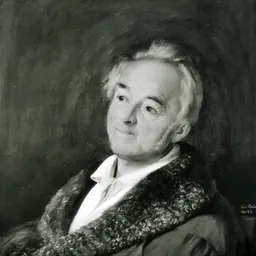
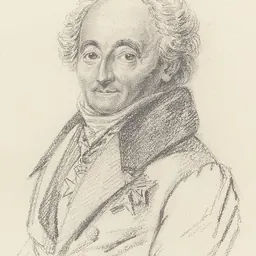
Contemporaries
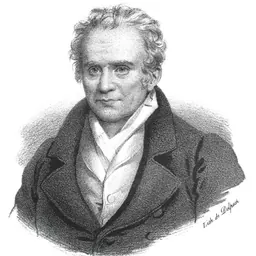
People whose lives overlapped Ugo Foscolo's



Frequently asked questions
Who was Ugo Foscolo?
Italian writer and poet (1778–1827)
When was Ugo Foscolo born?
Ugo Foscolo was born on 6 February 1778 in Zakynthos.
When did Ugo Foscolo die?
Ugo Foscolo died on 10 September 1827 in London, Turnham Green.
What was Ugo Foscolo's occupation?
Ugo Foscolo was a poet, writer, playwright, translator and literary critic.
What nationality was Ugo Foscolo?
Ugo Foscolo was Italian.
Sources & further reading
Cite this page
APA: Biography.guide. (2026). Ugo Foscolo. https://biography.guide/ugo-foscolo/
MLA: "Ugo Foscolo." Biography.guide, https://biography.guide/ugo-foscolo/.
Chicago: "Ugo Foscolo." Biography.guide. https://biography.guide/ugo-foscolo/.
Data last updated: 2026-09-21 · Spot an error? Report a correction.
Portrait: Wikimedia Commons · author & licence
Page generated 2026-09-27 04:59 UTC