
Ugo Ehiogu
English association football player
About Ugo Ehiogu
Lived 1972 – 2017 (aged 44). Ugo Ehiogu was a British association football player and association football coach.
Club career Early life Ehiogu was born in Hackney, London, He began his career at West Bromwich Albion as a trainee, turning professional in 1989.
Aston Villa After just a few games for Albion in the Second Division, Ron Atkinson brought him to First Division club Aston Villa for a £40,000 fee in August 1991. By 1994, he had replaced Shaun Teale as the main central defensive partner to Paul McGrath.
In the 1993–94 season Villa played Tranmere Rovers over two legs in the semi-finals of the League Cup, in which Ehiogu took part in the second leg. Ehiogu was selected as a substitute and came on to replace Ray Houghton during the game, helping the team to a 3–1 win leaving the two legs at 4–4 on aggregate. In the following penalty shoot-out he went on the take the fifth penalty, which he struck against the bar and missed. Ron Atkinson had told The Independent newspaper that it was "the most dramatic football match" of his managerial career. However, Villa went on to win the shootout for a League Cup final showdown with Manchester United, which Ehiogu missed out on.
In the 1994–95 season, Villa competed in the UEFA Cup, where in the second round second leg in a match against Turkish club Trabzonspor, Ehiogu scored in the 90th minute in a 2–1 home win. However, this wasn't enough as the tie ended 2–2 on aggregate, meaning Trabzonspor went through on the away goals rule.
He was part of the Villa team that won the 1995–96 Football League Cup, as Villa beat Leeds United 3–0 in the final. Ehiogu also received a runners-up medal when Villa lost 1–0 to Chelsea in the 2000 FA Cup Final.
He remained at the club for nine years, making over 300 appearances in all competitions until November 2000, when he joined Middlesbrough from Villa for, at the time, a club record fee of £8 million. The deal went ahead after negotiations between Villa and West Bromwich Albion, whose 50% sell-on clause on the player had been seen as a stumbling block to the move.
Middlesbrough His career at Boro got off on the wrong foot when he was forced to limp off with a calf injury five minutes into his debut at Charlton Athletic. Whilst at Middlesbrough, Ehiogu quickly became a mainstay in the central defence since joining the club and rejoining his former teammate Gareth Southgate in central defence. He missed the start of the 2003–04 season with a knee injury sustained in the final match of the previous season. He returned in time to play in Boro's League Cup final win against Bolton Wanderers, the first major trophy in the club's history. Only into the third game at the start of 2004–05 season Ehiogu had an accidental clash with his own keeper Mark Schwarzer which resulted in knee ligament damage. Again he was forced to miss many important games, although Boro still managed to secure a place in the UEFA Cup for a second successive season.
He agreed a loan move to West Bromwich Albion during the January transfer window of 2006, but this move was cancelled when a number of Middlesbrough players became injured.
On 23 November 2006, he moved to Leeds United on loan. He made six appearances and scored one goal against Barnsley and also an own goal against Stoke, during his spell at Leeds, which ended in January 2007 when his loan deal expired.
Rangers Ehiogu was released from his contract at Middlesbrough and signed an 18-month contract with Scottish Premier League club Rangers in January 2007. His first goal for Rangers came on 11 March with an overhead kick in his first Old Firm game, giving Rangers a 1–0 win against Celtic. The Rangers fans voted for Ehiogu's goal against Celtic as their Goal of the Season.
Ehiogu found his first team opportunities limited at the start of the 2007–08 season, with Carlos Cuéllar and David Weir being preferred by manager Walter Smith. He was released by Rangers that January.
Sheffield United On 16 January 2008, it was reported that Sheffield United were interested in signing Ehiogu. The next day he was released by Rangers and travelled down to Sheffield for talks with club manager Bryan Robson. He completed the move on 18 January 2008. Ehiogu made his first team debut for the Blades in a 1–1 home draw with Watford at the end of January, and was used as a defensive cover for the remainder of the season.
With injuries and suspensions to his fellow defenders in the early stages of the following season he forced his way into the first team and was rewarded with what turned out to be his only goal in Blades colours, scoring the winner against Preston North End in October 2008. Having embarked on his most successful spell for United he suffered an injury in the Boxing Day game against Wolves which sidelined him for the rest of the season. After the Blades failed to gain promotion, Ehiogu was released at the end of the season when his contract expired as the club tried to cut costs.
On 3 August 2009, Ehiogu retired from football after a trial with Milton Keynes Dons.
Wembley On 24 August 2012, Ehiogu came out of retirement to sign for Wembley, agreeing to play in the club's FA Cup games alongside fellow former professionals Ray Parlour, Martin Keown, Claudio Caniggia, Brian McBride and Graeme Le Saux. Ehiogu played alongside Caniggia in the club's 2–2 draw with Uxbridge in the preliminary round. Wembley subsequently lost the replay 5–0.
International career In April 1993, Ehiogu became the first black player to captain an England team in a competitive match, in a game for the England U21 team against the Netherlands. Ehiogu made his senior England debut on 23 May 1996, replacing Tony Adams after 76 minutes of a 3–0 friendly win against China at the Workers' Stadium in Beijing. He went on to win another three caps in friendly matches and scored once for his country, a header in a 3–0 victory over Spain on 28 February 2001 at Villa Park.
Coaching career Ehiogu worked with the England Under-20s in 2013 and was part of Peter Taylor's coaching team at the 2013 FIFA U-20 World Cup.
Following a period working part-time with the Tottenham Hotspur Academy, Ehiogu was appointed Under-21s team coach in July 2014. Writing after he had suffered a heart attack, Henry Winter noted that Ehiogu "is one of the most thoughtful English coaches, frequently talking eloquently about the need for English football to have a more distinct culture and commit more to age-group tournaments so that senior internationals of the future can experience differing styles".
Music career After retirement, Ehiogu began working in music management. In 2010, he established a record label, Dirty Hit, with Jamie Oborne, Chuck Waite and Brian Smith. After signing The 1975 for £20, the band became Dirty Hit’s first act to achieve mainstream success. The couple had a son, Obi Jackson, together. Ehiogu also had a daughter Jodie from a previous relationship. Death On 20 April 2017, Ehiogu collapsed due to a cardiac arrest at the Tottenham Hotspur training ground and was taken to hospital, He is buried in Highgate Cemetery.
Tributes In the days following Ehiogu's death, many clubs held tributes to him in the form of a minute's applause before matches, in which players wore black armbands. In the aftermath, it was announced that Ehiogu's widow Gemma would set up a charity in his honour. She used social media site JustGiving with the aim of raising £1,000 to start the charity. By 24 April, the appeal had raised £11,000.
In February 2026, the Tottenham Hotspur Academy held the inaugural U16 Ugo Ehiogu Memorial Cup in his honour. The two-day youth tournament at Hotspur Way featured the Under-16s of Ehiogu's former clubs Aston Villa and Sheffield United, as well as Liverpool, Fulham, Charlton Athletic and Tottenham. Aston Villa and Sheffield United contested the final, with the former crowned as champions.
Career statistics Club
International
Scores and results list England's goal tally first, score column indicates score after Ehiogu goal.
Honours Aston Villa Football League Cup: 1995–96
Middlesbrough Football League Cup: 2003–04
Individual PFA Team of the Year: 1995–96 Premier League
Don’t just read it —
keep it.
Full-length biographies made to live with: read them, listen on the way to work, watch them tonight.
- E-book
- Audio
- Video
Instant download · yours to keep · every purchase keeps this site free
Important facts
People in Ugo Ehiogu's life
Named in this biography and alive at the same time



Related people
Same field, nearest in time
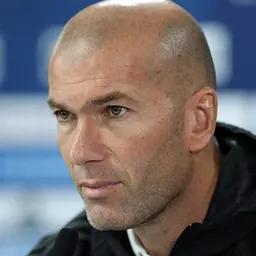

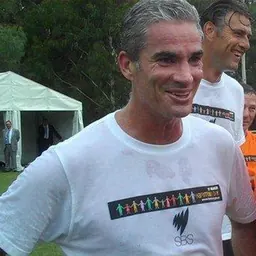

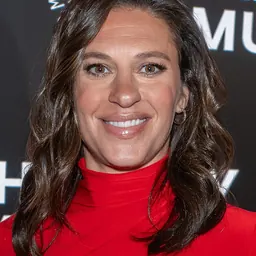
Contemporaries
People whose lives overlapped Ugo Ehiogu's

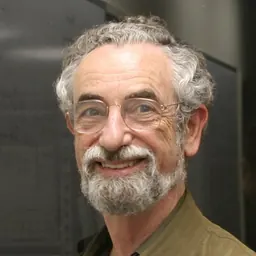

Frequently asked questions
Who was Ugo Ehiogu?
English association football player (1972-2017)
When was Ugo Ehiogu born?
Ugo Ehiogu was born on 3 November 1972 in London Borough of Hackney.
When did Ugo Ehiogu die?
Ugo Ehiogu died on 21 April 2017 in London.
What was Ugo Ehiogu's occupation?
Ugo Ehiogu was an association football player and association football coach.
What nationality was Ugo Ehiogu?
Ugo Ehiogu was British.
Sources & further reading
Cite this page
APA: Biography.guide. (2026). Ugo Ehiogu. https://biography.guide/ugo-ehiogu/
MLA: "Ugo Ehiogu." Biography.guide, https://biography.guide/ugo-ehiogu/.
Chicago: "Ugo Ehiogu." Biography.guide. https://biography.guide/ugo-ehiogu/.
Data last updated: 2026-09-26 · Spot an error? Report a correction.
Page generated 2026-09-27 05:15 UTC