
About Uehara Yūsaku
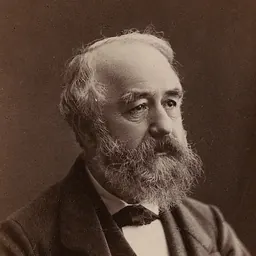
Lived 1856 – 1933 (aged 76). Uehara Yūsaku was a Japanese politician and military personnel.
Marshal Viscount was a field marshal in the Imperial Japanese Army. His wife was a daughter of General Nozu Michitsura. He was the founder of the Imperial Japanese Army Engineering Corps.
Early career Uehara was born as Tatsuoka Shinaga in Miyakonojō, Hyūga Province (present-day Miyazaki Prefecture), as the second son of a samurai in the service of Satsuma Domain. In 1875, he was adopted by the Uehara family, a cadet branch of the Shimazu clan, and changed his name to Uehara Yūsaku. He graduated from the Imperial Japanese Army Academy in 1879 with Akiyama Yoshifuru as one of his classmates, and his speciality was military engineering. In June 1881, he was sent to France for studies on modern military techniques, including fortification and artillery. He was promoted to lieutenant in September 1882 and to captain in June 1885, while still in France. After his return to Japan in December 1885, he served in administrative positions within the Imperial Japanese Army General Staff. In 1889 he was sent as a military attaché to Europe. He was promoted to major in May 1890 and was assigned to the IJA 5th Division, commanded by his father-in-law, General Nozu Michitsura.
Uehara came to the attention of Kawakami Soroku and was recruited to become one of his "brain trust". In August 1892, Uehara was appointed aide-de-camp to Prince Arisugawa Taruhito and also served as an instructor at the Army Staff College. From July to November 1893, he was sent as a military attache to Annam and to Siam and from June 1894 was sent to Korea during the Donghak Rebellion. With the start of the First Sino-Japanese War, Uehara transferred directly to the Ōshima Yoshimasa, which defeated the Chinese at the Battle of Seonghwan outside of Asan, south of Seoul in the first land engagement of war. Uehara was on the staff of the IJA 1st Army (commanded by General Nozu Michitsura) and was promoted to lieutenant colonel in September 1894 while in Korea. He rose to the position of chief-of-staff of the IJA 1st Army in March 1895. In May, he was reassigned to the 2nd Bureau of the General Staff and in March 1896 was assigned to accompany Prince Fushimi Sadanaru as part of Japan's official delegation to the coronation of Tsar Nicholas II of Russia. The delegation remained until August, during which time he was officially reassigned to the 4th Bureau of the General Staff. After his return to Japan, he was promoted to colonel in October 1897. In 1899 he was the Japanese delegate to the Hague Convention.
As general
Uehara was promoted to major general in July 1900, and commandant of the Army Artillery School. From August 1903 to February 1904, he was sent as a military attache to Europe. With the start of the Russo-Japanese War, Uehara became chief-of-staff of the Japanese Fourth Army (commanded by General Nozu Michitsura). By many accounts, General Nozu had a difficult personality, and his son-in-law was one of the few people who could get along with him. However, Uehara had many disagreements with General Kageaki Kawamura and remained on bad terms with Kawamura throughout his career.
He was promoted to lieutenant general in July 1906 and ennobled as a baron (danshaku) in the kazoku peerage in September of the following year. In December 1908 he became the commander of the IJA 7th Division. His appointment was controversial, as it was the first time an engineering officer had been appointed a divisional commander. The appointment had the support of General Terauchi Masatake, and Uehara specifically requested an assignment far from Tokyo, so that the Choshu-dominated Army Ministry would be unable to interfere. The IJA 7th Division was a garrison force in Asahikawa, Hokkaido. From September 1911 he commanded the IJA 11th Division.
In December 1912, Uehara was appointed Army Minister in Prime Minister Saionji Kinmochi's second cabinet. Since the civilian government was pursuing a tight fiscal policy, it soon came into conflict with the army, which was demanding an increase in funding for another two infantry divisions. When Uehara resigned as Army Minister over this conflict, the remainder cabinet resigned en masse when the Army refused to nominate a successor, precipitating the collapse of Saionji's government. This event was known as the "Taisho Political Crisis".
From March to May 1913, Uehara was commander of the IJA 3rd Division. In April 1914, he became Inspector General of Military Training, the third most prestigious post in the Army. In February 1915, Uehara was promoted to general and became a member of the Supreme War Council; he also became Chief of the Imperial Japanese Army General Staff, remaining in this post longer than any person before or after (with the exception of a member of the Imperial House). While in this position, he authorized the Siberian Intervention in support of White Russian forces against the Bolshevik Red Army in the Russian Civil War.
Uehara received the rank of marshal in April 1921, and his kazoku title was raised to shishaku (viscount). He retired as chief of staff in 1923.
Uehara died in 1933 of peptic ulcer disease and cardiovascular disease at his home in Tokyo at the age of 77. His grave is at the Aoyama Cemetery in Tokyo.
Awards and decorations Japanese Peerages and titles Baron (21 September 1907) Viscount (18 April 1921) Gensui (27 April 1921)
Decorations
Foreign
link=Distinguished Service Medal (U.S. Army) US: Distinguished Service Medal (DSM)
Don’t just read it —
keep it.
Full-length biographies made to live with: read them, listen on the way to work, watch them tonight.
- E-book
- Audio
- Video
Instant download · yours to keep · every purchase keeps this site free
Important facts
People in Uehara Yūsaku's life
Named in this biography and alive at the same time

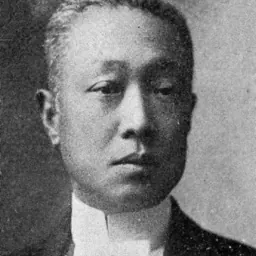


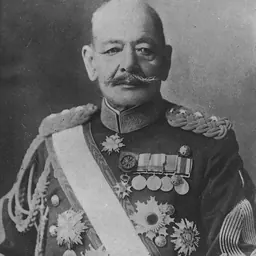
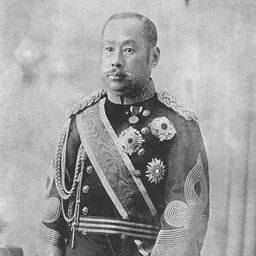
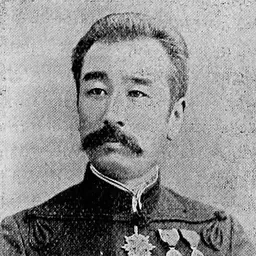
Related people
Same field, nearest in time





Contemporaries
People whose lives overlapped Uehara Yūsaku's





Frequently asked questions
Who was Uehara Yūsaku?
Japanese general (1856-1933)
When was Uehara Yūsaku born?
Uehara Yūsaku was born on 6 December 1856 in Miyakonojō.
When did Uehara Yūsaku die?
Uehara Yūsaku died on 8 November 1933 in Tokyo.
What was Uehara Yūsaku's occupation?
Uehara Yūsaku was a politician and military personnel.
What nationality was Uehara Yūsaku?
Uehara Yūsaku was Japanese.
Sources & further reading
Cite this page
APA: Biography.guide. (2026). Uehara Yūsaku. https://biography.guide/uehara-yusaku/
MLA: "Uehara Yūsaku." Biography.guide, https://biography.guide/uehara-yusaku/.
Chicago: "Uehara Yūsaku." Biography.guide. https://biography.guide/uehara-yusaku/.
Data last updated: 2026-09-20 · Spot an error? Report a correction.
Page generated 2026-09-27 05:24 UTC