
Udo Steinberg
German association football player
About Udo Steinberg
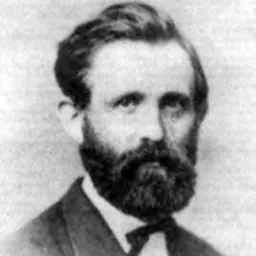
Lived 1877 – 1919 (aged 42). Udo Steinberg was a German association football player, association football coach, tennis player and sports journalist.
Udo Steinberg Werle (13 June 1877 – 25 December 1919) was a German engineer, athlete and sports official who played football as a forward for the Spanish club FC Barcelona between 1902 and 1910. He is best known for being the author of Barça's first-ever goal in the history of the El Clásico.
Before settling in Spain, he participated in the founding of several football clubs in his country, as well as being present at the meeting in which the German Football Association was born. During his time in Catalonia, Steinberg was undoubtedly one of the most influential players of FC Barcelona on and off the pitch.
Despite being an outstanding football player, a sport to which he owes his career, he was an all-around sportsman who also performed in other modalities such as athletics, cricket, tennis, cycling, boxing and alpine disciplines.
Education Udo Steinberg was born as the second son of a total of six children from Eugen Oscar Steinberg and his wife Pauline Elise Cäcilie, on 13 June 1877 in Berlin. By the time his father died in Italy in 1889, Steinberg was attending the Friedrich Wilhelm Gymnasium, where he completed an apprenticeship in Ferdinand Ernecke's mechanical workshop in Berlin. He moved to Chemnitz in 1896, to study electrical engineering and mechanical engineering at the Mittweida technical school, graduating in both disciplines in 1900. It was around this time that Steinberg met the Portuguese Virgilio Da Costa, an industrial technical engineer who also played for the Mittweida BC, and with whom he established a great friendship, and they went on to be teammates at FC Barcelona. In addition to da Costa, Mittweida BC was also the football cradle of the likes of Antonio Alonso from Vigo, Juan Arzuaga, Adolfo Uribe and Luis Astorquia from Bilbao.
After moving to Barcelona in 1900, he began playing tennis and football with athletes from Germany, England and Switzerland who lived in the Catalan capital, and together, they founded the Barcelona sports club. In April 1902, the first football school of FC Barcelona was created and Steinberg was appointed director of it in order to "instill his extensive knowledge in the players of the third side". This school was the forerunner of La Masia, and he managed it until 1916, which means that, in a way, he was the first-ever youth coach of FC Barcelona. Steinberg quickly established his position in Barcelona and was one of the most prominent players in the team.
Steinberg played a fundamental role in Barça's first-ever piece of silverware, the 1901–02 Copa Macaya, netting a whopping 17 goals, including back-to-back hat-tricks against Club Español and University SC and a 6-goal haul in the tournament's final matchday on 23 March 1902 to help his side to a 15–0 victory over Català FC. Despite his prolificity in front of goal, he failed to be the tournament's top scorer as he was narrowly outscored by teammate and captain Joan Gamper. The Copa Macaya is now recognized as the first Catalan championship.
FC Barcelona in 1903. Standing: Llobet, Terradas, Reig and Vidal. Seated: Ossó, Steinberg, Meyer, Witty, Gamper, Harris and Lassaletta. Together with Gamper, the Morris brothers (Samuel, Enrique, Miguel) and Alfonso Albéniz, he was a member of the Barcelona side that participated in the very first national tournament played in Spain, the 1902 Copa de la Coronación, helping Barça reach the final on 15 May 1902, where they were beaten 2–1 by Bizcaya (a combination of players from Athletic Club and Bilbao Football Club). In the semi-finals on 13 May, Steinberg went down in history as one of the eleven footballers who played in the very first El Clásico in history, netting twice in a 3–1 comeback victory for Barça against Madrid FC (later Real), thus becoming Barça's first-ever goalscorer in the history of this eternal clash. He stayed loyal to the club through its crisis in the mid-1900s and helped them win another championship in 1908–09, this time featuring alongside the likes of Paco Bru, Enrique Peris and Charles Wallace.
Together with Manuel Amechazurra, Ricard Graells, Pepe Rodríguez, he participated in the inaugural edition of the Pyrenees Cup, playing in the semi-finals against Olympique de Cette on 24 April in a 1–1 draw, and though he did not play in the final which they won with a 2–1 win over Real Sociedad, this was his last title in his career. In 1910 he ended his career to prioritize himself on his company Udo Steinberg S. en. C.. He was buried in the Civil Cemetery of Madrid.
Career statistics Club
Honours Barcelona Copa Macaya: 1901–02 Copa Barcelona: 1902–03 Catalan championship: 1904–05, 1908–09 Pyrenees Cup: 1910
Don’t just read it —
keep it.
Full-length biographies made to live with: read them, listen on the way to work, watch them tonight.
- E-book
- Audio
- Video
Instant download · yours to keep · every purchase keeps this site free
Important facts
People in Udo Steinberg's life
Named in this biography and alive at the same time





Related people
Same field, nearest in time



Contemporaries
People whose lives overlapped Udo Steinberg's

Frequently asked questions
Who was Udo Steinberg?
German association football player (1877-1919)
When was Udo Steinberg born?
Udo Steinberg was born on 13 June 1877 in Berlin.
When did Udo Steinberg die?
Udo Steinberg died on 25 December 1919 in Madrid.
What was Udo Steinberg's occupation?
Udo Steinberg was an association football player, association football coach, tennis player and sports journalist.
What nationality was Udo Steinberg?
Udo Steinberg was German.
Sources & further reading
Cite this page
APA: Biography.guide. (2026). Udo Steinberg. https://biography.guide/udo-steinberg/
MLA: "Udo Steinberg." Biography.guide, https://biography.guide/udo-steinberg/.
Chicago: "Udo Steinberg." Biography.guide. https://biography.guide/udo-steinberg/.
Data last updated: 2026-09-20 · Spot an error? Report a correction.
Page generated 2026-09-27 05:21 UTC