
About Ubay Orifov
Lived 1909 – 1976 (aged 67). Ubay Orifov was a Russian physicist, politician, university teacher, scientist and editor-in-chief.
Ubay Orifovich Orifov (Russian: Убай Арифович Арифов; 15 June [ O.S. 2 June] 1909 – 24 December 1976) was a Soviet Uzbek physicist and academician who served as the President of the Academy of Sciences of the Uzbek SSR from 1962 to 1966. He was also a participant in the Great Patriotic War.
Early life and education Ubay Orifov was born in the city of Kokand in the Ferghana Oblast of Russian Turkestan. He graduated from the Uzbek State Pedagogical Academy in 1931.
Career He worked at the Central Asian University as an assistant from 1935 to 1941. He join the Communist Party of the Soviet Union in 1944. From 1945 to 1956, Orifov was the Director of the Physicotechnical Institute of the Academy of Sciences of the Uzbek SSR, a position he would serve in again from 1963 to 1967. He was then the Director of the Institute of Nuclear Sciences of the Uzbek SSR from 1956 to 1962. He assumed the position of President of the Academy of Sciences of the Uzbek SSR on January 23, 1962 and served until February 26, 1966. He was then the Director of the Institute of Electronics of the Academy of Sciences of the Uzbek SSR. He was also the editor-in-chief of the Reports of the Academy of Sciences of the Uzbek SSR (1962-1966) and Heliotekhnika (1965-1976) magazines.
Orifov's scientific works mainly focused on physical electronics, solid-state surface physics, nuclear and radiation physics, mass spectrometry, and solar technology. He explored the non-stationary processes on the surface of metals and developed methods for determining coefficients of ionization surfaces and the heats of adsorption and desorption. He also explored the patterns of electron emission during the bombardment of metal crystals and film systems by atomic particles. In addition, he developed the mechanisms of potential and kinetic electron emission of various classes of the surface of a solid body; established the possibility of a strong increase in the yield of negative ions from the sprayed surface and laid the foundation for the development of spray sources of negative ions; proved the possibility of directional changes in surface properties using beams of charged particles and developed methods of ion nitriding, passivation, ion-beam treatment, etc.; and designed solar furnaces with a diameter of up to 3 meters, solar photo converters, solar concentrators, etc.
Death Ubay Orifov died at the age of 67 in Tashkent. Order of the Red Banner of Labour Order of the Red Star ) State Biruni prize (1968)
Don’t just read it —
keep it.
Full-length biographies made to live with: read them, listen on the way to work, watch them tonight.
- E-book
- Audio
- Video
Instant download · yours to keep · every purchase keeps this site free
Important facts
Related people
Same field, nearest in time

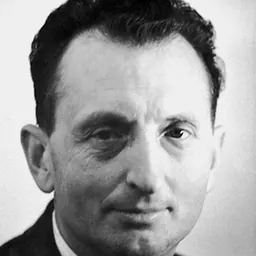

Contemporaries
People whose lives overlapped Ubay Orifov's



Frequently asked questions
Who was Ubay Orifov?
Soviet physicist (1909-1976)
When was Ubay Orifov born?
Ubay Orifov was born on 2 June 1909 in Qoʻqon.
When did Ubay Orifov die?
Ubay Orifov died on 24 December 1976 in Tashkent.
What was Ubay Orifov's occupation?
Ubay Orifov was a physicist, politician, university teacher, scientist and editor-in-chief.
What nationality was Ubay Orifov?
Ubay Orifov was Russian.
Sources & further reading
Cite this page
APA: Biography.guide. (2026). Ubay Orifov. https://biography.guide/ubay-orifov/
MLA: "Ubay Orifov." Biography.guide, https://biography.guide/ubay-orifov/.
Chicago: "Ubay Orifov." Biography.guide. https://biography.guide/ubay-orifov/.
Data last updated: 2026-09-20 · Spot an error? Report a correction.
Page generated 2026-09-27 05:24 UTC