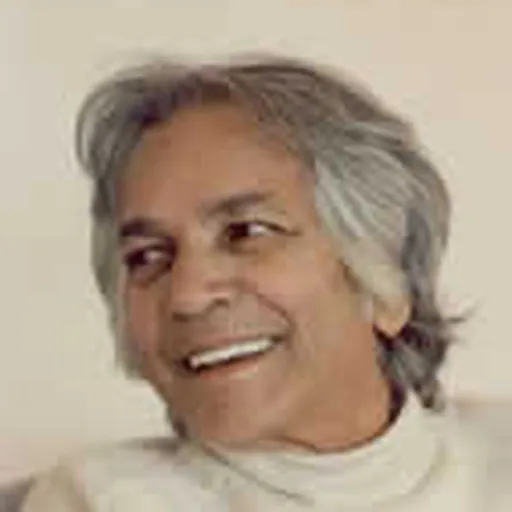
About U. G. Krishnamurti
Lived 1918 – 2007 (aged 88). U. G. Krishnamurti was an Indian philosopher and writer.
Uppaluri Gopala Krishnamurti (9 July 1918 – 22 March 2007) was an Indian "anti-guru" who questioned the search for enlightenment. Having pursued a religious path in his youth and eventually rejecting it, U.G. clarified that he had experienced a devastating biological transformation on his 49th birthday, an event he referred to as "the calamity". He emphasized that this transformation back to "the natural state" is a rare, acausal, biological occurrence with no religious context. Because of this, he discouraged people from pursuing the "natural state" as a spiritual goal.
He rejected the basis of thought and in doing so negated all systems of thought and knowledge. Hence he explained his assertions were experiential and not speculative – "Tell them that there is nothing to understand."
He was unrelated to his contemporary Jiddu Krishnamurti, although the two men had a number of meetings because of their association with the Theosophical Society and U.G. has, at times, referred to him as "[his] teacher" in spite of having ultimately rejected his teachings as well as the idea that anything could or should be taught in any spiritual context.
Biography
Early life U.G. was born on 9 July 1918 in Machilipatnam, a town in coastal Andhra Pradesh, India, and raised in the nearby town of Gudivada. His mother died seven days after he was born, and he was brought up by his maternal grandfather, a wealthy Brahmin lawyer, who was also involved in the Theosophical Society. U.G. also became a member of the Theosophical Society during his teenage years and mentions having "inherited" his association with the Theosophical Society from his grandfather. South Indian actresses Gautami and Soumya Bollapragada are his very close relatives.
During the same period of his life, U.G. reportedly practised various austerities and sought moksha or liberation.
To that end, between the ages of 14 and 21, he undertook a variety of spiritual exercises, determined to find out whether moksha was possible. Wanting to achieve that state, he had also resolved to prove that if there were people who have thus "realized" themselves, they could not be hypocritical. As part of this endeavour, he searched for a person who was an embodiment of such "realization".
He spent seven summers in the Himalayas with Swami Sivananda studying yoga and practising meditation. During his 20s, U.G. began attending the University of Madras, studying psychology, philosophy, mysticism, and the sciences. He dropped out of the Master's program with the idea that the answers of the West – to what he considered were essential questions – were no better than those of the East.
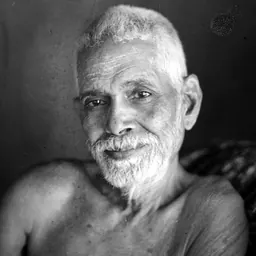
Quest In 1939, at age 21, U.G. met with known spiritual teacher Ramana Maharshi. U.G. related that he asked Ramana, "This thing called moksha, can you give it to me?" – to which Ramana Maharshi replied, "I can give it, but can you take it?". This answer completely altered U.G.'s perceptions of the "spiritual path" and its practitioners. Later, U.G. would say that Maharshi's answer – which he perceived as "arrogant" – put him "back on track".
In 1941, he began working for the Theosophical Society, in C.W. Leadbeater's library. Shortly after, he began an international lecture tour on behalf of the Society, visiting Norway, Belgium, Germany and the United States. Returning to India, he married a Brahmin woman named Kusuma Kumari in 1943, at age 25.
From 1947 to 1953, U.G. regularly attended talks given by Jiddu Krishnamurti in Madras, India, beginning a direct dialogue with him in 1953. U.G. related that the two had almost daily discussions for a while, which he asserted were not providing satisfactory answers to his questions. Finally, their meetings came to a halt. He described part of the final discussion:
And then, towards the end, I insisted, "Come on, is there anything behind the abstractions you are throwing at me?" And that chappie said, "You have no way of knowing it for yourself". Finish – that was the end of our relationship, you see – "If I have no way of knowing it, you have no way of communicating it. What the hell are we doing? I've wasted seven years. Goodbye, I don't want to see you again". Then I walked out. :1
London period He separated from his family and went to live in London. While sitting one day in Hyde Park, he was confronted by a police officer who threatened to lock him up if he didn't leave the park. Down to his last five pence, he made his way to the Ramakrishna Mission of London where the residing Swami gave him money for a hotel room for the night. The following day, U.G. began working for the Ramakrishna Mission, an arrangement that lasted for three months. Before leaving the mission he left a letter for the residing Swamiji telling him that he had become a new man. but U.G. declined his help. Jiddu eventually persuaded him to attend a few talks he was giving in London, which U.G. did, but found himself bored listening to him.
Early Swiss period After two weeks in Geneva, U.G. was unable to pay his hotel bill and sought refuge at the Indian Consulate. He was listless, without hope, and described himself as "finished" – he requested that he be sent back to India, which the consular authorities refused to do at the state's expense. A consulate employee in her 60s named Valentine de Kerven offered U.G. shelter. Valentine and U.G. became good friends, and she provided him with a home in Switzerland.
For the next few years, the questions regarding the subject of enlightenment – or anything else – did not interest him, and he did nothing to further his enquiry. But by 1967, U.G. was again concerned with the subject of enlightenment, wanting to know what that state was, which sages such as Siddhārtha Gautama purportedly attained. Hearing that Jiddu Krishnamurti was giving a talk in Saanen, U.G. decided to attend. During the talk, Jiddu was describing the state and U.G. thought that it referred to himself. He explained it as follows:
He continues: Then – very strange – that question "What is that state?" transformed itself into another question "How do I know that I am in that state, the state of Buddha, the state I very much wanted and demanded from everybody? I am in that state, but how do I know?"
Post-calamity According to U.G., his life-story can be separated into the pre- and post-calamity parts. Describing his post-calamity life, he stated that he was functioning permanently in what he called "the natural state": A state of spontaneous, purely physical, sensory existence, characterised by discontinuity – though not absence – of thought. U.G. also maintained that upon finding himself in the "natural state", he had lost all acquired knowledge and memories, and had to re-learn everything, as if "...the slate had been wiped clean".
After his calamity experience, U.G. often traveled to countries around the world, declining to hold formal discussions yet talking freely to visitors and those that sought him out. He gave his only formal post-calamity public talk in India, in 1972.
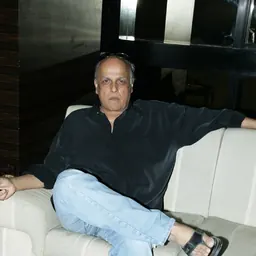
Death On 22 March 2007, U.G. died at Vallecrosia in Italy. He had slipped and injured himself and was bedridden for seven weeks before his death. Three friends, including long-time devotee Mahesh Bhatt, were in the city with him when he died. Mahesh states in his biography of U.G., "U.G. Krishnamurti, A Life", that U.G. died alone after Mahesh and those present went out for a brief walk with the specific intention of allowing U.G. some moments of solitude to die in peace. In February 2007, he had dictated his final speech, "My Swan Song".
U.G. had asked that no rituals or funeral rites be conducted upon his death; also, he did not leave instructions on how to dispose of his body. His body was cremated by Bhatt the next day. True to his own philosophy, U.G. did not want to be remembered after his death.
Health U.G. was known for his unusual health and diet preferences. Carrying with him a "portable kitchen" in a tiny suitcase throughout his travels, he consumed a great deal of salt and cream, and stated "no meal should take longer than a few minutes to prepare." After 1949, U.G. never saw a doctor or took medication, believing the body would take care of itself. Often complimented for good looks in his old age, U.G. would respond "that's because I don't eat healthy food, I don't take vitamins, and I don't exercise!"
U.G. maintained that the reason people came to him (and to gurus) was to find solutions for their everyday real problems, and/or for solutions to a fabricated problem, namely, the search for spirituality and enlightenment. He insisted that this search is caused by the cultural environment, which demands conformity of individuals as it simultaneously places within them the desire to be special – the achievement of enlightenment thus viewed as a crowning expression of an individual's "specialness" and uniqueness. Consequently, the desire for enlightenment is exploited by gurus, spiritual teachers, and other "sellers of shoddy goods", who pretend to offer various ways to reach that goal. According to U.G., all these facilitators never deliver, and cannot ever deliver, since the goal itself (i.e. enlightenment), is unreachable.
The self, as he perceived, is an illusory entity projected by thought and sustained by the "demand" to bring about change in the world, in itself, or in both.
Likewise, U.G. rejected the notion of a knower by turning the epistemological cornerstone "Cogito, ergo sum" by Descartes on its head, postulating that there is no one thinking, there is just thinking. He went one step further in his statement: "What is there is about thought but not thought itself." He also used "thought sphere" (atmosphere of thoughts) synonymously with the term "world mind". He stated that human beings inhabit this thought realm or thought sphere and that the human brain acts like an antenna, picking and choosing thoughts according to its needs.
Selected publications The Courage to Stand Alone: Conversations with U.G. Krishnamurti, 2001, Smriti Books. The Mystique of Enlightenment: The Radical Ideas of U.G. Krishnamurti, 2002, Sentient Publications. Thought is Your Enemy: Conversations with U.G. Krishnamurti, 2002, Smriti Books. The Little Book of Questions, 2003, Penguin Books. Mind Is a Myth: Conversations with U.G. Krishnamurti, 2003, Smriti Books. No Way Out: Conversations with U.G. Krishnamurti, 2005, Smriti Books. The Natural State, In the words of U.G. Krishnamurti, 2005, Smriti Books.
Reception His unorthodox non-message philosophy and the uncompromising, direct style of its presentation, generated a measure of notoriety and sharply-divided opinions. At the extremes, some people considered him enlightened, while others considered him nothing more than a charlatan. The clamour increased as books and articles about U.G. and his newly expounded philosophy continued appearing.
Don’t just read it —
keep it.
Full-length biographies made to live with: read them, listen on the way to work, watch them tonight.
- E-book
- Audio
- Video
Instant download · yours to keep · every purchase keeps this site free
Important facts
People in U. G. Krishnamurti's life
Named in this biography and alive at the same time

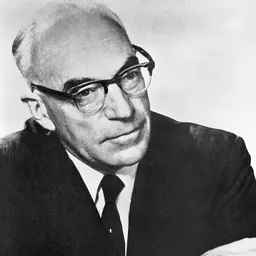
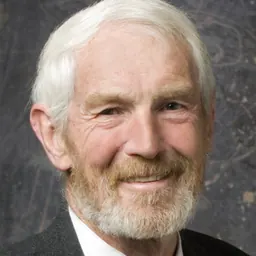
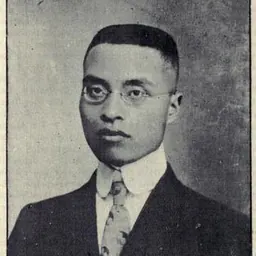
Related people
Same field, nearest in time


Contemporaries
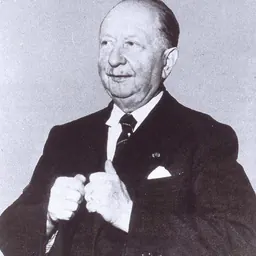
People whose lives overlapped U. G. Krishnamurti's



Frequently asked questions
Who was U. G. Krishnamurti?
Indian philosopher (1918–2007)
When was U. G. Krishnamurti born?
U. G. Krishnamurti was born on 9 July 1918 in Machilipatnam.
When did U. G. Krishnamurti die?
U. G. Krishnamurti died on 22 March 2007 in Vallecrosia al mare.
What was U. G. Krishnamurti's occupation?
U. G. Krishnamurti was a philosopher and writer.
What nationality was U. G. Krishnamurti?
U. G. Krishnamurti was Indian.
Sources & further reading
· Wikipedia: U. G. Krishnamurti
Cite this page
APA: Biography.guide. (2026). U. G. Krishnamurti. https://biography.guide/u-g-krishnamurti/
MLA: "U. G. Krishnamurti." Biography.guide, https://biography.guide/u-g-krishnamurti/.
Chicago: "U. G. Krishnamurti." Biography.guide. https://biography.guide/u-g-krishnamurti/.
Data last updated: 2026-09-23 · Spot an error? Report a correction.
Portrait: Wikimedia Commons · author & licence
Page generated 2026-09-27 05:05 UTC