
About Tsvi Misinai
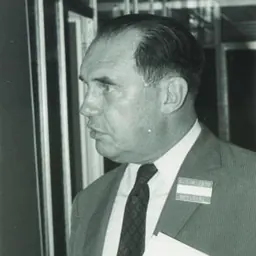
Born 1946. Tsvi Misinai is an Israeli anthropologist and historian.
Tsvi Jekhorin Misinai (; born 15 April 1946) is an Israeli researcher, writer, historian, computer scientist and entrepreneur. A pioneer of the Israeli software industry,
Biography
Tsvi Misinai was born in 1946 in Jerusalem, Mandatory Palestine to Ashkenazi Jewish parents who immigrated from Ternopil in Poland Galicia (now Ukraine) in 1939. He graduated in Physics from the Haifa Technion in 1968. He was the first Israeli to receive the Rothschild Award for industrial development in the field of software in 1992.
Misinai is the founder of Sapiens International Corporation and served as its president until 1994. He embedded the principle of Positive Thinking in computers and invented the Rule Based Object Oriented technology for developing data processing applications, the development of which he started in the Weizmann Institute of Science in 1972.
Misinai self-identifies as a secular Jew and currently resides in Rehovot.
Misinai first heard about the "Hebrew origins of Palestinians" theory from his father, Kha'yim Avraham, who served in the Royal Artillery in the Second World War. His interest was rekindled after the 1991 Gulf War, when there was talk about a new order in the Middle East. After the failure of the Oslo Accords that led to the commencement of the Al-Aqsa Intifada in 2000, he abandoned his career as a computer scientist and devoted his entire life to investigating the Jewish roots of Palestinians. He now spends his entire time tracking down Palestinians who acknowledge their Jewish heritage, and lobbying ministers, ambassadors, religious leaders and activists in both communities.
According to Misinai, unlike the ancestors of the modern day Jews who were city dwellers to a large extent, the Hebrew ancestors of the Palestinians were rural dwellers, and were allowed to remain in the land of Israel to work the land and supply Rome with grain and olive oil.
Later, when the edict was finally repealed in 1044 during the reign of Caliph Al-Mustansir of Cairo, only 27 per cent of the Jewish converts to Islam returned to Judaism openly, although they too would remain Musta’arabi (culturally and linguistically Arab). The remainder continued to live as Muslim crypto-Jews in order to continue enjoying the economic advantages of Muslims, such as exemption from paying jizya and kharaj, the ability to sell their agricultural products to the foreign authorities, or gain employment in the government machinery. Many younger persons of Hebrew-origin (Jewish, Christian or Samaritan) saw it simultaneously possible to lead dual lives, incorporating their prior faith while being outwardly Muslim, and accruing material benefits. Later, with the advent of Mamluk rule, Judaism had reached a breaking point in Palestine.
Tsvi Misinai validates his theory of the Hebrew origin of Palestinians on the basis of various findings in terms of historic-demographic, historic-geographic, national-territorial, genetic, behavioural-religious, nomenclature and linguistics, and Palestinian cultural and oral traditions. In his book Brother shall not lift sword against brother, he details numerous testimonies of their Jewish ancestry by Palestinians and Bedouins, and cites the anthropological studies conducted by Israel Belkind, one of the organizers of the Bilu movement, David Ben-Gurion and Yitzhak Ben-Zvi (both the first Prime Minister and the second President of Israel, respectively). In 2001, the Human Immunology magazine published a genetic study conducted by Prof. Antonio Arnez-Vilna, a Spanish researcher from the Complutense University of Madrid, who discovered that the immune systems of the Jews and the Palestinians are extremely close to one another in a way that almost absolutely demonstrates a similar genetic identity. Furthermore, a 2002 test by Tel Aviv University researchers, determined that only two groups in the world—Ashkenazi Jews and Palestinians—were genetically susceptible to an inherited deafness syndrome.
Classification of the Palestinians Tsvi Misinai separates the Palestinian people into three main groups; the "Descendants of Israel", "Brethren of Israel" and "Palestinians of miscellaneous origins". He states that until recently, there had been very few inter-marriages between these groups, as Palestinians usually tended to marry within their own clans or related clans.
Descendants of Israel The "Descendants of Israel", he claims, comprise descendants of the ancient biblical Hebrews which are native to the land west of the Jordan River (the West Bank, Gaza Strip and Israel proper).
Samaritans
Samaritan High Priest with the Paleo-Hebrew alphabet Samaritan Torah, Nablus, c. 1920.
The Samaritans are distinguished among Descendants of Israel, given that their ancient history serves as an analogous precursor to the present situation that Tsvi Misinai argues exists between world Jewry and the Palestinians—that upon their returns from exile and re-establishments of Israel, world Jewry misidentified as foreigners the descendants of those Israelites who had stayed behind, first in antiquity misidentifying the Samaritans as foreigners, and today in modern times misidentifying the Palestinians (Arabized Hebrews of the Muslim and Christian faiths) as foreigners.
The Samaritans are Descendants of Israel, being descended from farmers among the Israelite Tribes, part of whom were never exiled by the Assyrians or the Babylonians during the period of the destruction of the First Jewish Commonwealth. Their maternal lineages, however, derive from the Small Nations (those who came from Cuthah and others) who were exiled to Samaria by the Assyrians and intermixed with their paternal Israelite ancestors. The alien minority who remained in the land, adopted the Israelite religion (Samaritanism, the sister Israelite religion to Judaism) in the course of time, after the destruction of the First Temple. A portion of the Samaritans exiled by the Assyrians, were later repatriated by the prophet Jeremiah in the days of the Judean king Josiah.
The Babylonians, who followed the Assyrians as the dominant entity in the Fertile Crescent, exiled many Samaritans but skipped over a significant part of the Samaritan population. By the time they arrived in Samaria, the Babylonians found many alien elements in the land of Israel. Consequently, they did not undertake a thorough ethnic cleansing expulsion from Samaria, since the Assyrians had led many areas to be viewed as places whose indigenous population had already been replaced by aliens and needed no further expulsion.
Misinai states that the history of the Brethren of Israel is mostly intertwined with those of the Descendants of Israel. The Moabites, the Ammonites and the Edomites were forcibly converted to Judaism and made an extension of the Israelite nation during the course of King David’s conquests. Despite this, their kings were allowed to continue to directly hold the reins of power, and they were not incorporated into any of the Israelite tribes.
Since the Edomites and Moabites ancestral lands were located east of the Jordan River, this made them more close to Arabia and more removed from the Jewish people. As a result, they were more susceptible to conversions to Islam, and hence, subsequently became Musta’arbim. When devastating famines broke out at the beginning of the 16th century, many among these Brethren of Israel emigrated to Persia. As a result of juggling different religious identities to avoid persecution, they eventually forgot their Jewish and Musta’arbi origins and became radicalised, and started considering themselves to be Arabs.
Later, as things improved in the 18th and 19th century, many of those who left returned from Persia, Yemen and Sudan, shifting residences between present day Jordan and Israel, with the former mountain dwellers returning to their ancient homes, and the Edomites, Moabites, etc., settling in the plains. It is these "Brethren of Israel", Misinai contends, who constitute most of the Palestinian population east of the Jordan river and the Palestinian refugees (both within the Palestinian territories and outside), while the majority of Palestinians who did not flee and remain in Israel proper, West Bank and Gaza area, are "Descendants of Israel".
Misinai traces the beginning of the Arab–Israeli conflict and a Palestinian "Arab" identity to the simultaneous immigration of the Jews from various places and Brethren of Israel (from the east), to the land west of the Jordan river from 1840 to 1947. He states that by 1914 the Brethren of Israel became a very large group among Palestinians there and would remain so, until they were mostly expelled during the Palestinian exodus in 1948. He argues that these people have now returned to their ancestral homeland east of the Jordan river, and possess no right to the land of Israel.
Misinai states it is this group that are the most anti-semitic and most active in terrorist activities in the intifada, with their objectives being to return to the lands they abandoned in 1948.
Others A Druze man in Peki'in, Israel. Misinai claims that the Druze are partially of Jewish descent.
In addition to these two main components, there also include a significantly small percentage of Arabs, descendants of the soldiers who served in the occupying Roman army after the destruction of the Second Temple and even some survivors of the ancient Canaanite and Philistine who are idol worshipers that live in Gaza and in the village of Jisr az-Zarka, near Haifa.
The various entities among the neighbouring small nations of gentiles, such as the Philistines, Canaanites, Jebusites, Amorites, Hivites and Perizzites inhabited the remainder of the historical region of Canaan, from which the Hebrews under Joshua had driven them off and carved out a nation for themselves called Israel. These nations were all eventually vanquished by King David and made a part of the Kingdom of Israel. A large number were later exiled by King Nebuchadnezzar in the course of the destruction of the Kingdom of Judah and the Babylonian exile. A mass Judaization process in Israel in the course of the Hasmonean Period left only a handful of Philistines, Canaanites and other members of the Small Nations. Since conversion was not imposed on remnants of these Small Nations who had been Hellenized, they continued to worship Greek deities. They were forced to nominally accept Christianity during the Byzantine period, and later finally expelled by Caliph Al-Hakim during the Fatimid rule, together with the majority of the Christian descendants of the Roman Army and almost all the Christian Arabs.
A few hundred, however, remained and their descendants constitute the small numbers of idol worshippers who live in Israel in modern times. These include a few Canaanites that reside in the village of Jisr az-Zarqa near Caesarea, a few thousand Philistines and Canaanites in Gaza, and descendants of the Phoenicians in the form of Maronite Catholics (primarily the refugees from Ikrit and Kafr Bir'im). He further states that there were Jewish villages that became part of the Druze community, mostly to avoid being forcibly converted to Islam, such as the residents of the Western Galilee villages of Abu Snein and Yarka.
Proportion of Hebrew-descended Palestinians
Tsvi Misinai claims that nearly 90 per cent of the Palestinian people living in Israel proper and the occupied territories are of Hebrew descent (with the percentage among the population of the Gaza Strip being higher than 90 per cent), but a greatly reduced percentage among Palestinian refugees living outside those areas.
In his book Brother shall not lift his sword against Brother, Misinai puts forward the following statistics pertaining to the proportion of the "Descendants of Israel" and the "Brethren of Israel" populations among the Palestinians and Arab Israelis, as of December 2007. It is detailed as four main areas (the West Bank excluding East Jerusalem, Gaza strip, East Jerusalem and Israel proper) and are as follows: In the Israeli-occupied West Bank—not counting East Jerusalem, the number of permanent residents was 956,000, of which over 580,000 (61 per cent) were Descendants of Israel. Another 27 per cent were 259,000 Brethren of Israel (of whom were 158,000 descendants of the Edomites and 101,000 descendants of the Moabites). The remainder included 43,000 Arabs (4.5 per cent), 44,000 descendants of the Roman Army, 24,000 Christians from Distant Places and 6,000 Kurds. In the Gaza Strip, there were 891,000 permanent residents, including Bedouin. Out of the non-Bedouin, 275,000 were Descendants of Israel, 520,000 were Brethren of Israel (approximately 270,000 descendants of the Moabites and approximately 250,000 descendants of the Edomites), 43,000 descendants of the Roman Army, 4,000 Arabs who live in the Jabali’ya refugee camp; 3,400 Canaanites and 2,700 Philistines all living in Gaza city, and 3,000 Druze that live in the Dir al-Balakh refugee camp. Among the Descendants of Israel in the Gaza Strip, 30,000 are descendants of the Samaritans and 245,000 (27.5 per cent) are descendants of authentic Jews. The population of the Gaza Strip also includes 40,000 Bedouin. The internal distribution of the Gaza Bedouin is 18,000 descendants of Moabites, 14,000 descendants of Edomites and 8,000 Descendants of Israel. In addition to the Bedouin, the total number of the Descendants of Israel is 283,000 (32 per cent), of the Brethren of Israel is 552,000 (62 per cent, 288,000 or 32 per cent descendants of Moabites and 264,000 or 30 per cent descendants of Edomites).
Misinai claims that the Palestinian national identity is not developed, for most Palestinians think of it in religious terms, not territorial. He states that their identity today is only Islamic and that there is a need for them to obtain a modern identity, which is Israeli. He asserts that this modern identity can never be Palestinian, as the country never had such an historical identity and as most Palestinians are themselves the progeny of the ancient Hebrews.
He believes that both his findings and the genetic evidence gathered by Ariella Oppenheim and others render the Israeli–Palestinian conflict redundant, as it proves that the whole of Israel and the occupied territories belong to both the so-called "recognised Jews" and "unrecognised Jews". He asserts that most of the Palestinians who together with the Jews possess historical rights to Israel have become hostages of descendants of foreigners in their own homeland who control their lives, force terrorism upon them and control the cash designated for Palestinians.
"The Engagement": A solution to the Israeli–Palestinian conflict
Concept
In contrast to the two commonly discussed solutions to the Israeli–Palestinian conflict—a two state solution (i.e., two states for two people) vs. a one state solution (i.e., a binational state, one state for two peoples)—Misinai believes that the only solution to the Israeli–Palestinian conflict is a third option: a "one state solution for one people." This "one state" integrates Israel proper with the West Bank and Gaza Strip as one territorial unit, while the "one people" consists of both groups being bound and re-defined as one united Israeli-Hebrew nation. Misinai concedes that "The Engagement" might seem like a surreal project, but so too did Zionism initially. "The Engagement", he admits, is a process that requires participation by both sides and mutual acknowledgement of the "other" as a part of oneself.
Uni-lateral Engagement As a prelude to creating conditions to make the re-integration of the majority of Palestinians with the Jews possible, Misinai advocates a "Uni-lateral Engagement" in which autonomy is granted for the Palestinian territories and the present Palestinian leaderships are removed.
Re-engagement process Misinai states that the re-engagement will take one of two forms: Residents without citizenship, or Re-engagement with the People of Israel. The process will be carried out on a family-by-family basis, and in certain instances on an individual basis. In the first stage, which will be carried out gradually among all the Palestinian population, each and every Palestinian (except those suspected of terrorist activity) will have three choices: Loyal Residency: An oath of allegiance to the State, and declaration of waiver of citizenship rights for oneself (if the individual declines to opt for the second course of action that follows). This is equivalent to the American green card, but where additionally, one's status is passed to children on the basis of jus sanguinis (by contrast, children of American non-citizens born on US soil are automatically citizens due to jus soli, whatever the status of the parents). Children of individuals (who are Descendant of Israel) who chose this first option may circumvent status of "loyal residency" passed on by their parents if they themselves opt for the second course of action that follows. This choice is available only for those Palestinians who do not wish to rejoin the People of Israel, or who are not Descendants of Israel. Re-engagement with the People of Israel: The expressed desire and willingness to rejoin the People of Israel via an oath of allegiance to the State of Israel and its people, the People of Israel, and declaration that one does not belong to the Arab nation. Emigration: Emigration and purchase of the émigrés’ house by the State at a fair price (in order not to cause injury to émigrés due to fluctuations in market prices, likely to be depressed by an exodus and surplus of real estate). This choice is available for those Palestinians who, if eligible for the first, or both the first and second options, want neither.
In the event of either of the first two options, neither de-Christianization nor de-Islamization, nor cultural de-Arabization are components of The Engagement. Furthermore, if an individual person wanted to revert to Judaism, this is strictly a personal matter which would be done through the relevant religious channels, which The Engagement process is not a part of in any form.
The Engagement is of a national re-unificationist nature. Most importantly, it is thus far the first that is specifically religiously pluralistic (that is, it acknowledges the People of Israel are today of many faiths), an aspect that lends to its very controversy.
Citizenship sought by members of world Jewry would continue to be dealt with by the requirements and specifications of the Law of Return. Persons who are neither Jews nor Palestinians, and are seeking residency or citizenship, would follow naturalisation processes and requirements separate from both the Law of Return and The Engagement.
Requirements Under the scheme while each new member would not be required to convert to Judaism, they would, however, be required to gain mastery of the following: The Hebrew language (including reading and writing). The culture of the People of Israel. The history of the People of Israel, including the forced conversion of their ancestors. The history of Eretz-Israel. The Tanakh. Jewish religious tradition.
The scope of knowledge or proficiencies required would be equal to that of most secular Jews, and would ensure that the act of re-engagement would have sufficient quality and depth. The scope of knowledge would actually be far greater than that required in conventional conversion to Judaism, and would not exclusively focus on matters of faith and ritual. This is in order to provide a cognitive counterweight to the hostile education and incitement that Palestinians have been subjected to in the past in regard to Israel. Moreover, it will serve to enhance the level of education of participants to enable them to successfully integrate into Israeli society without being marginalised or becoming second-class citizens. Such education, outlined in Option Two above, will continue for a number of years and will be accomplished in a framework similar to the Hebrew language ulpans (intense six month ‘total immersion’ crash-courses designed to inculcate basic mastery of Hebrew by new immigrants in Israel).
On the other hand, Brethren of Israel, being native to the land east of the Jordan river, only those who are presently in the Land of Israel will be eligible for "loyal residency", unless they opt for emigration. Those Brethren of Israel who are presently outside of the Land of Israel (a majority among Palestinian refugees) will not be eligible for "loyal residency", nor a right of return to the Land of Israel. They possess a right of return to Jordan. This is because they are not ethnically Jews, and their historic Jewish identity came about by forced conversions to Judaism, as is the case with Islam. Furthermore, their rights to Israel go back only 170 years, and are superseded by those of the Jews and Descendants of Israel, who have a historic connection to the land, spanning several thousand years.
Reactions
Support
Tsvi Misinai's theory does have its supporters among some Palestinians, including Sulaiman al-Hamri, a Fatah official from Bethlehem, and former Palestinian Authority minister Ziad Abuzayyad, who asked Misinai to prepare Arabic language versions of his thesis and the Engagement booklet. He has also gained support among some Jews, including at least one Israeli government minister who so far has remained unidentified.
Additionally, some Haredi Jewish settler leaders have also welcomed the idea with great enthusiasm, since they believe that once the entire biblical land of Israel is populated with Jews, a new era of peace on Earth will be ushered in. of the current nascent Sanhedrin (a Jewish religious council of 200 rabbis modelled on the biblical Sanhedrin rulers of Jerusalem), also supports the Hebrew origin of most Palestinians.
Among Israeli academics and intellectuals, Tsvi Misinai has received the avid support of Mordechai Nisan, a professor and scholar of Middle East Studies from the Hebrew University in Jerusalem. Nisan was also asked by the Sanhedrin to serve as its professional consultant on this issue, while Elon Yarden, an attorney who has written a series of books about the land of Israel and its inhabitants, has also reached the same conclusion as Misinai.
Among the Druze, Druze MK Ayoob Kara of the Likud party agrees with Misinai's claim about the Druze, and further postulates that all Druze rather than just a few villages, are actually descended from Jews who were forced to convert to Islam. Kara has even gone as far as saying that he can bring forward genetic evidence to prove it. Another Palestinian, Kamel Katalo, professor of Sociology at Al-Khalil University in Hebron, has stated that he has read Tsvi Misinai's booklet and come to the conclusion that Misinai makes strident generalisations and reaches spurious and completely erroneous conclusions based on questionable premises, stating that there is no such thing as a "Jewish gene".
Literature Tsvi Misinai has written two books on this subject, Hearing is Believing – The Roots and the Solution to the Eretz-Israel Problem explaining his thesis and detailing numerous testimonies, linguistic and name similarities, genetic and natural science findings, cultural and religious similarities, as well as a shortened version Brother Shall not Lift Sword against Brother. The former is available only in Hebrew under the title Ye’amen ki Yisupar – Ba’ayat Eretz-Israel, Shorasheha oo-Pitronah, with the latter being available in Hebrew and English, as well as an Arabic version which was released in 2010.
Works Hearing is Believing – The Roots and the Solution to the Eretz-Israel Problem (available only in Hebrew, formal launch March 2006) Brother Shall not Lift Sword against Brother (formal launch 2007)
Don’t just read it —
keep it.
Full-length biographies made to live with: read them, listen on the way to work, watch them tonight.
- E-book
- Audio
- Video
Instant download · yours to keep · every purchase keeps this site free
Important facts
People in Tsvi Misinai's life
Named in this biography and alive at the same time


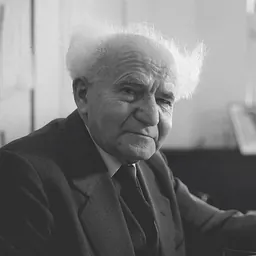




Related people
Same field, nearest in time


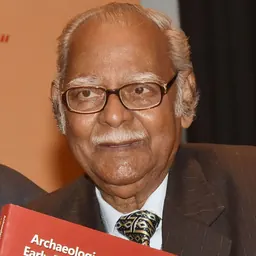
Contemporaries
People whose lives overlapped Tsvi Misinai's
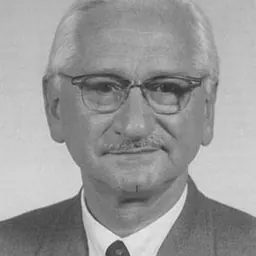

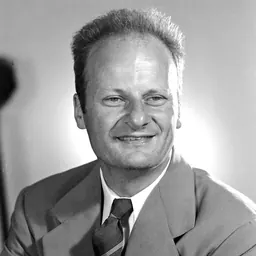


Frequently asked questions
Who is Tsvi Misinai?
Israeli researcher and writer
When was Tsvi Misinai born?
Tsvi Misinai was born on 15 April 1946 in Jerusalem.
What is Tsvi Misinai's occupation?
Tsvi Misinai is an anthropologist and historian.
What nationality is Tsvi Misinai?
Tsvi Misinai is Israeli.
Sources & further reading
Cite this page
APA: Biography.guide. (2026). Tsvi Misinai. https://biography.guide/tsvi-misinai/
MLA: "Tsvi Misinai." Biography.guide, https://biography.guide/tsvi-misinai/.
Chicago: "Tsvi Misinai." Biography.guide. https://biography.guide/tsvi-misinai/.
Data last updated: 2026-09-20 · Spot an error? Report a correction.
Page generated 2026-09-27 05:10 UTC