
About Tsunehiko Watase
Lived 1944 – 2017 (aged 72). Tsunehiko Watase was a Japanese actor, television actor and singer.
was a Japanese actor. He is best known for portraying Rintaro Kano in Keishicho Sosa Ikka 9 Gakari ("Homicide Team 9"). He won Best Supporting Actor at the 2nd Japan Academy Prize for The Incident and at the 3rd Hochi Film Award for The Incident, and The Fall of Ako Castle.
Biography 1944–1969: Pre-debut Watase was born on July 28, 1944, in Shimane. He had an older brother, Michihiko Watase. He moved from his hometown of Shimane to Awaji, Tsuna, Hyōgo. In his junior high school exam, he had the second highest score, and in his third year of junior high school, he received his black belt in judo. He belonged to the swimming club in high school. His classmate, Hyōgo Prefectural Assemblyman Hiroshi Noma, recalled that Watase "was always reading Natsume Sōseki" and his Japanese score was always in the top 5 among 270 students. During high school, Watase aspired to be a newspaper reporter.
After graduating from high school, Watase was accepted into the Faculty of Law at Chuo University and Keio University, but not Waseda University. His older brother told him to go to Keio University, but after seeing his mother in tears over the rejection letter in the garden, he decided to retake the college exams a year later. Influenced by Shirou Ozaki's Theater of Life, He said he was "a sloppy student", his dream to become a newspaper reporter disappeared because the university had no lectures or graduation thesis at the height of student activism, He got a job in public relations at Dentsu but quit the company after a month to work in sales at Japark, an advertising agency in Aoyama founded by his senior. His older brother, then an actor under the stage name Tetsuya Watari, opposed Watase entering the entertainment industry, saying it was a "premodern workplace" and that he wanted Watase to take the "normal, strict path". Concerned he was being used to lure his brother to Toei,
With Modern Yakuza: Three Bloody Sakura Brothers (1971), True Story: Private Ginza Police (1973), In 1977, while filming Hokuriku Proxy War, Watase was thrown out of an open Jeep, and his leg was crushed by the car. The injury led him to change from an action actor to a character actor, They married in 1973 and divorced in 1978.
1978–1991: Expansion of roles In 1978, Watase received Blue Ribbon and Kinema Junpo awards for his supporting roles in The Incident, his first role outside of Toei, and The Fall of Ako Castle. In 1979, Watase won the Kinema Junpo Best Actor Award for his roles in Quivering Tongue and The Baby God Gave Me. Watase was enthusiastic about the film adaptation of Nobuhiko Kobayashi's novel Karajishi Corporation, but it was impossible to make a yakuza film at Shochiku; Kobayashi recalled that it was a great regret.
In a 2014 interview, Watase recalled that appearing in a Bathclin commercial was an opportunity to expand his horizons, connect with his audience more, and increase his recognition, as he had primarily appeared in serious roles.
1992–2014: Increase in television roles In 1994, Watase suffered a cerebral infarction, leaving him with a slight disability in his left hand. Although Watase continued to appear in films such as Crest of Betrayal, around this time he began appearing in more television dramas like Taxi Driver's Mystery Diary, which he had starred in since 1992. In the Inspector Totsugawa series, which he starred in from 1992 to 2015, producer Kazukiyo Morishita recalled that Watase was "not only an actor, but a staff member", having input on the script and sometimes directing the production.
In Chiri to Techin, which aired beginning in late 2007, Watase played Kusawaka Tsurezuritei, one of the four kings of rakugo in Kamigata. Though he struggled to play a role different from those he had played previously, feeling distant from a character that understood rakugo, Watase expressed a sense of accomplishment.
In 2012, Watase won the 20th Hashida Award for his starring roles in television dramas like Omiya-san.
2015–2017: Later life and death In August 2015, Watase was diagnosed with gallbladder cancer. His diagnosis was made public in May 2016. He died on March 14, 2017 due to multiple organ failure caused by the cancer.
Reception and acting style Director Sadao Nakajima said that Watase's interest in acting began when he met Ichirō Araki in Modern Yakuza: Three Bloody Sakura Brothers (1971).
Watase did many of his stunts without a stunt double. In Crazy Beast (1976), Watase obtained a bus driver's license for a scene where a bus he is driving flips over. Nakajima praised Watase's athletic ability, as he was able to hang onto a helicopter as it took off. Gradually, Nakajima worried that Watase was becoming overconfident in his driving skills, as in Violent Panic:the big crash 1976), he was the only cast member to not use a stunt double for the climactic scene in which 200 cars and motorcycles collide.
Filmography Film Sympathy for the Underdog (1971) Wandering Ginza Butterfly (1972) Battles Without Honor and Humanity (1973) Battles Without Honor and Humanity: Proxy War (1973) Bodyguard Kiba 2 (1973) Aesthetics of a Bullet (1973) The Rapacious Jailbreaker (1974) New Battles Without Honor and Humanity (1974) New Battles Without Honor and Humanity: The Boss's Head (1975) Violent Panic: The Big Crash (1976) Legend of Dinosaurs & Monster Birds (1977) The Fall of Ako Castle (1978) The Incident (1978) Kōtei no Inai Hachigatsu (1978) Heaven Sent (1979) G.I. Samurai (1979) Virus (1980) Sailor Suit and Machine Gun (1981) The Gate of Youth (1981) Dotonbori River (1982) The Gate of Youth: Part 2 (1982) Antarctica (1983) Heaven and Earth (1990) Rex: A Dinosaur's Story (1993) Crest of Betrayal (1994) Tokyo Blackout (1987) Toki o Kakeru Shōjo (1997) Andromedia (1998)
Television Oshin (1983–1984) Sanada Taiheiki (1985–1986) – Sanada Nobuyuki Inspector Totsugawa Series (1992–2015) – Inspector Totsugawa Taxi Driver's Mystery Diary (1992–2016) – Yoake Homura Tatsu (1993–1994) – Fujiwara no Hidehira Musashi (2003) Keishicho Sosa Ikka 9 Gakari (2005–2017) – Rintaro Kano Omiya-san (2008–2009)
Don’t just read it —
keep it.
Full-length biographies made to live with: read them, listen on the way to work, watch them tonight.
- E-book
- Audio
- Video
Instant download · yours to keep · every purchase keeps this site free
Important facts
Family & relationships
People in Tsunehiko Watase's life
Named in this biography and alive at the same time


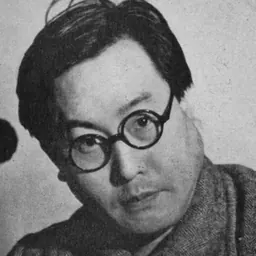
Related people
Same field, nearest in time


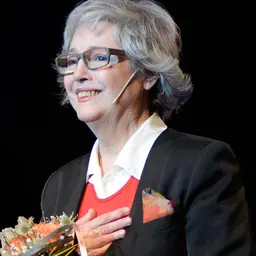

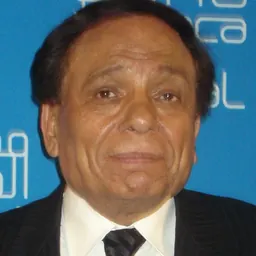
Contemporaries
People whose lives overlapped Tsunehiko Watase's
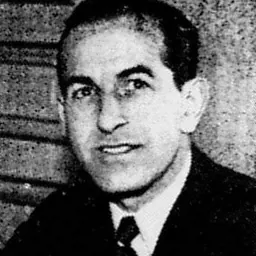



Frequently asked questions
Who was Tsunehiko Watase?
Japanese actor (1944–2017)
When was Tsunehiko Watase born?
Tsunehiko Watase was born on 28 July 1944 in Shimane Prefecture.
When did Tsunehiko Watase die?
Tsunehiko Watase died on 14 March 2017 in Tokyo.
What was Tsunehiko Watase's occupation?
Tsunehiko Watase was an actor, television actor and singer.
What nationality was Tsunehiko Watase?
Tsunehiko Watase was Japanese.
Sources & further reading
Cite this page
APA: Biography.guide. (2026). Tsunehiko Watase. https://biography.guide/tsunehiko-watase/
MLA: "Tsunehiko Watase." Biography.guide, https://biography.guide/tsunehiko-watase/.
Chicago: "Tsunehiko Watase." Biography.guide. https://biography.guide/tsunehiko-watase/.
Data last updated: 2026-09-22 · Spot an error? Report a correction.
Page generated 2026-09-27 05:21 UTC