
Tshenuwani Farisani
South African politician, theologian, and Lutheran minister
About Tshenuwani Farisani
Lived 1947 – 2025 (aged 77–78). Tshenuwani Farisani was a protestant theologian.
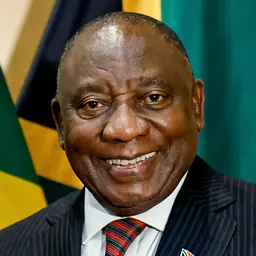
Tshenuwani Simon Farisani (30 August 1947 – 29 May 2025) was a South African politician, theologian and Lutheran minister. During apartheid, he was one of the country's most prominent black clergymen and preached anti-apartheid liberation theology from his diocese in Venda and Transvaal. He founded the Black Evangelic Youth Organisation with Cyril Ramaphosa in the early 1970s and was also active in the Black Consciousness movement, especially as president of the Black People's Convention from 1973 to 1975. He was arrested on four occasions, according to Amnesty International as a prisoner of conscience, and he testified abroad about the torture he was subjected to by the apartheid police.
After the end of apartheid, Farisani represented the African National Congress in the Limpopo Provincial Legislature and National Assembly. He was a Member of the Executive Council in the Limpopo provincial government under the inaugural Premier of Limpopo, Ngoako Ramatlhodi, from 1997 to 2004, and from 2004 to 2009 he was Speaker of the Limpopo Provincial Legislature.
Early life and career Tshenuwani Simon Farisani was born on 30 August 1947 in the region of the Transvaal province that became Limpopo. Farisani was a "brilliant" student and enrolled in theological college to prepare for ordainment as a minister in the Evangelical Lutheran Church. He subscribed to a radical political interpretation of Christianity, aligned with the black or liberation theology that was ascendant in South Africa in the 1960s and 1970s. In particular, Farisani argued strongly that apartheid was not God-given but was a manmade atrocity and that Lutheranism should not be a conservative political force but a force for the liberation of the oppressed. He resigned from the BPC in 1975 when he was ordained in the Evangelical Lutheran Church in Southern Africa. In the 1980s, he became a dean and deputy bishop in the church's northern diocese, which included the Venda bantustan and some areas of neighbouring Transvaal. According to the Washington Post and Africa Report, he was considered a frontrunner to succeed Beyers Naudé as secretary general of the South African Council of Churches. Between 1977 and 1987, he was detained without trial on four separate occasions. On the first occasion in March 1977, he was arrested and detained for two days in Howick, Natal on suspicion of fomenting the 1976 Soweto Uprising and helping activists flee the country into exile. He said that police officers tortured him, including by dangling him from a third-floor window and suspending him from a pole. Tshifhiwa Muofhe, a friend of Farisani who had been arrested with him, died in detention;
Upon his release, Farisani sued the Venda government for damages, claiming that he had suffered two heart attacks as a result of his torture, and the government paid him R6,500 (about $5,000) in a pre-trial settlement. In 1996, he testified about his experience in detention at the Truth and Reconciliation Commission.
Post-apartheid career In South Africa's first democratic elections in 1994, Farisani was elected to represent the African National Congress (ANC) in the new National Assembly. In July 1997, Ngoako Ramatlhodi, in his capacity as Premier of Limpopo (then known as Northern Province), appointed Farisani as Member of the Executive Council (MEC) for Agriculture in the Limpopo provincial government. During this period, Farisani was also a member of the ANC Provincial Executive Committee in Limpopo; in 1998, he was elected as provincial treasurer (under Ramatlhodi as provincial chairperson) and served in that position until the committee's dissolution in 2001. In June 1999, following the 1999 general election, Ramatlhodi reshuffled his executive and appointed Farisani MEC for Transport and Public Roads. when, following the 2004 general election, he was appointed Speaker of the Limpopo Provincial Legislature. in which he was elected to return to the National Assembly. He also became chairperson of the assembly's Portfolio Committee on Arts and Culture. However, he resigned his seat in late 2010. and was also an active member of the South African Communist Party (SACP); he was SACP regional treasurer in the Vhembe region as of 2019.
Personal life and death Farisani was married to Regina. He died on 29 May 2025, at the age of 77.
Honours In September 2022, the Dr Tshenuwani Farisani Development Foundation was launched in Farisani's honour in Thohoyandou, Limpopo.
Selected publications Farisani, Tshenuwani Simon (1987). Diary from a South African Prison. Fortress Press. . Farisani, Tshenuwani Simon (1990). In Transit: Between the Image of God and the Image of Man. W.B. Eerdmans. .
Don’t just read it —
keep it.
Full-length biographies made to live with: read them, listen on the way to work, watch them tonight.
- E-book
- Audio
- Video
Instant download · yours to keep · every purchase keeps this site free
Important facts
People in Tshenuwani Farisani's life
Named in this biography and alive at the same time


Related people
Same field, nearest in time



Contemporaries
People whose lives overlapped Tshenuwani Farisani's


Frequently asked questions
Who was Tshenuwani Farisani?
South African politician, theologian, and Lutheran minister
When was Tshenuwani Farisani born?
Tshenuwani Farisani was born in 1947.
When did Tshenuwani Farisani die?
Tshenuwani Farisani died on 29 May 2025.
What was Tshenuwani Farisani's occupation?
Tshenuwani Farisani was a protestant theologian.
Sources & further reading
· Wikipedia: Tshenuwani Farisani
· DBpedia: Tshenuwani Farisani
Cite this page
APA: Biography.guide. (2026). Tshenuwani Farisani. https://biography.guide/tshenuwani-farisani/
MLA: "Tshenuwani Farisani." Biography.guide, https://biography.guide/tshenuwani-farisani/.
Chicago: "Tshenuwani Farisani." Biography.guide. https://biography.guide/tshenuwani-farisani/.
Data last updated: 2026-09-20 · Spot an error? Report a correction.
Page generated 2026-09-27 05:09 UTC