
About Truong Nhu Tang
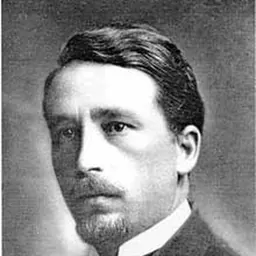
Lived 1923 – 2005 (aged 82). Truong Nhu Tang was a Vietnamese politician and jurist.
Trương Như Tảng (14 November 1923 – 8 November 2005) was a South Vietnamese lawyer and politician. He was active in many organizations opposed to the South Vietnamese government before joining the newly created Provisional Revolutionary Government of the Republic of South Vietnam as the Minister of Justice. He spent many years in the jungles near and in Cambodia until the Fall of Saigon in 1975. He quickly became disillusioned with the new government and escaped the reunited Socialist Republic of Vietnam via a boat in August 1978. He was sent to a refugee camp in Indonesia before moving to Paris, France, to live out his life in exile.
Early life
Tảng grew up in Saigon as one of six sons of a rich father who owned a rubber plantation and a printing house and taught ("for pleasure") at the Collège Chasseloup-Laubat; since his father intended him to be a pharmacist, after studying (exclusively in French) at the Collège Chasseloup-Laubat, Tảng was sent to Hanoi University for a year and then (after a delay caused by the violence attendant on the end of World War II in Vietnam) to France in 1946 to study pharmacy. While in Paris, however, Tảng was introduced to the movement for Vietnamese independence, met Hồ Chí Minh, and transferred to the École des Sciences Politiques, where he focused on military and diplomatic subjects and was especially drawn to Marxist writings on colonialism. When he refused to return to Saigon at his father's command, he was cut off and had to work as a dishwasher to earn his living. By 1951, he had completed his studies, having earned a master's degree in political science and having gone on to take a licentiate in law at the University of Paris. However, at the end of the year, he returned to Vietnam at his father's urgent request to help put his brothers through school. To avoid draft into the South Vietnamese army, he joined the newly created French School of Naval Supply in 1954. At the end of 1955, he took a job as Controller-General of the Viet-Nam Bank for Industry and Commerce, but he also became involved in opposition to the Ngô Đình Diệm government.
Anti-government organizer Through contacts that he had made during his studies in France, Tảng became involved in the anti-government activities in South Vietnam. His position as corporate executive gave him access to the ruling circle and he could easily recruit non-communist anti-government people. Through this time he became close friends with co-conspirator Albert Thảo until Thảo's death in 1965. In February 1965, he was arrested and held for six months by the National Police and held in jail under suspicion of being part of the Self-Determination Movement, an anti-government group opposed to the Diệm regime (the Diệm regime had already ceased in 1963, two years earlier). After his wife paid a US$5,000 (US$ in ) bribe to the South Vietnamese military tribunal, Tảng was sentenced to just two years, which were then suspended. He was held at a National Police secret prison where he was tortured and held without charge. An anti-government agent, Ba Tra, had been arrested and gave the South Vietnamese government extensive information on anti-government forces working in the city. Ba Tra was held and tortured for about two weeks before signing a confession that he was a communist. Another bribe by his wife of US$6000 (US$ in ) got him transferred to National Police headquarters where, in a small cell, he spent the next six months.
In February 1967, he and two other women anti-government organizers, San No and Duy Lien, were part of a secret prisoner exchange for two American prisoners. During his stay in the jungles of South Vietnam, he was one of the founders of the National Liberation Front (The NLF had already been established in 1960, seven years earlier), and Minister of Justice for the Provisional Revolutionary Government of the Republic of South Vietnam (PRG) during the Vietnam War. In April 1970, he was part of the escape of the Provisional Revolutionary Government when the military and civilian leadership of PRG and NLF were almost wiped out by ARVN forces.
Disillusionment Tảng returned to Saigon from Hanoi after the Fall of Saigon in 1975. The nature of the collapse of the South Vietnamese regime and the total victory of the PAVN gave total control to the communist elements. He and his peers from the NLF and PRG became almost immediately aware of the ways in which officials from the Democratic Republic of Vietnam (DRV) disregarded their authority during the reintegration process.
In his memoir, Tảng recalls an emergence of doubts during Saigon's Victory Celebrations on May 15, two weeks after the city's capture. Tảng noticed the military cavalcade was composed solely of units from the DRV's military, the People's Army of Vietnam (PAVN). Tảng was standing next to PAVN general Văn Tiến Dũng and asked him where the PRG's military units were. Dũng responded that the army had "already been unified," and ignored Tảng's further questions. This angered Tảng as the PRG had, to his knowledge, not been consulted on the decision. In the following months, the PRG cabinet played what Tảng referred to as a "subordinate role" to the DRV. Much of the PRG's responsibilities in formulating a new Southern government were fulfilled by Northern cadres. The older brother, Quynh, a doctor who worked with the Health Ministry, was moved to a high security camp in the north where he was incarcerated at least until 1985. Their boat travelled almost to Indonesia before coming across an Indonesian oil platform. Stopping there, they were picked up by UN ships and taken to a refugee camp on Galang Island, Indonesia. From there, Tảng went into exile in Paris, and, in 1985, published a book about his life in the NLF and PRG. The book, A Vietcong Memoir, outlines not only his own experiences, but also the impact of the war among other revolutionaries.
Published works - Total pages: 350
Notes and references
Don’t just read it —
keep it.
Full-length biographies made to live with: read them, listen on the way to work, watch them tonight.
- E-book
- Audio
- Video
Instant download · yours to keep · every purchase keeps this site free
Important facts
People in Truong Nhu Tang's life
Named in this biography and alive at the same time

Related people
Same field, nearest in time






Contemporaries
People whose lives overlapped Truong Nhu Tang's
Frequently asked questions
Who was Truong Nhu Tang?
Vietnamese politician (1923-2005)
When was Truong Nhu Tang born?
Truong Nhu Tang was born on 19 May 1923 in Cholon.
When did Truong Nhu Tang die?
Truong Nhu Tang died on 8 November 2005 in 15th arrondissement of Paris, Paris.
What was Truong Nhu Tang's occupation?
Truong Nhu Tang was a politician and jurist.
What nationality was Truong Nhu Tang?
Truong Nhu Tang was Vietnamese.
Sources & further reading
Cite this page
APA: Biography.guide. (2026). Truong Nhu Tang. https://biography.guide/truong-nhu-tang/
MLA: "Truong Nhu Tang." Biography.guide, https://biography.guide/truong-nhu-tang/.
Chicago: "Truong Nhu Tang." Biography.guide. https://biography.guide/truong-nhu-tang/.
Data last updated: 2026-09-20 · Spot an error? Report a correction.
Page generated 2026-09-27 05:14 UTC