
About Trevor Corry
Lived 1724 – 1780 (aged 55–56). Trevor Corry was a British diplomat.
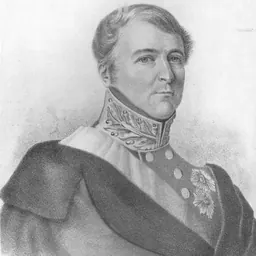
Sir Trevor Corry, Baron of Poland (1724 – 1 September 1780) was a British merchant and diplomat. He spent many years in Danzig, Polish–Lithuanian Commonwealth (now Gdańsk, Poland), where he acquired a considerable fortune. He acted as consul to Kings George II and George III in Danzig during the Seven Years' War and until his death in 1780.
As consul, he was responsible for sending information to the Secretary of State in London. Many of the reports were concerning the complex political and military developments happening in and around Poland in general and at the port of Danzig in particular. Among many other things, he reported on the trade-in timber intended for the building of warships and on the crippling taxation being imposed on the city of Danzig.
Corry was given the title "Baron to the Throne of Poland" on 20 October 1773 by the King of Poland, Stanisław II Augustus. On 29 March 1776, he was knighted by King George III. the family moved to Ireland as part of the Ulster Plantations.
Walter's son Isaiah or Isaac was born at Rockcorry, possibly in 1655. There is some evidence to suggest that, in 1689, Isaiah was attainted by the Catholic King Charles II but he seems to have regained his estate shortly afterwards. Isaiah held the post of High Sheriff of County Monaghan, previously held by his father who had died in 1699.
Isaiah's eldest son Isaac was born in 1690 or 1691 at Abbey Yard in Newry where he became a merchant. He married Cæzarea Smyth. Isaiah and Cæzarea had seven children, their third and youngest son, born at Newry in 1724, was Trevor Corry. Cæzarea died when Trevor was three and his father Isaac died in 1752.
Consul in Danzig (Gdańsk)
The Seven Years' War: 1754–1763
On 30 March 1754 King George II appointed Trevor Corry "to be his Majesty's Consul to the Republick of Dantzig" in Poland – now known as Gdańsk. He was recommended for the post by the Earl of Hillsborough. He arrived in Danzig in mid-May 1754. His work, which was unpaid, involved making regular reports back to the Secretary of State to the Northern Department at St. James' Palace in London.
The city of Danzig had suffered a slow economic decline during the wars of the early eighteenth century and had been held by the Russians for a short time after the Siege of Danzig in 1734. During Corry's time the city of Danzig remained part of Poland although, for much of the time, it was surrounded by Prussian held territory.
1756 had seen the beginning of the Seven Years' War in which Britain was allied with the Prussians, some German states and, from 1762, the Portuguese. The opposing side was made up of France, Russia, Austria, Sweden, Saxony and, from 1762, Spain. In the summer of 1757, the Russians had invaded Ducal Prussia. On 25 May 1757 Corry wrote to the Secretary of State saying there have been two or three Russian men of war of forty & fifty Guns each, cruising of this Harbour these eight days past – bringing up and searching all Vessels they meet with, (a thing never before known); 'tis imagined they intend making Prizes of Ships sailing under the Prussian Flag.
On 7 September Corry wrote a very hot engagement has happened between the Prussian and Russian Armies ... the Prussians have suffered very severely from the Enemy's Cannon, They having attack'd the Russ in their Entrenchments, which was not attended with the expected success, or indeed was it all together so prudent considering how strongly they had fortified their situation ... we may soon hear of a second Engagement, which will probably decide in whose hands Koningsberg shall remain this Winter. He was wrong, for the town of Colberg, the Prussian's last port on the Baltic Sea, was captured by the Russians soon afterwards. From Berlin he travelled to Amsterdam, via Hanover, from where he wrote, on 22 September, to report on the movements of the French Army.
The Treaty of Saint Petersburg was concluded on 5 May 1762 and ended the fighting between Prussia and Russia. On 3 June Corry wrote "I find the greatest Harmony to Subsist between them [the Russians] & the Prussians, in consequence of the Peace lately concluded ... which indeed saved all the Prussian Territories in this Neighbourhood from desolation". In November Corry wrote "Since the Russians return'd to their own Country, all has been quiet in these Parts, and the Inhabitants think themselves happily relieved of these unpolish'd People."
Other conflicts
In 1767 Catherine the Great of Russia made Poland a Russian protectorate thereby provoked a Catholic uprising by the Confederation of the Bar. In the summer of 1768, the actions of the Confederates prompted Corry to write "the troubles in Poland have been daily increasing, & many Outrages committed ... a large Body of Russians are on their March to Poland ... On whose arrival ... no doubt Peace may Soon be restored". Corry was not convinced of the integrity of these freedom fighters for in the following January he said the Troubles & Barbarities in Poland, committed by the Confederates on their Neighbours, still continue, without any distinction of Profession, or otherwise, which plainly shews that these outrages are only committed with the view of Plunder. The Posts throughout all Parts of Poland, are likewise robbed daily, & no security for Travellers, as the Roads are overall full of Robbers.
In July 1770 a large Body of Prussian Hussars, marched up within a hundred paces of the City Gates ... in consequence of which, the Russian & Danish Residents, with your Lordships Humble Servant, drove out directly about 3 miles of, to the Commander of these Troops ... Since then the Gates of the City have been kept entirely Shut, the Bridges drawn up, & nothing but Threatenings and Excesses on the part of the Prussians ... indeed they are of Such a Nature, & so different from the Behaviour of regular Troops, that ... all... must be Shockt & astonished at ... All Trade here is now at an End, to the great Detriment of His Polish Majesty's Revenues. Soon afterwards the Prussians, violating the declaration they had made, took possession of all the surrounding area and the sea approaches. Corry commented, "It is not to be imagined the Consternation that this Country is just now thrown into by these Procedures." However, Corry wrote "The Fortifications of this City are very strong, & every thing put in the best order of defence ... we could hold out a siege for at least Six Months ..." In October 1779 Corry wrote "the French & Spanish Contractors are come to the resolution of sending Home from hence all the Warlike Stores & Planks &c. for Ship Building that they can get Neutral Ships to Load, this late Season, in the hopes they will not be so much exposed to The Kings Ships & Privateers". In Corry's time, oak was felled and floated down the Vistula River to Danzig on a mass scale. As a ship owner he may have shipped the timber to England or Ireland in his own vessels. By hindering the efforts of the French and Spanish to import timber from Danzig his motives were as much about protecting his own interests as they were about protecting the interests of England. The potash trade made fortunes for some traders at this time and played an important part in the commercial life of Poland. It is possible that Corry was also involved in the potash trade for he refers to it several times in his letters to Secretaries of State.
Baron to the Throne of Poland
The Polish monarch had the power to grant titles to foreigners. Only two titles of baron were given to migrants from the British Isles. Corry was the first of them, for on 20 October 1773, he was granted the title of Baron to the Throne of Poland and naturalisation by Stanisław Augustus. Following this, on 5 November, Corry informed the Secretary of State, The Earl of Suffolk, of "the undeserved Honour His Polish Majesty has been pleased to confer, in creating me a Baron of Poland etc. for which Mark of Distinction, I have returned my Humble Acknowledgements, but shall not attempt to make use of the Title etc. I get our Kings Consent ..." In another letter written on the same day Corry points out that the honour "proceeds from my Endeavors to maintain the Trade and Freedom of this His [the Polish King's] City ..." which he did "entirely for The Trade and Advantages I knew it would be of to Britain – that – & that only was my Motive". Corry now had the right to wear the White Eagle from the Royal Arms of Poland on his Coat of Arms.
In December the Earl of Suffolk, replied I cannot help saying that however inclined I am in my private Capacity to congratulate You on any Event that gives You Pleasure and Satisfaction, I much regret Your Advancement to the Dignity of Baron of Poland, because I foresee Its inevitable Consequence of removing You from the Situation which You have so long filled with Credit & Esteem ... Nor is the Post of Commercial Agent to His Majesty's Trading Subjects properly compatible with the Honours You have received from a Foreign Prince. It will therefore become my Duty to ask His Majesty's Pleasure on the Appointment of Your Successor. But out of Attention to one who has been so long in the Service of the Crown I shall defer doing so 'till I hear from You in Answer to this Letter. Corry was knighted by King George III. The London Gazette reported that "The King was pleased on Friday last to confer the honour of Knighthood on Trevor Corry, Esq; his Majesty’s Commissary at the city of Dantzick; and he had the honour to kiss his Majesty’s hand."
Family and ill health When, in May 1754, Corry arrived in Danzig to take up his new post as consul, he lodged at the home of a James Sutherland. James had a nine-year-old daughter named Lucy.
From 1760 Corry suffered periods of ill health complaining in September 1764 of "a violent Pain in my Breast". Elizabeth was educated in Ireland and, at the age of fourteen, married a John Fowler. In 1780 they had a son Corry Fowler.
Early in 1774 Corry was worried about the repayment of a loan he had made. On 4 February he wrote to the Secretary of State saying that he had lent £10,000 to Sir George Colebrooke and his partners and they had not made any repayments, giving "tryfling Excuses". In order to recover the money he requested permission to go home to England for a few months and to put his nephew, Trevor Scott, in charge of his business in Danzig during his absence.
Corry, now a knight, took the waters at Bath in May 1777. He returned to Danzig, via Berlin, in early July 1777 and, according to Weickhmann and Schmidt, "went to live and cohabit with ... Lucy ... in his house there, where they continued to live and cohabit together in the greatest harmony".
Corry arrived back in Danzig in mid July 1779 but almost immediately started to plan his return to England. On 31 August he wrote to the Secretary of State in London saying, "the Doctors advising I intend going shortly to Bath for my Health, during my Absence Mr. Scott (my Nephew) will as usual acquaint Your Lordship of any matters that may occur worth communicating." However, on 5 October 1779 he wrote, "My Lord – By advice of the Doctors I left this last Month, but falling ill on the road, a weakness in my Limbs, obliged me to return & the Weather is now too cold for an Invalide to travel in." On 15 February 1780 he wrote An ill state of health, the effect I believe of a cold Climate, has obliged me for some years past to drink the Bath Waters & the doctors now thinking the same absolutely necessary, I have to request your Lordships procurring me His Majesty's Gracious Permission for that purpose. I shall not however leave this [place] before the Month of May or June, nor I have given Your Lordship every necessary information respecting the Transactions in question. The reply from the Secretary of State read, "As the present Situation of Affairs would make your Absence from your Post prejudicial to His Majesty's Service by depriving Us of the useful Intelligence you transmit, I hope you will be able to deferr your Journey to Bath". Following a further request for leave the Secretary of State wrote to Corry on 16 May 1780 saying, "I have laid Your Letter before the King and I have Pleasure to acquaint You that His Majesty is graciously pleased to permit You to return to England as soon as it may suit Your Convenience." On 2 June Corry wrote to the Secretary of State thanking him for permission to go to Bath. "I shall not however leave this Place, till I have found out the destination & other particulars of some Pomeranian Ships, shortly expected to arrive here, as well as that of two Dantzigers, who are busy in Loading Oak Planks & other Materials, for building ships, from the People that do Business here, for French Accompt ..." Corry added that Charles Gottfried Schipper, who had worked for him for over twenty years, would continue his work in his absence.
Two days later, on 23 July, he was still in Pyritz and wrote to his partners in trade, Messrs Trevor Scott and Compy of Dantzig. He believed he was recovering from the illness and would soon be able to continue his journey. He added, "I have made my Dear Lucy to Wife, of which you know she has ever been deserving & to her I may (under God) attribute my being in the land of the living".
On 1 September 1780, Corry died at the Post House in Pyritz. A few days later Lucy took Corry's body to Danzig.
On 8 September 1780 four letters were written to Viscount Stormont, who was by now, the Secretary of State. The first letter was written by Corry's secretary, Charles Gottfried Schipper, saying "I have to inform Your Lordship of Sir Trevor Corry's Death which happened the first of this month at the Town of Pyritz in the Prussian Dominions" and proposing that Corry's nephew, Trevor Scott, should be given Corry's job. The next was from Trevor Scott saying "I think it my duty to inform Your Lordship that my Uncle Sir Trevor Corry departed this Life the 1st. Instant at Pyritz in Prussia on his Journey to England, he died of a violent Cramp in his Stomach, after a confinement of about Nine Weeks." He went on to offer himself as a replacement in Corry's job as His Majesty's Commissary and states several reasons why he was well suited for it. Alexander also wrote to apply for the job saying he could get references from several people including the King of Poland. Alexander went on to suggest that Corry's conduct had not always been entirely virtuous, "Sir Trevor Corry held the Post of Commissary without receiving a salary, but he has to make it worth a great deal to him by misemploying the Protection the dignity of his Place granted him." Perhaps implying that the lack of any remuneration encouraged corruption, he requested "I beg leave to observe to your Excellency that a small appointment as Sallary will render this dignity more respectable as all the other accredited Gentlemen here have an allowance from their Courts." Alexander Gibson was successful in his application. Alexander Gibson was to become the second and last migrant from Britain to be made a baron by a Polish monarch. On this occasion it was by Friedrich II King of Prussia. Later that year, on 20 September, Corry was in Danzig and planning to travel. He was concerned about his journey – a concern that was fed by Lucy's father's experience in the summer of 1762 – whilst at sea his ship was met by a French privateer who robbed him of all his cash. Before leaving, Corry prepared a codicil that read That in case of my dying on the journey I am about to take to England, I leave & bequeath unto Lucy Sutherland ... three thousand, seven hundred & ten Ducats ... also my house in the Holy Gost Street ... all my wearing apparel, Horses, Carriages, Silver Plate, Rings, Watches, & all my House Furniture, of what kind or sort soever, & also my little Negro Boy called Pharoh”. He also left Lucy a further 309 ducats making a total of 4019 ducats.
On 11 July 1776 Corry was in Newry where he made a very long and complicated will. This was slightly altered and added to by a codicil written in Danzig on 24 February 1780. Corry left "Lucy Sutherland of Dantzig aforesaid spinster the sum of one thousand pounds sterling British Currency ... all my household furniture Diamond Rings watches linen & clothes together with my black Negro servant called Pharo & all my Horses Carriages & stable furniture & harness ... the use of my plate during her life". In addition Lucy was to be the beneficiary of a trust fund of £9,000 and was to receive "all my apparell effects & ready money at Dantzig which does not exceed three hundred pounds Irish". Corry directed a £3,000 trust be set up and that the interest from this trust – about £180 a year – be "for the use and benefit of my natural daughter Elizabeth Corry." Corry's mistress and the mother of Elizabeth was to receive an annual payment of £20. Other beneficiaries of legacies, trust funds, or annual payments were Corry's relatives, servants, physician, surgeon, and the poor of Danzig and Newry. The total value of legacies and trust funds was £42,450. Other money was to be invested so as to be able to make annual payments totalling £970.
Disputes concerning Corry's estate
There followed a long drawn out series of disputes as to what should happen to Corry's fortune. After Corry's death on 1 September 1780, Lucy, now Dame Lucy, took Corry's body back to Danzig. Upon her arrival Weickhmann and Schmidt, both of whom were beneficiaries of Corry's will, went to see her and asked to be given all Corry's papers. Lucy "thereupon took the Second Codicil [the Pyritz Codicil] ... and Certificate of her Marriage ... from among the Deceased papers and put them into her Bosom ... because she did not chuse to let the Executors see them". A few hours later she deposited the certificate and codicil for safe custody with Corry's clerk, Charles Gottfried Schipper, who kept it until about 6 November 1780 when it was noticed that the codicil had not been dated. When Corry's servant, Friedrick Wilhelm Kuhl, who had written the codicil, was asked by Schipper why no date had been written he said simply that he had not been told to write it at the time but, believing the date had been 18 August 1780, immediately wrote it on the codicil and stated that Corry "knew and understood the Contents thereof and well liked and approved of the same". The Pyritz Codicil and Corry's marriage to Lucy caused much suspicion. To support her claim, early in March 1781, Dame Lucy returned to Pyritz to seek affidavits confirming her marriage to Corry.
On 24 September 1781 Corry's will and both the codicils were proved and probate granted at the Prerogative Court of Canterbury in London with the two executors – Isaac Corry (Sir Trevor's brother) and James Portis present at the hearing. By June 1784 Weickhmann and Schmidt, who were by now magistrates in Danzig, had Kuhl "by their power or Interest put above the condition of Servant and provided for by some place or appointment in the Castle of ... Dantzig and he is never permitted to come out of the said castle but is now kept therein under their Influence Controul and Government and dare not depose in this or any other Cause contrary to the interests of them".
In January 1784, Lucy was living in Aldersgate Street in London and actively trying to get the Pyritz Codicil validated at the Prerogative Court of Canterbury. On 4 January she wrote her own will and instructed her executors to continue her fight at the Prerogative Court after her death. Lucy died of an illness aged about 39, and her will was proved at the Prerogative Court of Canterbury on 13 January 1784.
The will and two codicils which had been granted probate on 24 September 1781 were subject to another hearing at the Prerogative Court of Canterbury in London on 12 March 1785 during which the Pyritz Codicil was declared null and void. The will and first codicil were again proved again on 17 November 1786 and administration granted to Weickhmann and Schmidt.
Epitaph
Johanna Schopenhauer, a friend and contemporary of Corry, described him as "The head of the community [of Danzig], and its greatest ornament. The English consul, Sir Trevor Corry, contributed, with his showy equipage and his coal-black negro boy, Pharaoh, to the splendour of the city." Years later, Joanna's son, the German philosopher Arthur Schopenhauer wrote The world had never seen a resident, who stood longer or more firmly at his post, for he is still there [Danzig], though he has been dead these fifty years; he is still unburied in the great parish church; for the noble baronet, during his life, scorned our German earth, and the superstition of the sailors prevented his body being carried to England after his decease."
In 1810, twenty years after Corry's death, construction began on St Mary's Church in Newry for which Corry had left £1000 in his will. The church, which was finally completed in 1819, contains memorial plaques to many of Newry's prominent citizens, including ones to Corry and other members of his family. The inscription on his plaque reads: In memory of Trevor Corry, Knight, youngest son of Isaac and Caezarea Corry of Newry. He served for many years British Consul at Dantzig, was created Baron of the Kingdom of Poland by Stanisław II Augustus in 1773, and died at Pirytz in Pomerania 1 Sep. 1781. Though long a resident in a foreign land, he forgot not the wants of his own. He was the first who suggested the necessity for a new church in his native town, towards which purpose he bequeathed 1000 Pounds, 37 years before the erection of this present Church of St. Mary's. He also left 3000 Pounds to the poor of Newry.
Don’t just read it —
keep it.
Full-length biographies made to live with: read them, listen on the way to work, watch them tonight.
- E-book
- Audio
- Video
Instant download · yours to keep · every purchase keeps this site free
Important facts
People in Trevor Corry's life
Named in this biography and alive at the same time


Related people
Same field, nearest in time


Contemporaries
People whose lives overlapped Trevor Corry's





Frequently asked questions
Who was Trevor Corry?
British diplomat
When was Trevor Corry born?
Trevor Corry was born in 1724 in Newry.
When did Trevor Corry die?
Trevor Corry died on 1 September 1780 in Pyrzyce.
What was Trevor Corry's occupation?
Trevor Corry was a diplomat.
What nationality was Trevor Corry?
Trevor Corry was British.
Sources & further reading
Cite this page
APA: Biography.guide. (2026). Trevor Corry. https://biography.guide/trevor-corry/
MLA: "Trevor Corry." Biography.guide, https://biography.guide/trevor-corry/.
Chicago: "Trevor Corry." Biography.guide. https://biography.guide/trevor-corry/.
Data last updated: 2026-09-22 · Spot an error? Report a correction.
Page generated 2026-09-27 05:33 UTC