
About Torajirō Imada
Lived 1859 – 1940 (aged 80–81). Torajirō Imada was a Japanese police officer, known for Japan and Osaka.
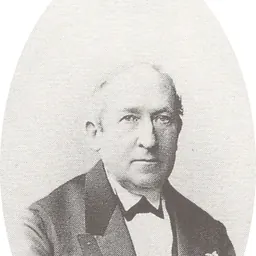
Torajirō Imada(今田虎次郎, 1859–1940) was a Japanese police chief who became the first director of Sotojima Hoyoen, a leprosy sanatorium in Osaka, Japan from 1909 to 1926. He admitted the autonomy right of the patients' association. The Sotojima sanatorium was destroyed in Muroto Typhoon in 1934 and it was reconstructed as Oku-Komyo-En Sanatorium, Okayama Prefecture.
Personal history He was born in Okayama Prefecture in 1859. After becoming the chief of several police stations in Osaka, he became the marshal of Sonezaki Police Station, in Osaka. In 1909, he was appointed the director of the Sotojima Hoyōen Sanatorium, situated in Osaka Prefecture. He retired in April 1926 and lived in Sakai, Osaka Prefecture. After eight months, Masataka Murata became the second director of the sanatorium. He died around July 1940 in Sakai.
Sotojima Hoyōen Sanatorium (1909-1934) At the start of the sanatorium, it was a lawless area with wandering vagabonds. However, order and safety were gradually established by his efforts. The director of the sanatorium admitted that he used a free hand. With the exception of Kyushu Sanatorium, in Kumamoto, directors of leprosy sanatoria came from police, since wandering leprosy patients included criminals. However, physicians took the parts of directors later in other sanatoria. Imada exceptionally stayed as the director of the sanatorium for 17 years.
The first chief doctor of the hospital was Takekichi Sugai, who studied leprosy intensively, and wrote many papers and guided other doctors. There were about 300 leprosy patients which was the capacity of the sanatorium in one and a half years. The problems of food, drinking water, and clothing first appeared very difficult, and later stabilized. A patient recreation organization was formed at his proposal. Those who could work were paid, and farms and gardens were made. A church was established. He was an able administrator and was loved by patients. In 1919, when the patient organization wanted to withdraw their autonomy right, Imada strongly inspired the spirit of autonomy.
Don’t just read it —
keep it.
Full-length biographies made to live with: read them, listen on the way to work, watch them tonight.
- E-book
- Audio
- Video
Instant download · yours to keep · every purchase keeps this site free
Important facts
People in Torajirō Imada's life
Named in this biography and alive at the same time


Related people
Same field, nearest in time




Contemporaries
People whose lives overlapped Torajirō Imada's


Frequently asked questions
Who was Torajirō Imada?
Japanese police officer
When was Torajirō Imada born?
Torajirō Imada was born in 1859 in Okayama Prefecture.
When did Torajirō Imada die?
Torajirō Imada died in 1940.
What was Torajirō Imada's occupation?
Torajirō Imada was a police officer.
What was Torajirō Imada known for?
Torajirō Imada was known for Japan and Osaka.
What nationality was Torajirō Imada?
Torajirō Imada was Japanese.
Sources & further reading
Cite this page
APA: Biography.guide. (2026). Torajirō Imada. https://biography.guide/torajiro-imada/
MLA: "Torajirō Imada." Biography.guide, https://biography.guide/torajiro-imada/.
Chicago: "Torajirō Imada." Biography.guide. https://biography.guide/torajiro-imada/.
Data last updated: 2026-09-22 · Spot an error? Report a correction.
Page generated 2026-09-27 05:21 UTC