
About Tony Gaudio
Lived 1883 – 1951 (aged 67). Tony Gaudio was an American and Italian cinematographer and film director.
Gaetano Antonio Gaudio, ASC (20 November 1883 – 10 August 1951) was an Italian-American cinematographer. He is considered a pioneer of motion picture photography during the early 20th-century, and worked on some 150 productions between 1903 and 1949. The son of one of Italy’s foremost photographic artists, the boy was quite literally brought up in the studio, where he learned at an early age to use the still camera and to develop negatives in the darkroom. His father also gave him a liberal education in lenses, cameras, composition and the manipulation of lights so that when the time came to take up motion photography, the young Tony had a head full of useful information to start with. He is indebted to his art training for his later interest in the camera as a medium of art, as opposed to a mere recording instrument. After attending art school in Rome, he became an assistant to his father and older brother, Rafael (Ralph) Gaudio, a prominent portrait photographer in Italy who later became president of the Society of Photography in Europe, and was nominated as Knight of the Crown in Italy for photographic achievement. in the family photography studio owned by Rafael, "Foto Gaudio",
New York In 1906 a young Gaudio arrived in the United States, moving to New York City. Tony was employed by Al Simpson to produce "song slides" that could be shown in theaters so patrons could sing along with the music. Twelve hand-colored slides were made for each new popular or near popular song.
Over 1,500,000 candle-power were employed to light up this set, the greater part of the light being supplied by the fifteen sunlight arcs. thumb After this collaboration, Gaudio stayed with First National Pictures, joining Norma Talmadge under the management of her husband and producer, Joseph Schenck. He was also a cameraman for Norma’s sister Constance Talmadge directed by Frank Borzage, a long time future collaborator of Gaudio. Arrangements were made whereby he was “farmed out” to other large producers, he having thus photographed John M. Stahl’s Husbands and Lovers, Corrine Griffith’s Déclassée, and Marion Davies in Adam and Eva. For the Corrine Griffith production, the special arrangement was during the vacation of Norma Talmadge. In total, Gaudio photographed 10 Talmadge films from 1922 to 1925 ASC is the professional body his brother had helped create to promote standardization in the industry of cinematography, serving as a body of information for cameramen. With German director William Dieterle, Gaudio photographed eight pictures, most notably The Life of Emile Zola (1937), which one the 1937 Academy Award for Best Picture, and Juarez (1939). Guadio and director Michael Curtiz collaborated six times, notably on The Adventures of Robin Hood (1938), and Kid Galahad (1937), another Bette Davis joint which gave him the opportunity to contrast high-key Art Deco scenes with the smoky interiors of the boxing ring. “The Eastman company is responsible for many improvements in photography,” he said, “but I am convinced this stock is not only a distinct advance. It is the best thing Eastman has done for the motion picture industry as a whole.” Also in 1940, Gaudio photographed The Letter, a William Wyler picture that gave Tony his 4th Oscar nomination for Best Cinematography, Black-and-White. This was another Bette Davis picture, one that is distinguished by Gaudio's moody cinematography, especially the memorable opening shot, a slow track through a Malaysian rubber plantation that sets the tone for the picture. In 1946 and 1947, Tony worked on 3 more films before his last film, being Swell Guy with Frank Tuttle, That’s My Man with Frank Borzage, and Love From a Stranger with Richard Whorf. After the divorce from his first wife, Rosina Gaudio, which caused a scandal at the time, there was an estrangement with his children. After retiring from work in 1949, Gaudio moved to San Francisco with his second wife, Marie Gaudio.
Gaudio was a revolutionary cinematographer, instituting and influencing many techniques and technologies in the craft. He has pioneered the use of “Dinky Inkies” and “precision lighting”, using spotlights almost to the exclusion of flood-lighting units.
In 1922, he invented a viewfinder for the new Mitchell Camera, as well as inventing the camera focusing microscope. Gaudio was never satisfied by artificial night lighting, and looked forward to the entire industry adopting his invention, which inevitably occurred. The story follows Tony Gaudio, little known until a few years ago, born from an initiative to rediscover this artist. The documentary was implemented by the Cineteca della Calabria, which aroused the interest of a group of young authors from Cosenza and their production company "Open Fields".
They proposed the idea of a documentary, obtaining the contribution of the Calabria Film Commission and the support of its counterpart Piedmontese institution. and as per AFI's database )) Year Title Role Production/Distribution Co. Director
Don’t just read it —
keep it.
Full-length biographies made to live with: read them, listen on the way to work, watch them tonight.
- E-book
- Audio
- Video
Instant download · yours to keep · every purchase keeps this site free
Important facts
People in Tony Gaudio's life
Named in this biography and alive at the same time


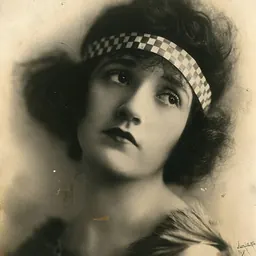
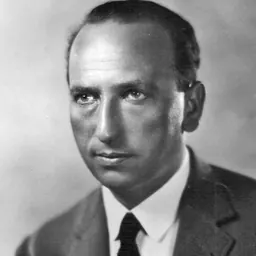
Related people
Same field, nearest in time



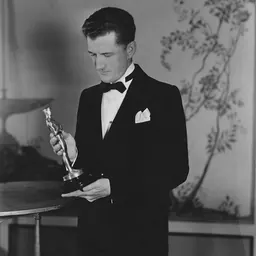
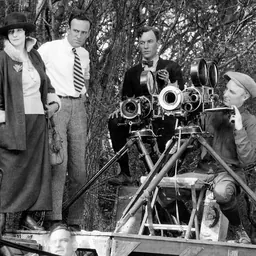
Contemporaries
People whose lives overlapped Tony Gaudio's


Frequently asked questions
Who was Tony Gaudio?
Italian American cinematographer (1883–1951)
When was Tony Gaudio born?
Tony Gaudio was born on 20 November 1883 in Cosenza.
When did Tony Gaudio die?
Tony Gaudio died on 10 August 1951 in Burlingame.
What was Tony Gaudio's occupation?
Tony Gaudio was a cinematographer and film director.
What nationality was Tony Gaudio?
Tony Gaudio was American and Italian.
Sources & further reading
Cite this page
APA: Biography.guide. (2026). Tony Gaudio. https://biography.guide/tony-gaudio/
MLA: "Tony Gaudio." Biography.guide, https://biography.guide/tony-gaudio/.
Chicago: "Tony Gaudio." Biography.guide. https://biography.guide/tony-gaudio/.
Data last updated: 2026-09-20 · Spot an error? Report a correction.
Page generated 2026-09-27 05:29 UTC