
Tomoji Abe
Japanese novelist, social critic, humanist and translator
About Tomoji Abe
Lived 1903 – 1973 (aged 69). Tomoji Abe was a Japanese novelist, translator, writer, literary critic and scholar of English.
was a Japanese novelist, social critic, humanist, and translator of English and American literature. Although he began writing as a modernist, in his later works he represented the intellectual movement in Japanese literature. This movement departed from Japanese traditional thinking and from established forms of narration, which focused on aesthetic values and emotional states of mind (such as appear in the works of Junichiro Tanizaki and Ryunosuke Akutagawa); it also departed from modernist views, which continued to be popular in world literature and in Japan (Japanese modernist writers included Haruo Satō, Sei Ito, Tatsuo Hori, Riichi Yokomitsu and Yasunari Kawabata). Abe's intellectual approach was incompatible with the socio-political atmosphere of Japan in the early Shōwa period (1926–1945), with rising fascism and militarism, and the crusade to preserve Japanese feudal traditions.
In 1927, Abe graduated from Tokyo University with a thesis on Edgar Allan Poe as a poet and then enrolled in graduate school.
Early work Tomoji Abe began his writing career as a modernist. In November 1925, while at university, he contributed his maiden work, Kasei (Metaplasia), and an essay, Kyoseisha no Tamashii (The Spirit of Rectifier) to Shumon (Red Gate), the Department of Literature's magazine. He became acquainted with the editor of Shumon, writer Seiichi Funabashi, who in 1967 received the Noma Literary Prize for Suki na Onna no Munakazari . Abe, Funabashi and others advocated modernism in opposition to Marxism. Abe traveled to Europe in the summer and returned to Tokyo at the end of 1950. Upon his return, Abe was surprised to see that Japan was relatively stable and peaceful, having heard rumors of the Korean War extending violence to Japan's shores while in Europe. In 1953, Abe stood at the bar as special defender in connection with the May Day Incident of 1 May 1952, when, during the May Day demonstration, a Communist-led group forced its way to Imperial Plaza; in the subsequent clash between demonstrators and police people on both sides were killed and injured. In March 1959, Abe and Kiyoshi Aono issued a written protest against the revision of the Treaty of Mutual Cooperation and Security between the United States and Japan. Abe was a passionate and outspoken critic of the Vietnam War. In May 1965, Abe, Rokurō Hidaka, a prominent academic and author of The Price of Affluence: Dilemmas of Contemporary Japan, and Yoshio Nakano, editor of the left-wing journal Heiwa ("Peace") protested against the Vietnam War and called for a united anti-war movement. In October 1966, Abe and Nakano called for a strike against the Vietnam War. In March 1968, Abe resigned from Meiji University and, with scientist Minoru Oda, called for a nationwide movement against the Vietnam War. In 1969, on a trip with his wife to Europe, Abe visited Edmund Blunden, his university lecturer.
In November 1971, Abe was diagnosed with cancer of the esophagus and hospitalised. He died on 23 April 1973, leaving an unfinished novel, Hoshū, which he had been dictating in his last year of life and which was published posthumously.
Published works Kasei (Metaplasia) and Kyoseisha-no Tamashii (The Spirit of Rectifier), essays, Shumon. 1925 Shuchi-teki Bungakuron (On Intellectualist Literature), essay, Shi-to Shiron. 1929; book, Kōseikaku. 1930 (The Japan–Germany Athletic Games), short story, Shinchō 1930 Shiroi Shikan (White Officer), short story, Shinchō. 1930 (Love and Africa), short story, Shinchō. 1930 (A Negro in Cinema), short story. 1930 (Caress of the Sea), short story, Shinchō. 1930 Bungaku to Rinrisei (Literature and Morality), essay, Kōdō. 1933 Riarizumu to Shinjitsu (Realism and the Truth), essay, Kōdō. 1934 Bungaku to Nikutai (Literature and the Flesh), essay, Kōdō. 1934 Bungaku no Kōsatsu (A Study of Literature), collection of essays, Kinokuniya. 1934 Merubiru (Melville), critical biography, Kenkyūsha. 1934 Arechi (Wasteland), short story, Kōdō. 1935 (A Winter Lodging), novel, Bungakkai (January–October issues, 1936); book (November), Dai-ichi Shobō. 1936 (Illusion), short story, Shinchō. 1936 Shi to Renai (Poems and Love), trans. PB Shelley's poems and essays, Daiichi Shobō. 1936 (Happiness), Kawade Shobō. 1937 Bairon (Byron), critical biography, Kenkyūsha. 1937 (Peking), Dai-ichi Shobō. 1938 Bairon Shishū (Byron's Poems Collection), Shinchōsha. 1938 (Wind and Snow), first installments in Nihon Hyōron. 1938 Bungakuronshū (A Compilation of Literary Theories), Kawade Shobō. 1938 Kage (Shadow), Bungakkai. 1939 (Town), Shinchōsha. 1939 Oki ni Mesu Mama (As You Like It), trans. of W. Shakespeare's play, Iwanami Bunko. 1939 (Wind and Snow), book, Sōgensha. 1939 (Light and Shadow), Shinchōsha. 1939 Merubiru Hakugei (Melville's Moby Dick), partial trans., Chisei. 1940 (Report from Jawa, the Island of Fire, and from Bali), collection of essays. 1944 (Green Robe), Shinchōsha. 1946 (Flower of Death), Sekai. 1946 Jojō to Hyōgen (Lyricism and Expression), collection of essays, Yōtokusha. 1948 (Black Shadow), Hosokawa Shoten. 1949 (The Castle: Letters from the Countryside), short stories collection, Tokyo, Sōgensha. 1949 (Moby Dick I), book, Chikuma Shobō. 1949 (Moby Dick II), book, Chikuma Shobō. 1950 (A Fake Garden), Gunzō, (in 1954 made into film Onna no Sono). 1953 (Moby Dick III), book, Chikuma Shobō. 1954 Chisei ni Tsuite (About Intelligence), essay. 1954 Ningen Besshi ni Kōshite (Resisting Contempt for Human Beings), essay, Bungei (Kawade Shobō Shinsha). 1955 Genbaku to Bungaku (Atom Bomb and Literature), essay, Mita Bungaku. 1955 (The Great Road), trans. of Agnes Smedley's The Great Road: The Life and Times of Chu The, Iwanami Shoten. 1955 Rekishi no Naka e (Inside History), collection of essays, Ōtsuki Shoten. 1955 Shōsetsu no Yomikata (How to Read Novels), essay, Shibundō. 1955 (Windows to the Sun and Moon), Kōdansha. 1955 , trans. of C. Bronte's Jane Eyre, Kawade Shobō Shinsha. 1955 , trans. of E. Bronte's Wuthering Heights, Iwanami Shoten. 1955 Gūwa (Allegory), trans. of W. Faulkner's novel, Iwanami Shoten. 1955 , trans. of Somerset Maugham's The Moon and Sixpence, Sekai Bungaku Zenshu (Kawade Shobō Shinsha). 1961 Sekai Bungaku no Nagare (Currents in World Literature), literary theory, Kawade Shobō Shinsha. 1963 (White Pillar), novel, Iwanami Shoten. 1963 Takarajima, trans. of R.L. Stevenson's Treasure Island, Iwanami Bunko. 1963 , trans. of J. Austen's Pride and Prejudice, Kawade Shobō Shinsha. 1963 (The Philosophy Behind Conscientious Objection). 1969 (Captive), novel, began writing in August, 1971; work interrupted by illness; continued, dictating, in 1972. Unfinished novel published posthumously. 1973
Other published translations Abe was a prolific translator of English and American literature. He is known as the translator of the Sherlock Holmes series (1960). He also translated other foreign works from English; for example the Polish Nobel Prize–winning author Władysław Reymont's Peasants (2nd Vol) (1939) and Valmiki Ramayana (1966).
Abe's other literary translations include: Oscar Wilde's De Profundis, 1935 and The Happy Prince, 1954; Thomas Hardy's Under the Greenwood Tree, 1936 and Tess, 1969; Daniel Defoe's Robinson Crusoe, 1952; Charles and Mary Lamb's Tales from Shakespeare, 1954; Jack London's Call of the Wild, 1955; Sir Arthur Conan Doyle's Silver Blaze, 1958; Mark Twain's Adventures of Tom Sawyer, c. 1959; Rudyard Kipling's The Jungle Book, 1961; Jane Austen's Emma, 1965 and Persuasion, 1968; Marjorie Kinnan Rawlings' The Yearling, 1965; Eleanor Farjeon's The Silver Curlew, 1968; Walter de la Mare's Stories from the Bible, 1970.
Works translated into foreign languages
Fuyu no Yado (Polish Zimowa kwatera) trans. Ewelina Tchórzewska-Adamowska, Książka i Wiedza. 1973
Nichi-Doku Taiko Kyogi (The Japan-Germany Athletic Games) trans. Misako Matsumura in Abe Tomoji, Japanese Modernist Novelist as Social Critic and Humanist, the Early Years (1925–19360). A Thesis Presented in Partial Fulfilment for the Degree Master of Arts in the Graduate School of the Ohio State University. 1998. Published online.
The Communist trans. Jay Gluck and Grace Suzuki. Ukiyo: stories of "the Floating World" of Postwar Japan, Jay Gluck, ed., 1963
Shinema no Kokujin (A Negro in Cinema) trans. Ayanna Bajita Doretha Hobbs. In Phallic Power of African American Men: a Study in Japanese Literature (1930–Present). A Thesis presented for the Degree Master of Arts in the Graduate School of the Ohio State University. 1999. Published online.
Don’t just read it —
keep it.
Full-length biographies made to live with: read them, listen on the way to work, watch them tonight.
- E-book
- Audio
- Video
Instant download · yours to keep · every purchase keeps this site free
Important facts
People in Tomoji Abe's life
Named in this biography and alive at the same time



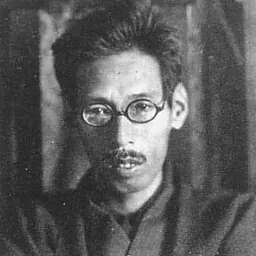
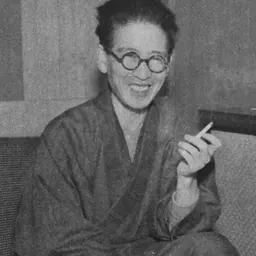

Related people
Same field, nearest in time
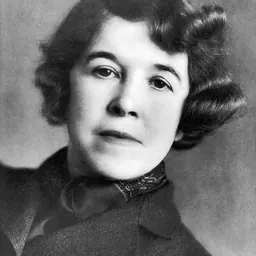
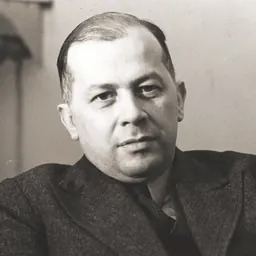


Contemporaries
People whose lives overlapped Tomoji Abe's

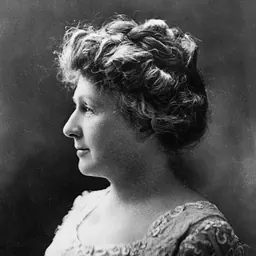
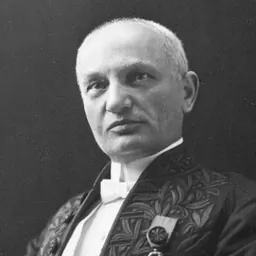
Frequently asked questions
Who was Tomoji Abe?
Japanese novelist, social critic, humanist and translator
When was Tomoji Abe born?
Tomoji Abe was born on 26 June 1903 in Mimasaka.
When did Tomoji Abe die?
Tomoji Abe died on 23 April 1973 in Tokyo.
What was Tomoji Abe's occupation?
Tomoji Abe was a novelist, translator, writer, literary critic and scholar of English.
What nationality was Tomoji Abe?
Tomoji Abe was Japanese.
Sources & further reading
Cite this page
APA: Biography.guide. (2026). Tomoji Abe. https://biography.guide/tomoji-abe/
MLA: "Tomoji Abe." Biography.guide, https://biography.guide/tomoji-abe/.
Chicago: "Tomoji Abe." Biography.guide. https://biography.guide/tomoji-abe/.
Data last updated: 2026-09-20 · Spot an error? Report a correction.
Page generated 2026-09-27 05:21 UTC